Africa's Green Watchdogs Under Siege: SLAPPs Threaten Environmental Journalism
A new report from the International Press Institute (IPI) reveals a grave and underreported threat to environmental and climate journalists across Africa: Strategic Lawsuits Against Public Participation (SLAPPs). These legal attacks, often disguised as defamation or harassment claims, aim to silence critical reporting on environmental degradation and climate change. The report highlights a concerning trend where powerful entities exploit legal systems to stifle vital public interest journalism, jeopardizing both press freedom and the continent's ecological future.
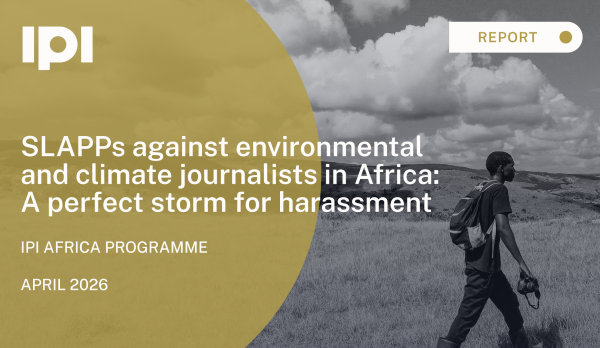
In the escalating global battle against climate change and environmental destruction, a critical frontline exists not just in policy debates or scientific laboratories, but in the newsrooms and field reports of dedicated journalists. Across Africa, these environmental and climate journalists are increasingly finding themselves targeted by a insidious and underreported threat: Strategic Lawsuits Against Public Participation (SLAPPs). A groundbreaking new report from the International Press Institute (IPI), titled “SLAPPs against environmental and climate journalists in Africa: A perfect storm for harassment,” casts a stark light on this growing crisis, revealing how powerful entities are weaponizing legal systems to silence critical voices and obscure environmental truths.
The IPI report, based on extensive interviews and research across seven West, Central, and East African countries – Cameroon, Democratic Republic of Congo (DRC), Ghana, Kenya, Nigeria, South Africa, and Uganda – paints a grim picture. It details how journalists investigating issues such as illegal mining, deforestation, land grabs, pollution, and the impacts of large-scale infrastructure projects are being subjected to a barrage of legal harassment. These lawsuits, often baseless and financially crippling, are not designed to win in court but to exhaust, intimidate, and ultimately silence reporters and media outlets, thereby chilling public discourse on vital ecological matters.
The Anatomy of a SLAPP: A Weapon Against Truth
SLAPPs are not conventional lawsuits; they are a form of legal bullying. Typically initiated by corporations, government officials, or wealthy individuals, they target individuals or organizations who speak out on issues of public concern. In the context of environmental reporting, a journalist might expose a company's polluting practices or a government's questionable land deals, only to be hit with a multi-million dollar defamation suit. The objective is rarely to secure a favorable judgment, but rather to impose prohibitive legal costs, consume the defendant's time and resources, and create a chilling effect that deters others from similar reporting.
The IPI report identifies several common characteristics of SLAPPs in Africa. They often involve exorbitant claims for damages that bear no relation to actual harm, prolonged legal proceedings designed to drain resources, and the misuse of criminal defamation laws which carry the threat of imprisonment. Furthermore, the report highlights how these lawsuits are frequently filed in jurisdictions far from the journalist's residence or workplace, adding an extra layer of logistical and financial burden. This tactic is particularly effective in countries where legal aid is scarce and judicial systems may be susceptible to influence.
For instance, the report cites cases where journalists investigating illegal logging in the DRC faced threats and legal action from powerful timber companies. In Nigeria, reporters covering oil spills and environmental degradation in the Niger Delta have been subjected to multiple lawsuits from oil corporations. These are not isolated incidents but part of a systemic pattern designed to protect vested interests at the expense of environmental accountability and public awareness.
A 'Perfect Storm' for Harassment: Intersecting Vulnerabilities
The IPI report's subtitle, “A perfect storm for harassment,” aptly describes the confluence of factors that make environmental journalists in Africa particularly vulnerable. Firstly, the critical nature of their reporting often pits them against powerful economic and political actors. Environmental issues frequently involve vast sums of money, natural resource exploitation, and the interests of influential elites, making the stakes incredibly high.
Secondly, the fragile media landscapes in many African countries exacerbate the problem. Journalists often work with limited resources, unstable employment, and inadequate legal protection. Many news organizations lack the financial capacity to defend against protracted legal battles, making them susceptible to self-censorship. This vulnerability is compounded by the fact that judicial systems in some regions may not always uphold press freedom robustly, or may be slow and inefficient, allowing SLAPPs to drag on for years.
Thirdly, the lack of robust anti-SLAPP legislation across most African nations leaves journalists exposed. Unlike some Western countries that have enacted laws to quickly dismiss baseless lawsuits targeting public participation, African legal frameworks often lack such safeguards. This legislative vacuum allows SLAPPs to thrive, creating an environment where the cost of reporting the truth can be devastating.
The Profound Implications: Beyond the Newsroom
The implications of this rise in SLAPPs extend far beyond the individual journalists and media outlets targeted. At its core, the phenomenon represents a direct assault on press freedom and the public's right to know. When journalists are silenced, the public is deprived of crucial information about environmental threats, corporate malfeasance, and governmental accountability. This information vacuum can have dire consequences for public health, ecological preservation, and sustainable development.
Moreover, the chilling effect generated by SLAPPs deters other journalists from pursuing similar investigative stories, leading to a significant reduction in critical environmental reporting. This self-censorship allows environmental crimes and unsustainable practices to continue unchecked, accelerating climate change impacts and biodiversity loss. The IPI report underscores that “silencing environmental journalists means silencing the alarm bells for our planet.”
For Africa, a continent particularly vulnerable to the impacts of climate change – from desertification and droughts to floods and extreme weather events – the suppression of environmental journalism is especially dangerous. It undermines efforts to build resilience, adapt to changing climates, and hold polluters accountable. Without a free and fearless press, the continent's ability to address its most pressing environmental challenges is severely compromised. The report emphasizes that “environmental journalism is not a luxury; it is a necessity for Africa’s future.”
A Call to Action: Protecting the Watchdogs
The IPI report is not just a diagnostic tool; it is a urgent call to action for a multi-faceted response. Firstly, there is a critical need for legal reforms across African nations to introduce robust anti-SLAPP legislation. Such laws would allow for the swift dismissal of abusive lawsuits and provide protection for journalists and activists engaging in public interest reporting. This would level the playing field and prevent powerful entities from weaponizing the courts.
Secondly, international organizations, media development groups, and human rights bodies must increase their support for environmental journalists in Africa. This includes providing legal aid, safety training, and financial assistance to media outlets struggling to defend against SLAPPs. Building the capacity of local media to understand and counter these legal threats is paramount.
Thirdly, judicial systems need to be sensitized to the nature and intent of SLAPPs. Judges and legal professionals must be educated on the importance of press freedom and the public interest in environmental reporting, ensuring that justice is not subverted by vexatious litigation. The report suggests “training for judges and lawyers on press freedom and SLAPP recognition.”
Finally, media solidarity and public awareness campaigns are crucial. By highlighting the plight of targeted journalists and exposing the tactics of those who deploy SLAPPs, public pressure can be brought to bear. Journalists must stand together, and the public must understand that an attack on environmental reporting is an attack on their own future.
In conclusion, the IPI report serves as a vital wake-up call. The fight against SLAPPs is inextricably linked to the fight for environmental justice and climate action. Protecting Africa's environmental journalists is not merely about defending press freedom; it is about safeguarding the continent's natural heritage and ensuring a sustainable future for its people. The international community, national governments, and civil society must act decisively to dismantle this 'perfect storm' of harassment and empower those who bravely speak truth to power in defense of our planet.
Stay Informed
Get the world's most important stories delivered to your inbox.
No spam, unsubscribe anytime.
Comments
No comments yet. Be the first to share your thoughts!