AirAsia's Landmark 150 A220 Order: A Game Changer for Regional Aviation and Airbus
AirAsia has placed a historic order for 150 Airbus A220-300 aircraft, marking the largest single firm order for the A220 program to date. This move signals a significant strategic shift for the Malaysian low-cost carrier, focusing on efficiency and sustainability for its future fleet. The deal not only propels the A220 program past the 1,000-order milestone but also underscores a growing trend towards smaller, more fuel-efficient jets in regional and emerging markets, promising a new era for air travel.
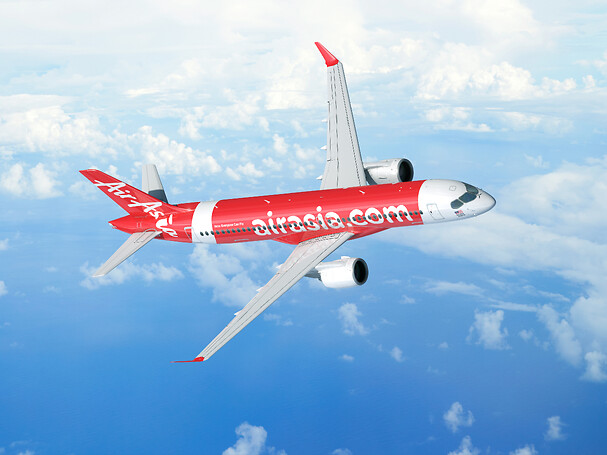
In a move poised to reshape the landscape of regional aviation, Malaysia’s AirAsia has announced a monumental order for 150 Airbus A220-300 aircraft. This landmark purchase, unveiled on May 6, 2026, from Mirabel, Canada, represents the single largest firm order ever placed for the A220 program, pushing its total firm orders beyond the significant 1,000-unit milestone. The decision by AirAsia, a titan in the low-cost carrier segment, to invest so heavily in the A220-300 speaks volumes about the evolving priorities within the airline industry: efficiency, sustainability, and adaptability to new market dynamics.
This order is not merely a transaction; it's a strategic pivot for AirAsia, traditionally known for its predominantly Airbus A320 family fleet. The A220-300, with its advanced technology and superior fuel efficiency, is perfectly positioned to serve thinner routes and expand AirAsia's network into secondary cities and underserved markets across Asia, offering a more flexible and cost-effective operational model. This move could potentially unlock new growth avenues for the airline, allowing it to maintain its competitive edge in a fiercely contested market while simultaneously addressing environmental concerns through reduced emissions.
The A220: A New Era of Efficiency and Comfort
The Airbus A220-300, formerly known as the Bombardier CSeries CS300, has rapidly gained a reputation as a highly capable and efficient aircraft in the 100-150 seat category. Its design incorporates advanced aerodynamics, composite materials, and Pratt & Whitney PurePower PW1500G geared turbofan engines, which together deliver a 25% reduction in fuel burn and CO2 emissions per seat compared to previous generation aircraft. For an airline like AirAsia, where cost efficiency is paramount, these operational savings translate directly into a stronger bottom line and more competitive fares for passengers.
Beyond fuel efficiency, the A220-300 offers an enhanced passenger experience. Its cabin, designed with wider seats, larger windows, and more spacious overhead bins, provides a level of comfort typically associated with larger, wide-body aircraft. This focus on passenger well-being is increasingly important in a post-pandemic world, where travelers prioritize space and comfort. For AirAsia, this means the ability to offer a premium experience at a low-cost price point, a powerful differentiator in the market. The aircraft's range also opens up possibilities for longer regional routes that might not be viable with smaller turboprops or less efficient narrow-bodies.
AirAsia's Strategic Vision and Market Impact
AirAsia's decision to embrace the A220-300 is a clear indicator of its long-term strategic vision. The airline has consistently been at the forefront of innovation in the low-cost sector, and this order reinforces its commitment to modernizing its fleet and optimizing its network. By introducing a new aircraft type, AirAsia gains significant operational flexibility. The A220 can operate efficiently on routes where the A320 might be too large, allowing for increased frequency or the opening of entirely new routes that were previously uneconomical.
This strategic move is expected to have a ripple effect across the Asian aviation market. Competitors will undoubtedly take note of AirAsia's investment in efficiency and passenger comfort. The increased presence of A220s in the region could also spur other airlines to consider similar fleet modernizations, potentially accelerating the retirement of older, less efficient aircraft. Furthermore, the order solidifies Airbus's position in the crucial regional jet segment, challenging traditional players and demonstrating the A220's versatility and market appeal. The sheer scale of this order, 150 aircraft, suggests a long-term commitment and integration of the A220 into AirAsia's core operations, not just as a niche aircraft but as a fundamental component of its future growth.
The A220 Program: A Story of Resilience and Success
The A220 program has a fascinating history, originating as the Bombardier CSeries before Airbus acquired a majority stake in 2018. This acquisition was a turning point, providing the program with Airbus's global reach, supply chain expertise, and financial muscle. Since then, the A220 has seen a surge in orders and deliveries, proving its value proposition to airlines worldwide. AirAsia's order is a testament to the successful integration and marketing efforts by Airbus, validating their strategic investment.
Reaching over 1,000 firm orders is a significant milestone for any aircraft program, especially for one that faced initial challenges. It signifies strong market confidence in the A220's performance, economics, and future potential. This order from a major Asian low-cost carrier like AirAsia further diversifies the A220's customer base, which already includes flag carriers and regional airlines across North America, Europe, and Africa. This global adoption underscores the aircraft's adaptability to various operational environments and business models, from full-service to ultra-low-cost carriers.
Looking Ahead: Sustainability and Growth in Aviation
AirAsia's investment in the A220-300 aligns perfectly with the broader industry trend towards sustainable aviation. As environmental regulations tighten and public awareness of climate change grows, airlines are under increasing pressure to reduce their carbon footprint. The A220's impressive fuel efficiency and lower emissions make it a key player in this transition. This order is not just about expanding capacity; it's about expanding responsibly.
Moreover, the post-pandemic recovery has highlighted the importance of flexible fleet planning. The A220's optimal size allows airlines to match capacity more precisely with demand, avoiding the inefficiencies of flying larger, half-empty aircraft on less popular routes. This agility is crucial for navigating an unpredictable global travel market. For AirAsia, this means being better prepared for future market shifts, whether they involve fluctuating fuel prices or evolving passenger preferences.
In conclusion, AirAsia's order for 150 A220-300s is a bold declaration of its intent to lead in efficiency, sustainability, and passenger experience. It's a strategic move that will undoubtedly reshape its network, strengthen its financial performance, and set a new benchmark for regional aviation in Asia. For Airbus, it's a monumental validation of the A220 program, cementing its status as a formidable contender in the single-aisle market. As the aviation industry continues its recovery and evolution, this landmark deal signals a future where smaller, smarter, and greener aircraft will play an increasingly central role in connecting the world.
Stay Informed
Get the world's most important stories delivered to your inbox.
No spam, unsubscribe anytime.
Comments
No comments yet. Be the first to share your thoughts!