AIRIS: MHI's AI Detector Revolutionizes Space Surveillance and Maritime Security
Mitsubishi Heavy Industries (MHI) has achieved a significant milestone with its AI-based object detector, AIRIS, successfully detecting ships from orbit. This groundbreaking technology, powered by a next-generation space-grade MPU, promises to transform satellite imagery analysis, offering unprecedented speed and efficiency. Beyond its immediate applications in maritime security and disaster response, AIRIS signals a new era for AI in space, with profound implications for global monitoring and data processing.
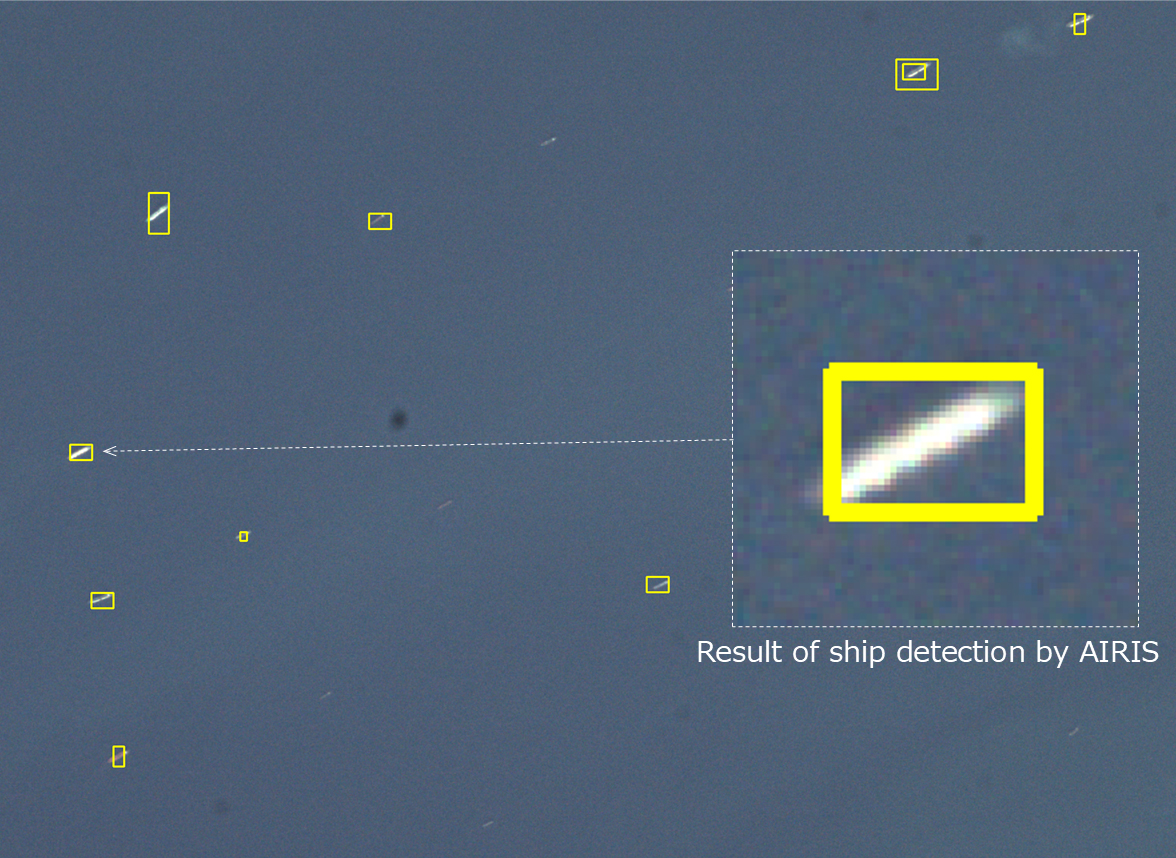
In a monumental leap for space technology and artificial intelligence, Mitsubishi Heavy Industries, Ltd. (MHI) announced on May 11, 2026, the successful in-orbit demonstration of its pioneering AI-based object detector, AIRIS. This cutting-edge system, leveraging a next-generation space-grade Microprocessing Unit (MPU), has proven its capability to accurately identify and track ships from the vast expanse of space. The achievement marks a pivotal moment, ushering in an era where sophisticated AI can perform complex analytical tasks directly on satellites, dramatically enhancing the speed and efficiency of data processing for critical applications.
For decades, satellite imagery has been an indispensable tool for monitoring our planet, from weather patterns to geopolitical movements. However, the sheer volume of data generated by high-resolution sensors often necessitates extensive ground-based processing, leading to delays that can be critical in time-sensitive scenarios. AIRIS directly addresses this bottleneck by bringing advanced analytical power to the edge – literally, to orbit. This onboard processing capability not only reduces the data downlink burden but also enables near real-time insights, a game-changer for industries reliant on swift and accurate information.
The Dawn of Onboard AI: How AIRIS Works
At the heart of AIRIS lies a sophisticated AI algorithm designed for object detection, specifically trained to identify maritime vessels. What sets AIRIS apart is its integration with a next-generation space-grade MPU. Traditional space hardware often lags behind terrestrial counterparts in computational power due to the extreme environmental conditions and stringent reliability requirements of space. However, advancements in radiation-hardened components and power-efficient designs have paved the way for more powerful processors in orbit. This MPU provides the robust computational backbone necessary for AIRIS to execute complex AI models effectively in the harsh vacuum of space.
The process begins with the satellite's optical sensors capturing high-resolution images of Earth's surface. Instead of transmitting raw, unprocessed imagery down to ground stations, AIRIS processes these images onboard. The AI model rapidly scans the visual data, identifies potential ship targets, and then extracts relevant information such as location, size, and potentially even type. Only the processed data – the coordinates of detected ships, for instance, or compressed imagery with identified objects highlighted – is then downlinked. This selective transmission vastly reduces the volume of data that needs to be sent, making the entire surveillance process significantly more efficient and responsive.
Unlocking New Frontiers: Applications and Impact
The immediate implications of AIRIS's success are profound, particularly for maritime security and global surveillance. The ability to detect ships from orbit in near real-time offers unparalleled advantages:
* Combating Illegal Fishing: Rapid identification of vessels operating in protected areas or engaging in unreported fishing activities can empower authorities to intervene more effectively. * Piracy Prevention: Monitoring shipping lanes for suspicious activity can provide early warnings to commercial vessels, enhancing safety and security. * Disaster Response: During natural disasters, quickly assessing maritime traffic and identifying distressed vessels or blockages in ports can be crucial for aid efforts. * Environmental Monitoring: Tracking oil spills or monitoring the movement of icebergs in critical shipping routes becomes more precise and timely. * Border Security: Enhancing coastal surveillance capabilities for national security purposes.
Beyond these direct applications, the technology behind AIRIS lays the groundwork for a broader revolution in space-based data analytics. Imagine satellites capable of autonomously identifying deforestation patterns, tracking urban expansion, or monitoring agricultural health without constant human intervention or extensive ground processing. This paradigm shift will democratize access to critical geospatial intelligence, making it faster and more affordable for a wider range of users, from governments and international organizations to research institutions and commercial enterprises.
The Future of AI in Space: Challenges and Opportunities
While the success of AIRIS is a testament to MHI's innovation, the journey of onboard AI in space is just beginning. Several challenges remain to be addressed:
* Power Consumption: Running powerful MPUs and AI algorithms in space requires significant electrical power, which must be efficiently generated and managed by the satellite's systems. * Radiation Hardening: Ensuring the longevity and reliability of advanced processors and memory in the harsh radiation environment of space is an ongoing engineering challenge. * Model Updates: Updating AI models in orbit can be complex, requiring secure and efficient mechanisms for transmitting new data or algorithm versions to the satellite. * Scalability: Developing systems that can scale to multiple satellites and handle diverse analytical tasks will be key to widespread adoption.
Despite these hurdles, the opportunities are immense. The development of AI-powered edge computing in space promises to transform how we observe and understand our planet. It moves us closer to a future where satellite constellations act as intelligent networks, capable of making autonomous decisions, identifying anomalies, and providing actionable insights with unprecedented speed. This could lead to more effective resource management, improved disaster preparedness, and a more secure global environment.
A New Era of Autonomous Space Intelligence
MHI's AIRIS is more than just an object detector; it's a harbinger of a new era of autonomous space intelligence. By demonstrating the viability of complex AI processing in orbit, MHI has opened the door for a myriad of future applications that were once confined to science fiction. The ability to process data at the source, rather than relying solely on ground infrastructure, fundamentally changes the economics and timelines of space-based observation. As AI continues to evolve and space hardware becomes even more capable, we can anticipate a future where satellites are not just data collectors, but intelligent agents actively contributing to our understanding and management of Earth. This achievement solidifies Japan's position at the forefront of space technology innovation and sets a new benchmark for what's possible when AI meets the final frontier.
Stay Informed
Get the world's most important stories delivered to your inbox.
No spam, unsubscribe anytime.
Comments
No comments yet. Be the first to share your thoughts!