AI's Looming Shadow: Should 'Robot Taxes' Protect White-Collar Jobs?
As artificial intelligence rapidly reshapes the global workforce, a prominent tech entrepreneur proposes a controversial solution: taxing AI and robots to mitigate job displacement. This article delves into the escalating debate surrounding AI's impact on white-collar professions, particularly in regions like Wales, and explores the economic and ethical implications of such a levy. We examine whether policy makers are prepared for this technological revolution and the potential for a universal basic income as a societal safety net.
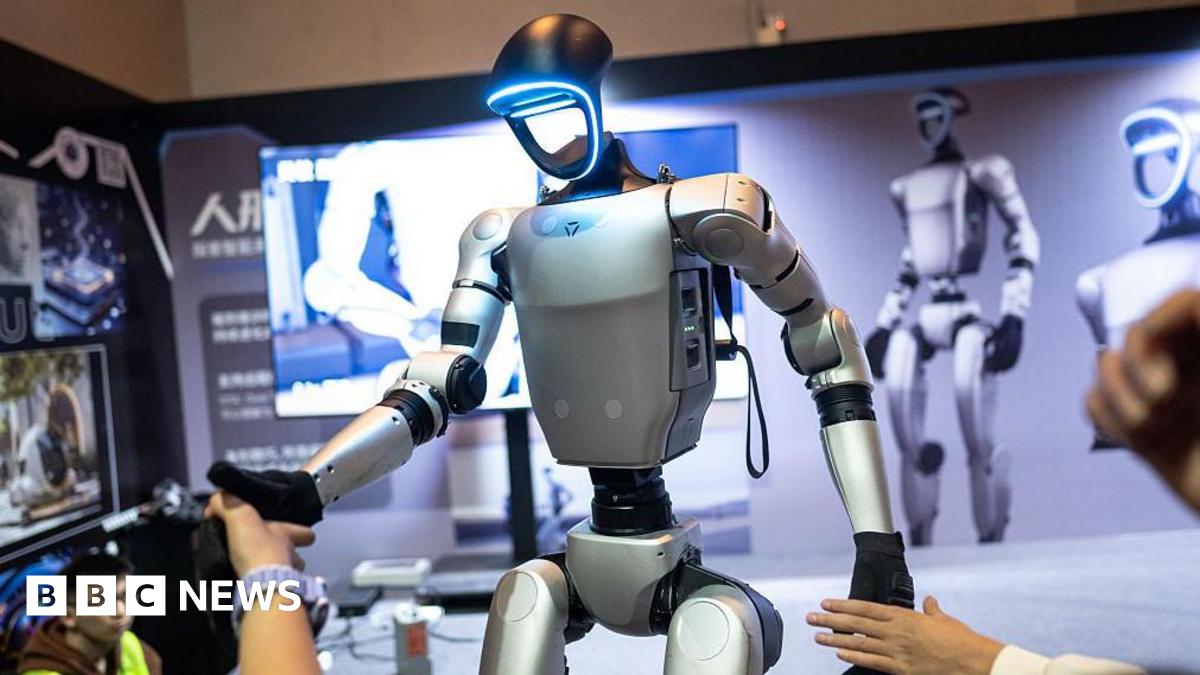
The specter of artificial intelligence (AI) replacing human jobs has long been a staple of science fiction, but for millions of white-collar workers across the globe, this dystopian vision is rapidly becoming a tangible reality. From the bustling financial districts of London to the administrative offices in Cardiff, a new wave of automation, driven by sophisticated AI algorithms, is poised to disrupt professions once considered immune to technological displacement. A prominent tech entrepreneur, Charles Radclyffe, has issued a stark warning: politicians are woefully unprepared for this seismic shift, advocating for a radical solution – a 'robot tax' – to cushion the blow of mass job losses.
Radclyffe's pronouncement, highlighting the vulnerability of "white-collar workers in places like Cardiff," underscores a growing anxiety within the professional classes. Unlike previous industrial revolutions that primarily impacted manual labor, AI's current trajectory targets cognitive tasks, threatening roles in finance, law, journalism, and administration. The question is no longer if AI will transform the workforce, but how we manage this transition to prevent widespread economic and social upheaval.
The Unprepared Political Landscape
Radclyffe's critique of political unpreparedness resonates deeply. Governments worldwide are grappling with the complexities of regulating an incredibly fast-moving technological frontier. The traditional policy toolkit, designed for industrial-era challenges, seems ill-equipped to handle the nuances of AI's economic and ethical implications. There's a palpable lack of coherent strategy, leading to a reactive rather than proactive approach.
The entrepreneur argues that taxing AI and robots could serve multiple purposes. Firstly, it could act as a disincentive for companies to replace human workers too quickly, thus slowing the pace of job displacement. Secondly, the revenue generated could be channeled into retraining programs for displaced workers, fostering a new generation of skilled professionals capable of thriving in an AI-augmented economy. Thirdly, and perhaps most ambitiously, these funds could help finance a Universal Basic Income (UBI), providing a safety net for those whose livelihoods are permanently altered by automation. The idea of UBI, once a fringe concept, is gaining traction as a potential solution to widespread technological unemployment, offering a baseline income to all citizens regardless of employment status.
However, implementing such a tax is fraught with challenges. Defining what constitutes a 'robot' or 'AI' for taxation purposes is a complex legal and technical hurdle. Would it apply to software, algorithms, or only physical machines? How would it differentiate between AI that augments human work versus AI that replaces it? These are questions that require deep collaboration between technologists, economists, and legal experts, a collaboration that is, by many accounts, still in its nascent stages.
Historical Echoes and Future Predictions
The debate over automation's impact on jobs is not new. The Luddites of the early 19th century famously resisted textile machinery, fearing it would render their skills obsolete. While history shows that new technologies often create more jobs than they destroy, the nature of those jobs changes, and the transition period can be brutal for those caught in the crossfire. The current AI revolution feels different, however, due to its unprecedented speed and its ability to replicate human cognitive functions.
Recent studies, including those by McKinsey and the World Economic Forum, predict that tens of millions of jobs could be automated by 2030, with a significant portion being white-collar roles. For instance, tasks involving data analysis, report generation, customer service, and even basic legal research are increasingly being handled by AI. This isn't just about factory floors; it's about offices, call centers, and professional service firms.
Consider the financial sector: AI algorithms can now perform complex trading strategies, fraud detection, and even personalized financial advice with greater speed and accuracy than humans. In journalism, AI can generate basic news reports from data, freeing human reporters for more investigative work, but also potentially reducing the need for entry-level positions. The implications are profound, demanding a societal response that goes beyond traditional unemployment benefits.
The Welsh Context: A Microcosm of Global Challenges
Radclyffe's specific mention of "white-collar workers in places like Cardiff" highlights the localized yet universal nature of this threat. Wales, like many regions, has a significant service economy, with a substantial portion of its workforce employed in administrative, financial, and public sector roles. These are precisely the sectors most susceptible to AI-driven automation.
For Wales, a region with a strong history of adapting to industrial change, the AI revolution presents both a challenge and an opportunity. Investment in digital skills, AI research, and innovation hubs could help future-proof its economy. However, without proactive policy, the risk of exacerbating existing inequalities and creating a new class of technologically displaced workers is significant. The Welsh government, like others, must consider how to foster an environment where AI can be a tool for prosperity rather than a catalyst for unemployment.
The Ethical Quandary and the Path Forward
The discussion around AI taxation also touches upon deeper ethical questions. If AI systems generate immense wealth, how should that wealth be distributed? Is it fair for a few companies to accrue vast profits from automation while large segments of the population face economic insecurity? These are not just economic questions but fundamental societal ones about fairness, equity, and the future of work.
Moving forward, a multi-pronged approach is essential:
* Policy Innovation: Governments must develop agile regulatory frameworks that encourage AI innovation while protecting workers. This includes exploring ideas like robot taxes, UBI, and new forms of social safety nets. * Education and Retraining: Massive investment in lifelong learning and reskilling programs is crucial. The workforce needs to adapt continuously, acquiring skills that complement AI, such as creativity, critical thinking, emotional intelligence, and complex problem-solving. * Ethical AI Development: Companies developing AI must do so responsibly, considering the societal impact of their technologies. This includes transparency in AI decision-making and prioritizing human-centric design. * International Cooperation: AI's impact is global, requiring international dialogue and cooperation to establish common standards and address cross-border challenges.
The debate over taxing robots is more than just an economic policy discussion; it's a profound conversation about the kind of society we want to build in the age of intelligent machines. As AI continues its relentless march, the onus is on policymakers, industry leaders, and citizens alike to shape a future where technology serves humanity, rather than displacing it. The time for preparation is now, before the "firing line of AI" reaches its full potential.
Stay Informed
Get the world's most important stories delivered to your inbox.
No spam, unsubscribe anytime.
Comments
No comments yet. Be the first to share your thoughts!