AI's Romantic Revolution: How 12 Years of Chats Became a Viral Wedding Story
An Anthropic employee's innovative use of AI to analyze 12 years of iMessages with his now-wife has gone viral, transforming their digital communication into a unique wedding website. This project highlights AI's surprising potential beyond corporate applications, offering a deeply personal narrative of their relationship's evolution. It sparks a broader conversation about data privacy, the future of personal storytelling, and how technology can document our most intimate human connections. The story challenges conventional views of AI, showcasing its capacity for creativity and emotional insight.
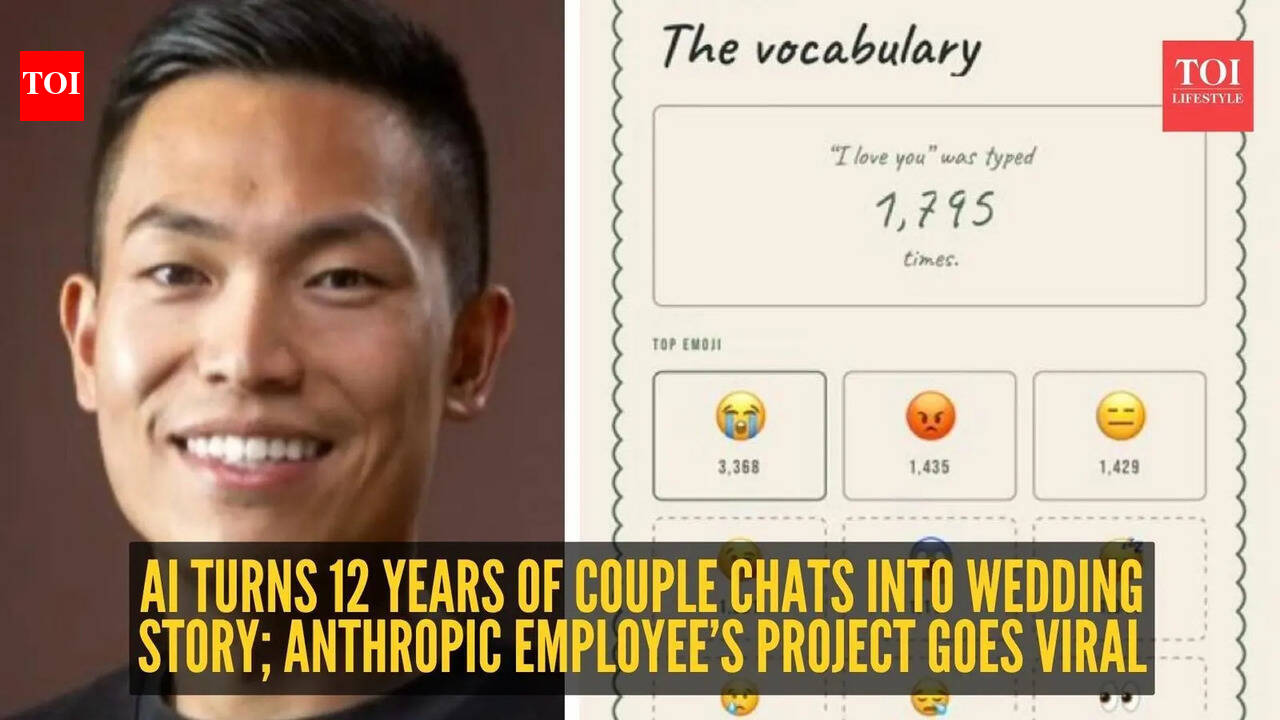
In an era where artificial intelligence often conjures images of complex algorithms, corporate automation, and perhaps even dystopian futures, a recent viral story has pivoted the narrative towards something far more intimate and profoundly human: love. An employee at Anthropic, a leading AI safety and research company, embarked on a deeply personal project that has since captivated the internet. He leveraged advanced AI to meticulously analyze 12 years of iMessages exchanged with his then-fiancée, transforming over 160,000 messages into a bespoke wedding website that chronicled their entire relationship. This innovative endeavor not only served as a unique tribute to their journey but also ignited a global conversation about the unexpected applications of AI in our personal lives.
The project, which quickly gained traction across social media platforms and tech news outlets, stands as a testament to AI's evolving capabilities. Far from being a mere data dump, the AI was tasked with identifying key relationship milestones, tracking communication patterns, and even pinpointing emotional shifts over more than a decade. The results were fascinating, revealing insights such as peak communication during their long-distance college years and the subtle evolution of their shared language. This wasn't just about crunching numbers; it was about extracting the emotional tapestry woven through countless digital exchanges, demonstrating AI's surprising capacity for narrative construction and emotional intelligence.
The Genesis of a Digital Love Story
The idea for this unconventional wedding project reportedly stemmed from a desire to create something truly unique and meaningful, something that encapsulated the depth and longevity of their relationship. The Anthropic employee, with his deep understanding of AI's analytical power, saw an opportunity to use technology to tell their story in a way that traditional methods simply couldn't. The sheer volume of data – 160,000 messages – would be insurmountable for human analysis, but for an AI, it was a rich dataset waiting to be explored. This project highlights a burgeoning trend: the application of sophisticated AI tools to personal, often sentimental, data.
The process involved several stages. First, the vast archive of iMessages had to be extracted and pre-processed. This step alone presents significant technical challenges, not to mention the ethical considerations of handling such sensitive personal data. Once the data was clean and structured, the AI models were deployed. These models likely utilized Natural Language Processing (NLP) techniques to understand the context, sentiment, and recurring themes within the conversations. For instance, the AI could identify periods of intense communication, perhaps correlating with significant life events, or detect changes in vocabulary and tone over time. The output wasn't just raw data; it was a curated narrative, complete with timelines, key quotes, and even visual representations of their communication frequency.
Beyond the Wedding Website: Implications for Personal Data and Privacy
While the romantic outcome of this project is undeniably heartwarming, it also opens a Pandora's Box of discussions regarding personal data, privacy, and consent. The employee had access to his own messages and, presumably, the full consent of his partner. However, the viral nature of the story prompts questions about the broader implications. As more of our lives are lived and recorded digitally, the potential for AI to sift through our personal histories grows exponentially. Who owns this data? How can it be used ethically? And what are the safeguards against misuse?
Experts in data privacy caution that while this particular case was consensual, it sets a precedent. The ability of AI to derive deep insights from seemingly innocuous conversations means that our digital footprints hold far more information than we might realize. Companies like Anthropic are at the forefront of developing responsible AI frameworks, and this project, while personal, inadvertently serves as a powerful case study for the need for robust ethical guidelines. The line between innovative application and privacy infringement can be thin, and as AI becomes more accessible, individuals and developers alike must grapple with these complex issues.
The Future of Storytelling and Digital Legacies
This wedding website is more than just a novelty; it's a glimpse into the future of storytelling. Imagine historical biographies enriched by AI analysis of personal correspondence, or family histories compiled from generations of digital communication. The ability of AI to find patterns, themes, and emotional arcs in vast datasets could revolutionize how we understand and preserve personal narratives. It suggests a future where our digital legacies are not just archives of messages, but dynamically generated stories, curated by intelligent algorithms.
Moreover, this project challenges the perception of AI as a purely utilitarian tool. It demonstrates its capacity for creativity, for revealing the beauty in mundane data, and for fostering deeper human connection. It's a powerful counter-narrative to the often-cold, mechanistic portrayal of AI, showcasing its potential to enhance our emotional lives and celebrate our shared humanity. This isn't just about a couple's wedding; it's about a paradigm shift in how we might interact with our own pasts, how we might commemorate milestones, and how technology can serve as a mirror to our most cherished relationships.
AI in the Mainstream: A Cultural Shift
The viral spread of this story also signifies a broader cultural shift in how the public perceives and interacts with AI. No longer confined to academic papers or corporate boardrooms, AI is entering the mainstream consciousness in increasingly relatable and personal ways. This particular anecdote has made AI tangible, demonstrating its power in a context that resonates deeply with universal human experiences: love, memory, and celebration. It demystifies the technology to some extent, showcasing its practical, albeit extraordinary, applications beyond the typical enterprise use cases.
This accessibility is a double-edged sword. While it fosters greater understanding and acceptance, it also necessitates a more informed public discourse about AI's capabilities and limitations. The Anthropic employee's project serves as an excellent talking point for educators, policymakers, and the general public to engage with these complex topics. It illustrates that AI is not just about automation or efficiency; it's also about augmenting human creativity and providing new lenses through which to view our own lives. The story encourages us to think creatively about how AI can serve our personal needs, rather than just our professional ones.
Conclusion: A New Chapter for AI and Humanity
The Anthropic employee's wedding website, born from 12 years of digital conversations and powered by sophisticated AI, marks a fascinating intersection of technology and human emotion. It's a poignant reminder that even the most advanced algorithms can be harnessed for purposes far beyond their initial design, revealing the intricate patterns of human connection. This project not only celebrated a couple's journey but also illuminated AI's potential as a tool for deeply personal storytelling and memory preservation. As AI continues to evolve, we can expect to see more such innovative and touching applications that blur the lines between data science and the art of human experience. It challenges us to consider not just what AI can do, but what it should do, and how it can enrich the tapestry of our lives in ways we are only just beginning to imagine. The future of AI, it seems, is not just about efficiency, but also about empathy and the enduring power of love, meticulously documented and beautifully retold by machines.
Stay Informed
Get the world's most important stories delivered to your inbox.
No spam, unsubscribe anytime.
Comments
No comments yet. Be the first to share your thoughts!