Ancient Echoes: Homer's Iliad Papyrus Unearthed from Roman-Era Mummy in Egypt
A groundbreaking discovery in Egypt's Minya Governorate has unveiled a rare papyrus fragment of Homer's Iliad, found remarkably preserved within a Roman-era mummy. This extraordinary find not only sheds new light on ancient burial practices, but also underscores the profound cultural exchange between Greek and Egyptian civilizations. The artifact offers invaluable insights into the widespread appreciation and transmission of classical Greek literature in the Roman world, challenging previous understandings of literacy and cultural diffusion in ancient Egypt.
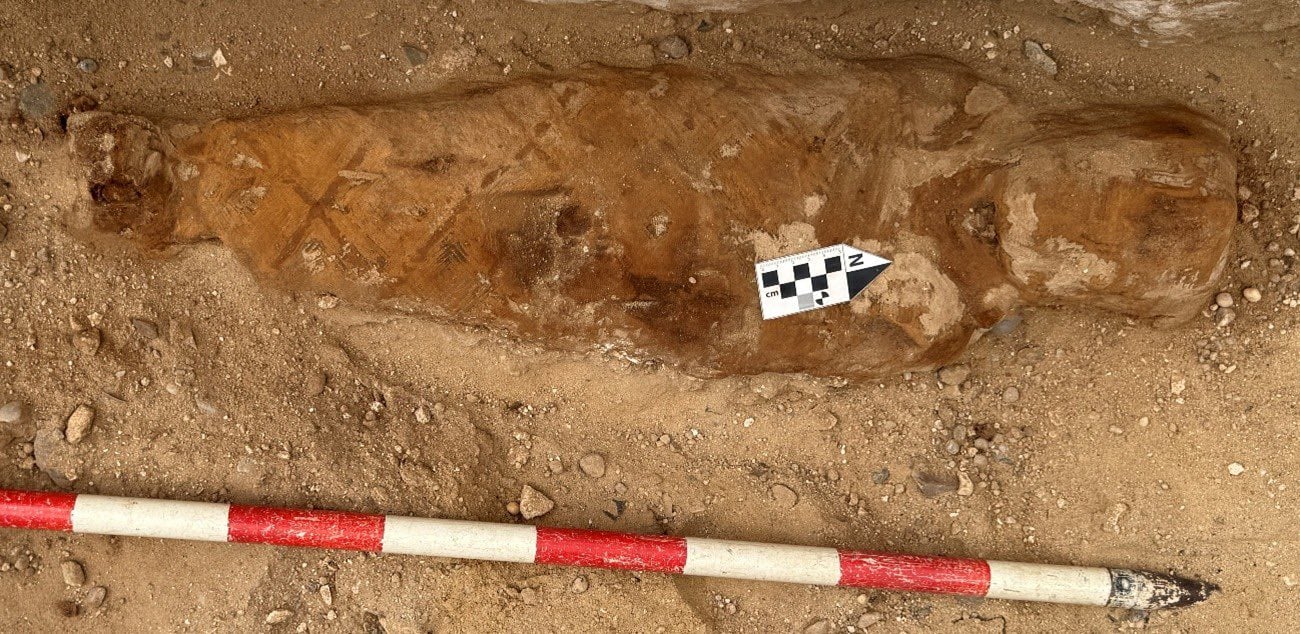
In a discovery that bridges millennia and intertwines the epic narratives of ancient Greece with the enigmatic burial rituals of Roman Egypt, archaeologists have unearthed a truly remarkable artifact: a papyrus fragment of Homer's Iliad, found nestled within the cartonnage of a Roman-era mummy. This extraordinary find, made by an Egyptian-Spanish archaeological team in Egypt’s Minya Governorate, is more than just a piece of ancient literature; it is a tangible testament to the enduring power of storytelling and the intricate cultural tapestry of the ancient world.
The initial reports from the archaeological mission, led by Dr. Maite Mascort and Dr. Esther Pons Mellado, focused on the discovery of a Roman-era tomb containing mummies with golden tongues, a fascinating detail that sparked immediate global interest. These golden tongues, placed in the mouths of the deceased, were believed to enable them to speak in the afterlife, offering a tantalizing glimpse into the spiritual beliefs of the time. However, as further investigations unfolded, the true magnitude of the discovery became apparent with the identification of the Iliad papyrus, elevating the find from significant to truly monumental.
A Glimpse into Ancient Burial Practices and Beliefs
The tomb itself, dating back approximately 2,000 years to the Roman period, is part of the larger Tuna al-Gabal necropolis, a site rich with archaeological treasures. The mummies, some remarkably preserved, were found adorned with intricate decorations, including painted masks and sarcophagi. The golden tongues are particularly intriguing. While not unique to this site, their presence here, alongside other funerary offerings, points to a complex set of beliefs regarding the journey to the afterlife. Ancient Egyptians believed that the deceased needed to be able to communicate with the gods, and a golden tongue might have been seen as a divine enhancement, ensuring their voice would be heard in the realm of Osiris. This practice underscores the syncretic nature of Roman Egypt, where indigenous Egyptian traditions often merged with Hellenistic and Roman influences.
Beyond the golden tongues, the mummies' cartonnage – the material used to create mummy masks and cases, often made from layers of linen or papyrus glued together – proved to be a treasure trove. It was within this seemingly mundane material that the Iliad fragment was identified. This method of recycling papyrus for funerary purposes was common, but rarely does it yield such a significant literary text. The fragment's preservation within the cartonnage speaks volumes about the environmental conditions of Egypt, which have allowed countless ancient texts to survive for millennia, offering unparalleled windows into ancient life and thought.
The Enduring Legacy of Homer in Roman Egypt
The discovery of an Iliad papyrus in a Roman-era Egyptian mummy is a powerful reminder of the pervasive influence of Greek culture across the ancient Mediterranean world. By the Roman period, Egypt had been under Hellenistic rule for centuries following Alexander the Great's conquest, and Greek language and literature were deeply embedded in its cultural fabric, particularly among the educated elite. Homer's epics, the Iliad and the Odyssey, were not merely stories; they were foundational texts of Greek education, morality, and identity. They were studied, recited, and revered, much like sacred texts.
* Cultural Diffusion: This find exemplifies the extent to which Greek literary traditions had permeated even the seemingly remote corners of the Roman Empire. It suggests that knowledge of Homer was not confined to major urban centers like Alexandria but was present in smaller communities, perhaps even among individuals who chose to incorporate such texts into their final resting places. Literacy and Education: The presence of the Iliad* fragment hints at a level of literacy and appreciation for classical literature among certain segments of the Roman Egyptian population. While we cannot definitively say the deceased was a scholar, the inclusion of such a text, even as recycled material, speaks to its perceived value and widespread availability. * Material Culture: The use of papyrus, the primary writing material of the ancient world, highlights the interconnectedness of daily life, education, and funerary practices. Papyrus was a precious commodity, and its reuse in cartonnage was a practical way to utilize discarded documents, sometimes inadvertently preserving invaluable historical and literary pieces.
Expert Analysis and Implications
Dr. Maite Mascort, co-leader of the mission, emphasized the rarity and significance of the find, noting that while papyri are common, a fragment of the Iliad from this context is exceptional. "This discovery not only enriches our understanding of the burial practices of the Roman period in Egypt but also provides direct evidence of the widespread dissemination of Greek literature," she stated in a press briefing. "It shows how deeply Hellenic culture had integrated into Egyptian society, even in death."
Dr. Es Pons Mellado added, "The meticulous work involved in separating and deciphering these fragments is immense, but the rewards are immeasurable. Each piece tells a story, not just of the text itself, but of the people who read it, preserved it, and ultimately, were buried with it." This discovery adds to a growing body of evidence that challenges the notion of a purely 'Egyptian' or 'Roman' identity in this period, instead pointing to a rich, hybridized culture where traditions blended and evolved.
The implications extend beyond literary history. For Egyptologists, the find provides further data points on Roman-era funerary customs, showing the continuation and adaptation of ancient Egyptian beliefs under foreign rule. For classicists, it offers a tangible link to the reception history of Homer's epics, demonstrating their enduring relevance and popularity centuries after their composition. It underscores the role of Egypt as a major hub for the preservation and transmission of classical knowledge, particularly through its dry climate, which has acted as a natural archive.
A Legacy Unveiled: Connecting Past and Present
This discovery in Minya is a powerful testament to the ongoing dialogue between the past and the present. Each artifact unearthed from the sands of Egypt offers a new piece to the vast, intricate puzzle of human history. The Iliad papyrus, in particular, reminds us that the stories that shaped Western civilization were not confined to Greece; they traveled, adapted, and found new homes in distant lands, even within the sacred confines of a mummy's final resting place.
As archaeologists continue their painstaking work, meticulously cleaning, preserving, and deciphering these fragments, there is always the hope of more revelations. What other texts, what other insights into ancient lives, might still be hidden within the cartonnage of mummies or beneath the desert sands? The Minya discovery serves as a vibrant affirmation of the enduring allure of archaeology and the profound connections that bind us to our ancient ancestors. It is a story of cultural exchange, intellectual heritage, and the eternal human quest for meaning, echoing across two millennia.
Stay Informed
Get the world's most important stories delivered to your inbox.
No spam, unsubscribe anytime.
Comments
No comments yet. Be the first to share your thoughts!