Australia Boosts Naval Defense with Raytheon SeaRAM for New Frigates
Australia is significantly enhancing its naval self-defense capabilities by integrating Raytheon's advanced SeaRAM system into its new Improved Mogami-class frigates. This strategic procurement, part of Project SEA3000, underscores a commitment to maritime security in the Indo-Pacific. The decision highlights the growing importance of sophisticated close-in weapon systems amidst evolving geopolitical challenges. This move also strengthens defense ties and technological cooperation between Australia and its allies.
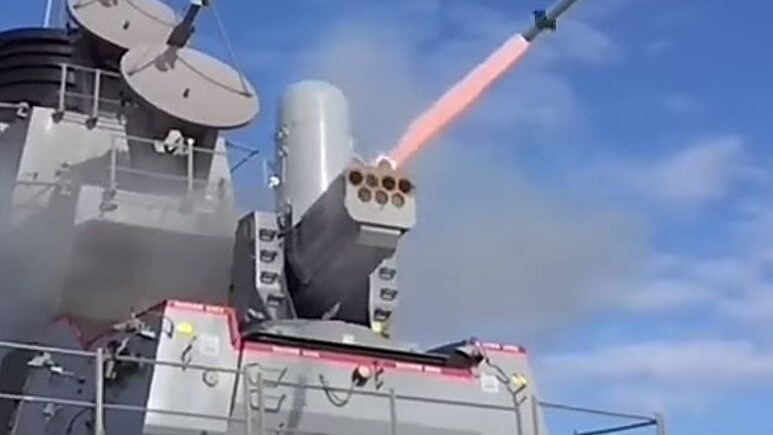
In a significant stride towards bolstering its naval capabilities, Australia has announced the selection of Raytheon’s sophisticated SeaRAM ship self-defense system for its upcoming Improved Mogami-class frigates. This crucial procurement, part of the country’s ambitious Project SEA3000 General Purpose Frigate program, was officially confirmed by Raytheon on Monday. The decision marks a pivotal moment for Australia’s maritime security strategy, ensuring its new fleet is equipped with state-of-the-art protection against a myriad of aerial and surface threats in an increasingly complex Indo-Pacific region.
The SeaRAM system, known for its rapid-response capabilities and autonomous operation, represents a critical layer of defense for modern warships. Its integration into the Australian frigates, which are notably being constructed in Japan, signifies a deeper strategic alignment and technological interoperability within key allied nations. This move is not merely about acquiring advanced hardware; it’s about weaving a robust fabric of defense that can adapt to future challenges and safeguard vital sea lanes and national interests.
The Strategic Imperative: Securing the Indo-Pacific
Australia's decision to invest in advanced self-defense systems like SeaRAM is a direct reflection of the escalating geopolitical tensions and rapid military modernization observed across the Indo-Pacific. The region, a nexus of global trade and strategic competition, demands a naval presence that is not only capable of power projection but also resilient against sophisticated threats. Project SEA3000, under which these frigates are being procured, aims to replace the aging Anzac-class frigates with a more capable and versatile fleet, designed for a wide range of missions from anti-submarine warfare to humanitarian assistance and disaster relief.
The Improved Mogami-class frigates, originally designed for the Japan Maritime Self-Defense Force, offer a blend of stealth, speed, and modularity. By adopting these vessels and integrating systems like SeaRAM, Australia benefits from proven technology and streamlined logistics, while tailoring the platforms to its specific operational requirements. The choice of SeaRAM is particularly telling, as it combines the Rolling Airframe Missile (RAM) guided missile launcher with the Phalanx Close-In Weapon System (CIWS) sensor suite, offering an unparalleled ability to detect, track, and engage incoming threats, including anti-ship missiles, helicopters, and fast attack craft.
Raytheon's SeaRAM: A Closer Look at the Technology
At the heart of the Australian frigates' new defensive posture lies the SeaRAM system, a testament to modern naval engineering. Unlike traditional CIWS that rely solely on gunfire, or standalone missile launchers, SeaRAM integrates both into a single, compact system. It utilizes the Phalanx Block 1B radar and electro-optical sensor system to provide autonomous search, detection, tracking, and engagement capabilities. This means the system can operate independently of the ship’s main combat system, offering a crucial last line of defense even if other systems are compromised.
The system typically carries 11 RAM Block 2 missiles, which are supersonic, fire-and-forget missiles designed to intercept highly maneuverable anti-ship cruise missiles. The RAM missile itself is a marvel of engineering, employing dual-mode infrared and radio frequency guidance for exceptional accuracy and resistance to countermeasures. This combination of a sophisticated sensor suite and highly effective missiles provides a layered defense that significantly enhances the survivability of the frigates. The compact footprint of SeaRAM also makes it an attractive option for vessels where space and weight are at a premium, allowing for greater flexibility in ship design and armament.
Implications for Regional Security and Defense Cooperation
The acquisition of SeaRAM-equipped frigates by Australia has significant implications beyond its immediate naval capabilities. Firstly, it signals a deeper commitment to interoperability with key allies, particularly Japan and the United States, both of whom operate or are procuring similar advanced defense systems. This shared technological base facilitates joint exercises, intelligence sharing, and coordinated responses to regional threats, strengthening the collective security architecture of the Indo-Pacific.
Secondly, it contributes to a regional arms race dynamic, albeit one driven by defensive necessity. As various nations in the Indo-Pacific modernize their navies and acquire more potent anti-ship capabilities, countries like Australia are compelled to enhance their defensive measures to maintain a credible deterrent. This continuous cycle of development and counter-development underscores the volatile nature of the current security environment.
Furthermore, the contract with Raytheon, a major U.S. defense contractor, reinforces the strong defense industrial base ties between Australia and the United States. Such collaborations are vital for technology transfer, local industry participation (where applicable), and ensuring long-term support and upgrades for critical defense assets. The decision to build the frigates in Japan also highlights a burgeoning defense partnership between Canberra and Tokyo, reflecting a mutual interest in regional stability and a shared vision for a free and open Indo-Pacific.
A Forward-Looking Defense Posture
Australia’s investment in the SeaRAM system for its Improved Mogami-class frigates is a clear indicator of a nation preparing for the complexities of 21st-century naval warfare. It’s a move that balances the need for advanced offensive capabilities with an equally critical requirement for robust self-defense. As the global strategic landscape continues to shift, with new technologies emerging and existing threats evolving, the ability to protect high-value naval assets becomes paramount.
This procurement ensures that Australia's future frigates will not only be formidable platforms for projecting power and maintaining presence but also highly survivable assets capable of operating effectively in contested environments. The SeaRAM system provides a crucial layer of confidence for the Royal Australian Navy, enabling its sailors to execute their missions with enhanced protection, thereby contributing significantly to regional stability and Australia's national security interests for decades to come. The integration of such advanced systems is a testament to Australia's proactive and forward-thinking approach to national defense, ensuring it remains a significant and capable maritime power in the Indo-Pacific.
Stay Informed
Get the world's most important stories delivered to your inbox.
No spam, unsubscribe anytime.
Comments
No comments yet. Be the first to share your thoughts!