Autocorrect Catastrophe: Why iPhone Users Are Demanding Apple Fix Its 'Broken' Feature
Apple's once-lauded autocorrect feature is now a source of widespread frustration for iPhone users, sparking a viral social media outcry. Millions of views on platforms like X highlight a growing chorus of complaints about its perceived decline in accuracy and helpfulness. This article delves into the technical challenges, user experience implications, and Apple's potential response to this escalating digital dilemma, examining how a seemingly minor glitch can profoundly impact daily communication.
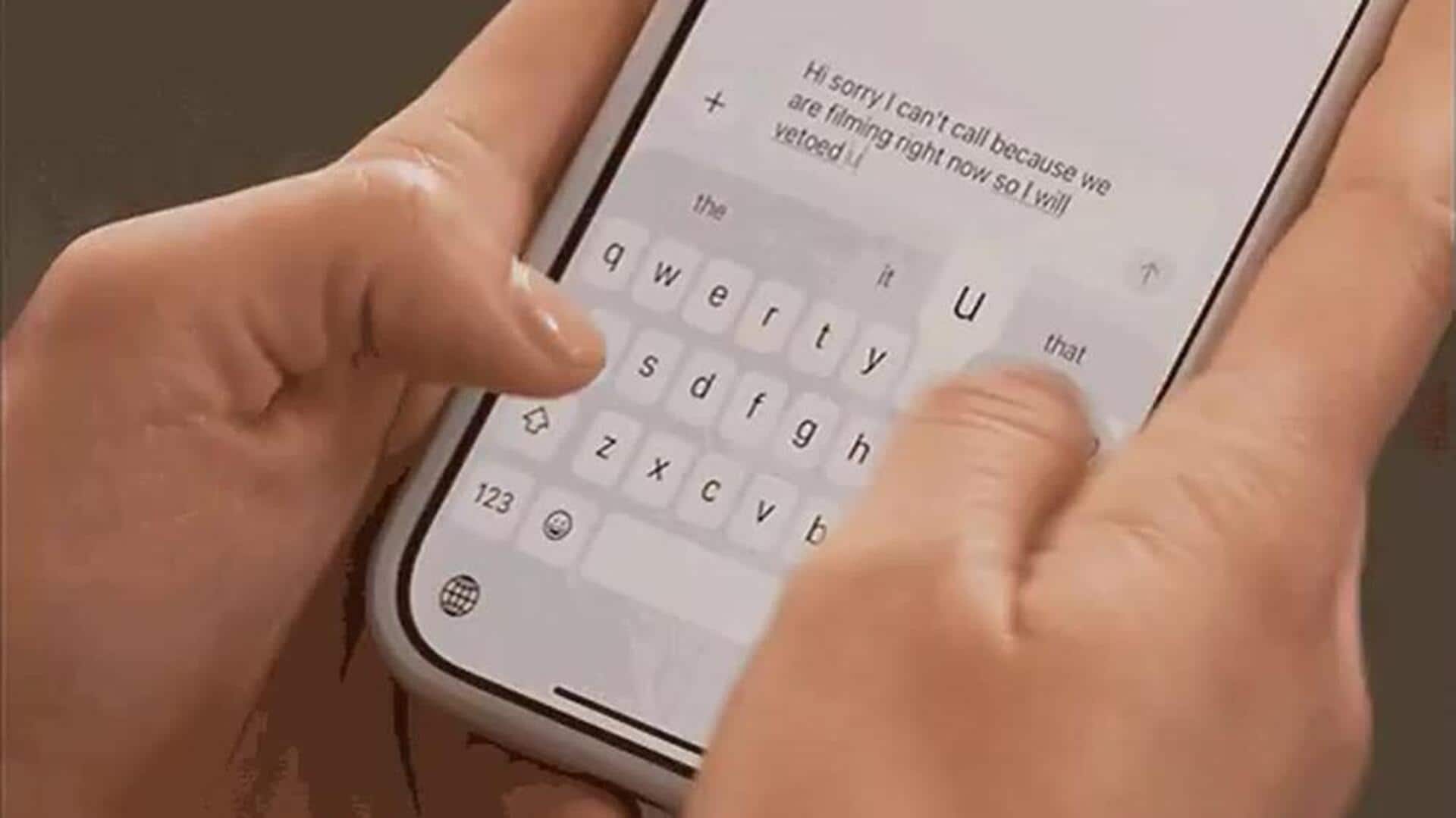
In an era where digital communication underpins nearly every aspect of our lives, the tools designed to streamline our typing experience are expected to be seamless, intuitive, and, above all, accurate. For millions of iPhone users worldwide, however, Apple's once-celebrated autocorrect feature has devolved from a helpful assistant into a source of daily exasperation, prompting a viral outcry across social media platforms. What began as scattered grumbles has coalesced into a unified demand for action, with posts detailing autocorrect's perceived blunders garnering millions of views and sparking a global conversation about the declining quality of a fundamental smartphone utility.
This isn't merely a minor inconvenience; it's a significant disruption to efficient communication, affecting everything from casual texts to professional emails. Users report bizarre word substitutions, an inability to learn common slang or even correctly spell proper nouns, and an overall sense that the system is actively working against them rather than for them. The frustration is palpable, and it raises critical questions about the evolution of AI-driven features in our devices and the delicate balance between automation and user control.
The Digital Dilemma: From Helper to Hindrance
The core of the current discontent stems from a perception that Apple's autocorrect, once a benchmark for predictive text, has become increasingly erratic and unhelpful. Early versions of autocorrect were revolutionary, anticipating words and correcting common typos with remarkable precision. They learned from user input, adapted to individual writing styles, and significantly sped up typing on small touchscreens. Fast forward to today, and the narrative has flipped. Users are sharing anecdotal evidence of autocorrect changing 'duck' to 'f*' (a classic and persistent meme), substituting perfectly spelled words for incorrect ones, and failing to recognize context-specific terminology.
One viral X post, which amassed nearly two million views, perfectly encapsulated the collective sentiment: “Is anyone else’s iPhone autocorrect becoming completely useless? It’s actively changing words I’ve typed correctly into incorrect ones. It’s infuriating.” This sentiment resonates deeply, as countless replies and quote-tweets attest. The issue isn't just about minor typos; it's about the system overriding correct input, forcing users to constantly backtrack and manually correct errors that the system itself introduced. This constant vigilance transforms a supposed time-saver into a time-waster, eroding user trust in a core functionality of their premium devices.
Unpacking the Technical Tangle: Why the Decline?
Several theories attempt to explain the perceived degradation of autocorrect. One prominent hypothesis points to the increasing complexity of language models and the potential for over-correction. As AI models become more sophisticated, they might be trained on vast datasets that, while comprehensive, may not always align with individual user intent or contemporary slang. This could lead to a system that is too aggressive in its corrections, prioritizing statistical likelihoods over immediate contextual relevance.
Another factor could be the shift towards on-device machine learning. While beneficial for privacy and speed, the local models might not be as robust or as frequently updated as cloud-based counterparts, potentially leading to a slower adaptation to new words, names, or evolving linguistic trends. Furthermore, the integration of new features, such as enhanced dictation or predictive text suggestions, might inadvertently interfere with the core autocorrect logic, creating unforeseen conflicts.
Industry experts suggest that balancing a vast vocabulary with nuanced contextual understanding is an immense challenge. “The goal of autocorrect is to predict user intent, not just to correct spelling,” explains Dr. Anya Sharma, a computational linguist. “When a system starts to misinterpret that intent, or when its predictive algorithms become too rigid, it quickly becomes a liability. Apple’s challenge is to refine its models to be more adaptive and less prescriptive.” The sheer diversity of human language, accents, and typing styles makes creating a universally perfect autocorrect an almost Sisyphean task.
The User Experience Impact: More Than Just Annoyance
The consequences of a malfunctioning autocorrect extend beyond mere annoyance. For professionals, incorrect autocorrection in emails or messages can lead to misunderstandings, embarrassment, or even damage to credibility. For individuals, it can hinder clear communication with friends and family, leading to frustrating exchanges and the need for constant clarification. The mental load of constantly double-checking every typed word adds a layer of stress to daily digital interactions.
Moreover, the issue touches upon the broader theme of user agency and control over their devices. When a core feature designed to assist begins to dictate or distort communication, users feel disempowered. This sentiment is particularly strong given Apple's reputation for user-centric design and intuitive interfaces. The expectation is that Apple products just work, and when they don’t, especially in such a fundamental area, it creates a significant disconnect between brand promise and user reality.
Some users have resorted to disabling autocorrect entirely, sacrificing the convenience of automatic corrections for the certainty of manual input. This workaround, however, defeats the purpose of the feature and highlights the severity of the problem. It forces users to revert to a less efficient typing method, undermining years of technological advancement designed to enhance the mobile experience.
Apple's Response and the Path Forward
While Apple has not yet issued a public statement specifically addressing the recent surge in autocorrect complaints, the company has a history of responding to widespread user feedback, often through software updates. The sheer volume and visibility of the current outcry make it difficult for them to ignore. Future iOS updates will likely include refinements to the predictive text engine, possibly incorporating more sophisticated contextual analysis and improved learning algorithms.
One potential solution could involve a more robust personal dictionary system that better integrates user-specific vocabulary and preferences across all applications. Furthermore, allowing users more granular control over autocorrect's aggressiveness or offering different correction profiles could empower individuals to tailor the feature to their specific needs. The integration of advanced neural networks, which are constantly learning and adapting, holds promise for making autocorrect truly intelligent and less prone to frustrating errors.
Ultimately, the autocorrect saga underscores the continuous challenge for tech giants in perfecting AI-driven features that interact directly with human language. As our digital lives become increasingly intertwined with these intelligent assistants, the demand for precision, adaptability, and user control will only grow. Apple, known for its meticulous attention to detail, faces the task of restoring faith in a feature that, for many, has become a symbol of digital frustration. The future of communication on iPhones hinges on whether they can transform this digital dilemma back into a seamless, intuitive experience, ensuring that our devices truly understand what we mean to say, rather than what they think we mean to say. The millions of frustrated users are waiting, fingers poised, for a fix that will finally make their iPhones speak their language again. The ball is now firmly in Apple's court to deliver a solution that lives up to its reputation for innovation and user satisfaction. The pressure is on for Cupertino to deliver a truly intelligent autocorrect that enhances, rather than hinders, the user experience. This isn't just about fixing a bug; it's about reaffirming the trust users place in their devices to facilitate, not complicate, their daily lives.
Stay Informed
Get the world's most important stories delivered to your inbox.
No spam, unsubscribe anytime.
Comments
No comments yet. Be the first to share your thoughts!