Aviation Insurance Underwriters Call for Collaborative Overhaul of Outdated Policy Wordings
The global aviation insurance sector faces a critical challenge: policy wordings, some dating back decades, are no longer fit for purpose against modern aircraft and evolving risks. Industry leaders are advocating for a collaborative committee approach to thoroughly review and update these foundational documents. This initiative aims to eliminate ambiguity, enhance clarity, and ensure policies accurately reflect the complexities of contemporary aviation, from advanced technology to new operational paradigms. The move is crucial for maintaining stability and trust within this vital industry.
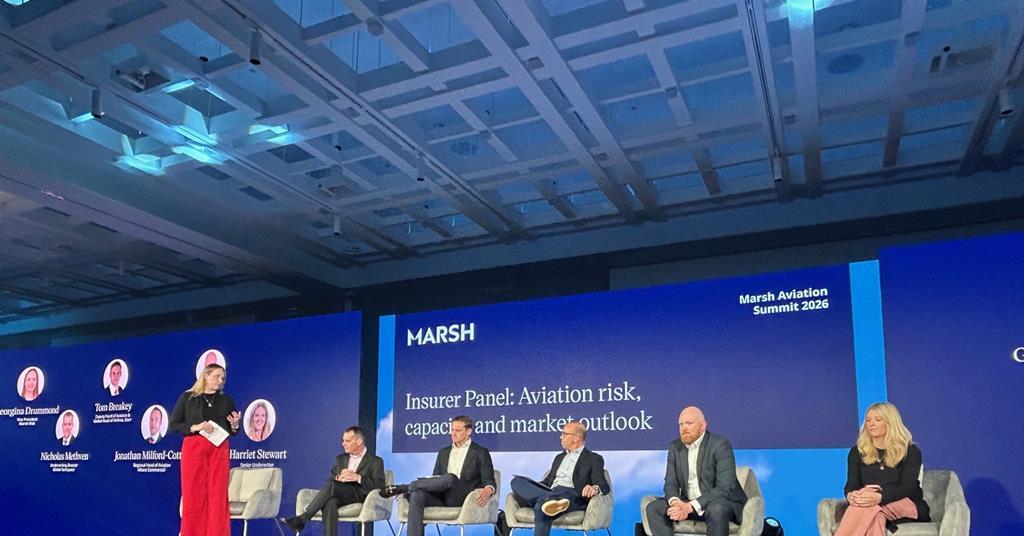
The skies are ever-changing, a dynamic arena of technological marvels and evolving risks. Yet, beneath the sleek, modern exteriors of today's aircraft and the sophisticated operations of global aviation lies a surprising anachronism: many of the insurance policy wordings governing this multi-billion-dollar industry were drafted decades ago. This stark disconnect is now prompting a fervent call to action from leading aviation underwriters, who argue that these foundational documents are "pretty much insignificant now" in the face of current sector realities.
Harriet Stewart, a senior underwriter at Convex Insurance, has emerged as a prominent voice in this growing chorus, advocating for a collaborative committee model to bring aviation insurance policies firmly into the 21st century. Her proposal, gaining traction across the market, underscores a critical need to eliminate ambiguity and adapt to the rapid pace of change in aircraft technology, operational complexities, and emerging perils.
The Looming Crisis of Obsolete Language
The core of the problem lies in the inherent inertia of legal and contractual language. While aviation technology has leaped from propeller planes to supersonic jets, from manual controls to highly automated systems, and from basic airframes to composite materials, the underlying insurance contracts have often remained static. These policies, crafted in an era vastly different from our own, struggle to adequately define and respond to contemporary risks such as cyber threats, advanced autonomous systems, new propulsion technologies, or even the nuanced liabilities associated with urban air mobility (UAM) and drones. The result is a landscape rife with potential for misinterpretation, disputes, and inadequate coverage, threatening the very stability of the aviation ecosystem.
Stewart highlights that the current wordings, often inheriting clauses from historical precedents, were never designed to anticipate the complexities introduced by fly-by-wire systems, AI-driven diagnostics, or the intricate supply chains that support global aviation today. When an incident occurs, the ambiguity in these outdated clauses can lead to protracted legal battles, delayed settlements, and a lack of clarity for both insurers and insureds. This not only erodes trust but also introduces significant financial uncertainty for airlines, manufacturers, and service providers.
The Collaborative Solution: A Path Forward
Recognizing the magnitude of the challenge, Stewart's proposal for a collaborative committee offers a pragmatic and inclusive solution. The idea is to bring together a diverse group of stakeholders – including underwriters, brokers, legal experts, aviation manufacturers, airlines, and regulatory bodies – to collectively review, revise, and standardize policy wordings. This multi-stakeholder approach is crucial because no single entity possesses all the necessary expertise to tackle such a broad and technical undertaking.
Historically, changes to policy wordings have often been incremental or driven by individual market players, leading to a patchwork of varying interpretations and clauses across different policies. A unified, collaborative effort, however, could establish a new industry benchmark, ensuring consistency and clarity across the board. This model has proven successful in other complex insurance lines where shared understanding and collective expertise are paramount.
Learning from History: Why Collaboration is Key
The aviation insurance market has a long history of adapting to catastrophic events and technological shifts. From the early days of flight to the advent of commercial jet travel, insurers have consistently had to innovate. However, the current pace of technological advancement, particularly in areas like digitization, automation, and sustainable aviation fuels, presents a challenge unlike any seen before. The traditional, reactive approach of updating policies only after a major incident is no longer sustainable.
Consider the rise of cyber warfare. A decade ago, the notion of an aircraft's systems being compromised remotely was largely theoretical. Today, it's a tangible threat that demands specific, clear policy language regarding cyber exclusions, indemnities, and business interruption coverage. Similarly, the proliferation of drones for commercial purposes, from logistics to infrastructure inspection, has created an entirely new risk profile that existing aviation policies struggle to encompass adequately.
Stewart emphasizes that a collaborative committee can draw upon the collective wisdom of the industry to proactively address these emerging risks. By pooling knowledge and foresight, the committee can develop forward-looking wordings that are flexible enough to accommodate future innovations while providing robust coverage for current exposures. This proactive stance is vital for maintaining the aviation sector's resilience.
Implications for the Global Aviation Sector
The successful overhaul of aviation policy wordings would have far-reaching positive implications. For airlines and aircraft operators, it would mean greater certainty in their coverage, reducing the risk of disputes and ensuring smoother claims processes. For manufacturers, clear policy language would help in defining liability and managing product risk more effectively, fostering innovation without undue financial burden.
For the insurance market itself, updated wordings would lead to a more stable and predictable underwriting environment. Reduced ambiguity means less litigation, more efficient capital deployment, and a healthier competitive landscape. Ultimately, this benefits the entire global economy, as efficient and reliable aviation insurance underpins international trade, travel, and logistics.
Moreover, this initiative could serve as a model for other specialized insurance lines grappling with the challenges of rapid technological change. The aviation sector, often at the forefront of innovation, has an opportunity to lead by example in demonstrating how an industry can collectively modernize its foundational contractual frameworks.
The Path Ahead: A Call to Action for All Stakeholders
The call for a collaborative committee is not merely a suggestion; it is an urgent imperative. The aviation industry is poised for unprecedented growth and transformation, driven by advancements in AI, sustainable propulsion, and autonomous flight. To fully realize this potential, the underlying financial and risk management frameworks must evolve in tandem. The current policy wordings, described as "pretty much insignificant now," represent a significant structural weakness that needs immediate attention.
As Harriet Stewart and others advocate, the time for individual, piecemeal adjustments is over. A concerted, industry-wide effort, leveraging the collective expertise of all stakeholders, is the only viable path to creating a robust, clear, and future-proof set of aviation insurance policy wordings. This collaborative endeavor will not only safeguard the industry against current ambiguities but also ensure its continued resilience and growth in the decades to come, allowing the skies to remain a domain of innovation and progress, backed by sound financial protection.
Stay Informed
Get the world's most important stories delivered to your inbox.
No spam, unsubscribe anytime.
Comments
No comments yet. Be the first to share your thoughts!