Beyond Instinct: How Bonobos Play and Chimps Reason, Redefining Our Closest Relatives
Recent groundbreaking research is shattering long-held beliefs about the cognitive abilities of great apes. From bonobos engaging in imaginative play to chimpanzees demonstrating rational decision-making, these findings reveal a profound depth of intelligence. This article explores how these discoveries are reshaping our understanding of ape minds and their striking similarities to human cognition.
For decades, the line between human and animal intelligence was drawn with a thick, indelible marker, placing Homo sapiens firmly at the apex of cognitive complexity. Yet, a quiet revolution has been brewing in primatology labs and wildlife sanctuaries, fueled by a series of astonishing discoveries that are not just blurring, but actively erasing that line. Our closest relatives, the great apes—bonobos, chimpanzees, gorillas, and orangutans—are proving to be far more sophisticated, empathetic, and even imaginative than we ever dared to imagine. The implications of these findings are profound, challenging our anthropocentric worldview and urging us to reconsider our ethical obligations to these remarkable beings.
The Playful Minds of Bonobos: Imagination Unleashed
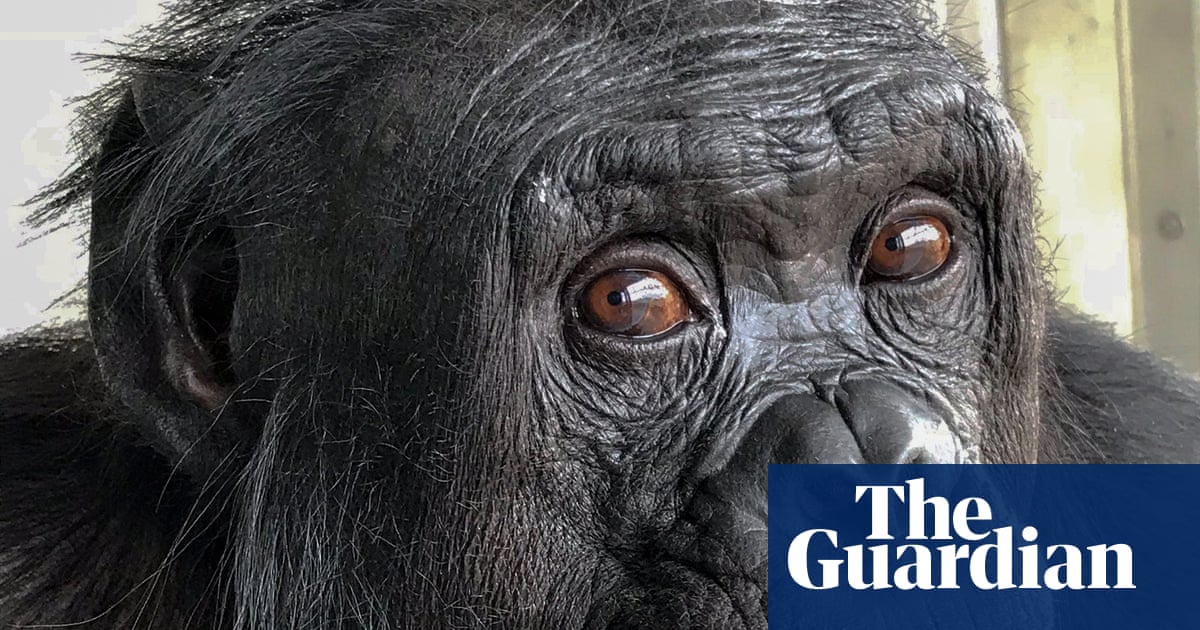
The scene in Des Moines, Iowa, was deceptively simple: clear plastic cups and pitchers on a wooden table. But the participant, a bonobo named Kanzi, wasn't just interacting with objects; he was engaging in a sophisticated act of pretend play. When offered a choice between an empty cup and one that had been 'filled' with invisible juice, Kanzi enthusiastically chose the latter, playing along with the human researcher. This wasn't mere mimicry; it was evidence of a mind capable of abstract thought, of creating and participating in a shared imaginary world. Such behavior, once considered uniquely human, suggests that bonobos possess a theory of mind—the ability to attribute mental states, beliefs, intents, desires, and knowledge to oneself and others—and the capacity for symbolic representation.
Further studies have corroborated these observations. Bonobos have been documented using tools not just for immediate tasks, but for future planning, and demonstrating complex communication skills, including understanding human speech and using lexigrams to express desires and intentions. Their highly social structures, characterized by matriarchal leadership and conflict resolution through non-aggressive means, further underscore their advanced cognitive and emotional intelligence. The ability to engage in pretend play is a hallmark of human development, crucial for social learning and problem-solving. Its presence in bonobos forces us to acknowledge a shared evolutionary heritage of imagination.
Chimpanzees: Rationality, Culture, and Self-Awareness
While bonobos charm with their playful imagination, chimpanzees impress with their strategic thinking and cultural nuances. Recent research has highlighted chimpanzees' capacity for rational decision-making, even in complex social scenarios. Studies involving economic games, for instance, have shown that chimpanzees can make choices that maximize their gains, demonstrating an understanding of fairness and reciprocity. They can learn from past mistakes, adapt strategies, and even deceive rivals, suggesting a sophisticated grasp of cause and effect and the mental states of others.
Beyond individual rationality, chimpanzees exhibit clear evidence of culture. Different chimp communities have distinct tool-use traditions, hunting techniques, and social customs that are passed down through generations, not genetically, but through social learning. For example, some groups use stones to crack nuts, while others use sticks to 'fish' for termites, and these practices vary geographically. This cultural transmission is a powerful indicator of advanced cognitive abilities, including observational learning, imitation, and teaching. Furthermore, experiments involving mirrors have repeatedly shown that chimpanzees possess self-awareness, recognizing their own reflection—a trait once thought to be exclusive to humans and a few other species.
Gorillas and Orangutans: Beyond the Stereotypes
Gorillas, often stereotyped as aggressive giants, have revealed a profound emotional depth and intellectual capacity. Dian Fossey's pioneering work, and subsequent research, has shown their complex social structures, strong family bonds, and ability to learn sign language. Koko, the famous gorilla, not only learned over 1,000 signs but also demonstrated an understanding of abstract concepts, humor, and even grief. Her ability to combine signs to create new meanings, such as 'finger bracelet' for a ring, showcased a creative linguistic capacity.
Orangutans, the solitary tree-dwellers of Borneo and Sumatra, are equally impressive. Their ability to construct elaborate nests, use tools for foraging, and navigate vast forest territories demonstrates exceptional spatial memory and problem-solving skills. Studies have also shown their capacity for future planning, such as preparing tools for a task they anticipate performing later. Their quiet intelligence and independent nature often lead to their cognitive abilities being underestimated, yet they are masterful strategists in their arboreal world.
The Ethical Imperative: Redefining Our Relationship
The cumulative weight of these findings—from bonobos' pretend play and empathy to chimpanzees' rationality and culture, gorillas' linguistic prowess, and orangutans' foresight—paints a picture of beings far more like us than previously conceived. They experience emotions, form complex social bonds, solve problems, and even engage in abstract thought. This scientific re-evaluation carries significant ethical implications.
If great apes possess such advanced cognitive and emotional capacities, then our treatment of them, particularly in captivity or in the face of habitat destruction, becomes a pressing moral issue. The concept of personhood for great apes, granting them certain fundamental rights, is gaining traction in legal and philosophical circles. Conservation efforts, already critical, take on an even greater urgency when we acknowledge the intricate minds and nascent cultures we are at risk of losing.
Key Takeaways: * Imaginative Play: Bonobos engage in pretend play, suggesting advanced theory of mind and symbolic thought. * Rationality & Culture: Chimpanzees exhibit rational decision-making, cultural transmission of knowledge, and self-awareness. * Emotional Depth: Gorillas demonstrate complex communication and emotional intelligence. * Foresight: Orangutans show evidence of future planning and sophisticated problem-solving. * Ethical Considerations: These findings necessitate a re-evaluation of ape welfare, conservation, and the concept of personhood.
A Shared Evolutionary Tapestry
The ongoing discoveries about great ape intelligence are not just fascinating scientific anecdotes; they are profound insights into the very nature of intelligence and consciousness. They remind us that the human mind, while uniquely complex in certain aspects, is part of a broader evolutionary tapestry. By understanding the cognitive depths of our closest relatives, we gain a deeper understanding of ourselves and our place in the natural world. The challenge now is to translate this newfound knowledge into meaningful action, ensuring that these extraordinary beings are given the respect, protection, and freedom they so clearly deserve, allowing their complex minds to thrive for generations to come.
Stay Informed
Get the world's most important stories delivered to your inbox.
No spam, unsubscribe anytime.
Comments
No comments yet. Be the first to share your thoughts!