Beyond Prompts: Mira Murati and OpenAI's Quest for 'Always-On' AI
OpenAI's former CTO, Mira Murati, is spearheading a paradigm shift in artificial intelligence, moving beyond the traditional 'request-response' model. This new generation of AI aims to be continuously present and contextually aware, fostering more natural and intuitive human-AI interactions. The development signifies a major leap towards AI systems that anticipate needs and integrate seamlessly into daily life, promising a future where AI acts as a constant, intelligent companion.
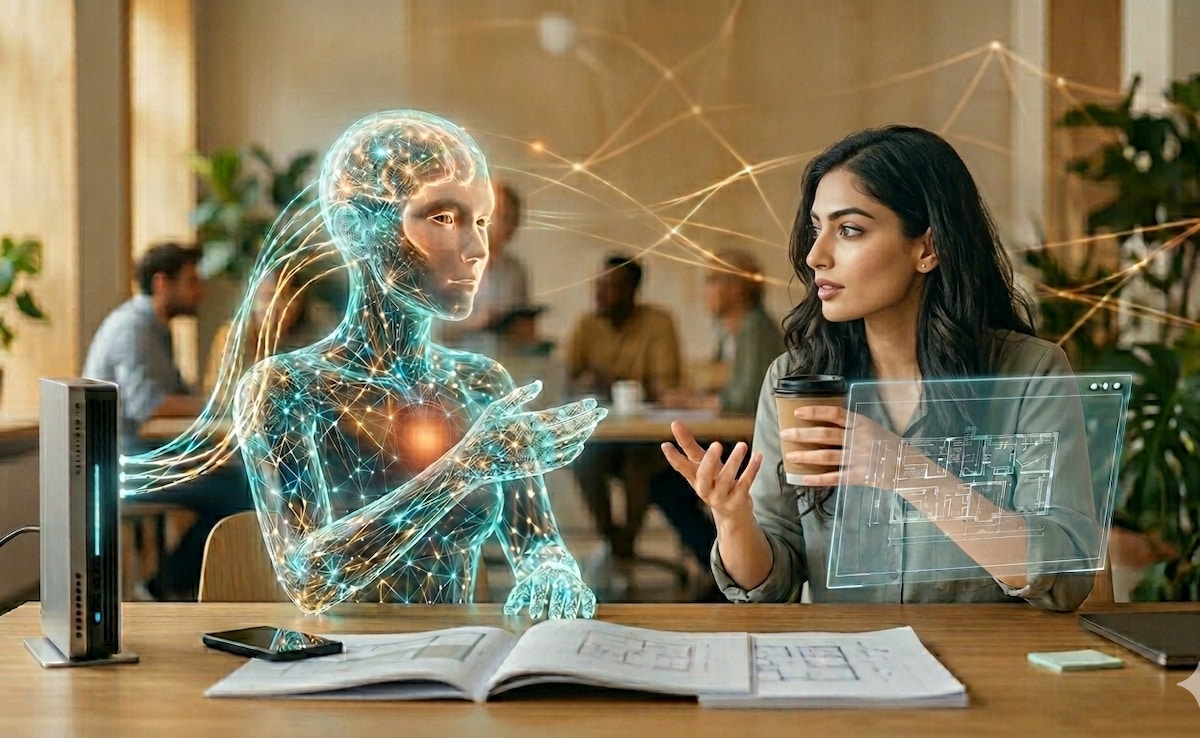
For the past two years, the artificial intelligence revolution has largely operated on a 'walkie-talkie' model: you speak, the AI listens, processes, and then replies. This transactional exchange, familiar to users of ChatGPT, Gemini, Claude, and Grok, has defined our initial interactions with generative AI. However, a seismic shift is underway in Silicon Valley, led by figures like OpenAI's former Chief Technology Officer, Mira Murati. The new frontier isn't just about faster, smarter responses, but about creating AI that is continuously present, contextually aware, and capable of sustained, proactive engagement. This evolution promises to transform AI from a tool we actively summon into an intelligent companion that anticipates our needs and integrates seamlessly into our lives.
The Limitations of the 'Walkie-Talkie' Model
The current generation of AI, while revolutionary, operates with inherent limitations. Each interaction is largely discrete; the AI processes a prompt, generates a response, and then effectively 'forgets' the immediate context unless explicitly reminded or prompted again. This stateless nature, while efficient for many tasks, creates a disjointed user experience. Imagine a human conversation where you have to re-introduce yourself or the topic every few sentences – it would be exhausting and inefficient. This is precisely the challenge developers are now tackling. The 'walkie-talkie' model, where the AI stops, listens, thinks, and replies, then waits, is giving way to a vision of AI that is always 'on,' always 'listening' (in a privacy-preserving way), and always ready to contribute meaningfully to an ongoing task or conversation. This move from episodic interaction to persistent presence marks a critical inflection point in AI development.
Historically, AI advancements have often focused on improving specific capabilities: better natural language understanding, more sophisticated image generation, or enhanced predictive analytics. The shift Murati and her team are pursuing, however, is more fundamental. It's about changing the very nature of the interaction, moving from a command-and-response dynamic to a more fluid, collaborative relationship. This requires not just advanced algorithms but also a deep understanding of human psychology and interaction patterns.
The Vision of 'Always-On' AI
The concept of 'always-on' AI envisions systems that maintain a continuous understanding of the user's context, goals, and even emotional state. This doesn't mean constant surveillance, but rather a sophisticated ability to retain and leverage information across interactions, much like a human assistant would. Instead of repeatedly providing background information, the AI would already possess it, allowing for more efficient and natural dialogue. For instance, an AI assisting with a complex project could remember previous discussions, access relevant documents, and proactively suggest next steps, rather than waiting for explicit prompts. This level of contextual awareness is paramount to achieving true human-like interaction.
Murati's work at OpenAI, particularly with models like GPT-4o, hints at this future. These models are designed to handle multimodal inputs – voice, text, vision – and respond with greater fluidity and emotional nuance. The goal is to make the AI feel less like a machine and more like a sentient entity capable of genuine engagement. This involves not just understanding what is said, but how it's said, inferring intent, and even anticipating needs based on observed patterns. The implications for productivity, accessibility, and personal assistance are profound, offering a glimpse into a future where AI becomes an indispensable, seamless extension of our cognitive abilities.
Technical Hurdles and Ethical Considerations
Building AI that stays 'present' is a monumental technical challenge. It requires significant advancements in memory management, real-time processing, and contextual reasoning. Current AI models, despite their power, struggle with long-term memory and maintaining consistent 'personalities' or knowledge bases across extended conversations. Developing architectures that can efficiently store, retrieve, and update vast amounts of user-specific context without overwhelming computational resources is a key hurdle. Furthermore, ensuring privacy and data security becomes even more critical when AI systems are designed to be continuously attentive. Robust ethical frameworks and transparent data handling policies are not just desirable but essential to build user trust.
Beyond the technical, the ethical implications are vast. The idea of an AI that is always 'listening' or 'present' raises concerns about surveillance, autonomy, and the potential for over-reliance. Developers must grapple with questions of agency: how much decision-making power should these 'always-on' AIs have? How do we prevent them from becoming intrusive or manipulative? The design must prioritize user control and provide clear mechanisms for opting in and out of persistent engagement. The balance between helpfulness and intrusiveness will define the success and acceptance of this new generation of AI.
The Future of Human-AI Collaboration
This shift towards 'always-on' AI is not merely an incremental improvement; it represents a fundamental redefinition of the human-AI interface. It moves us from a world of discrete queries to one of continuous collaboration, where AI acts less like a search engine and more like a highly intelligent, proactive partner. Imagine a future where your AI assistant not only schedules your meetings but also proactively summarizes relevant documents before each one, reminds you of key discussion points, and even drafts follow-up emails based on the meeting's flow. This level of integration promises to unlock unprecedented levels of efficiency and creativity.
The impact will be felt across industries, from healthcare, where AI could continuously monitor patient data and alert professionals to subtle changes, to education, where personalized AI tutors could adapt in real-time to a student's learning pace and difficulties. The ultimate goal is to create AI that feels less like a separate entity and more like an intuitive extension of ourselves, augmenting our capabilities without replacing our agency. As Mira Murati and others push the boundaries of what AI can be, we are entering an era where the lines between human and artificial intelligence become increasingly blurred, paving the way for a truly symbiotic future. The journey from walkie-talkie to seamless companion is just beginning, and its implications will reshape our world in profound ways.
Stay Informed
Get the world's most important stories delivered to your inbox.
No spam, unsubscribe anytime.
Comments
No comments yet. Be the first to share your thoughts!