Beyond the Handshake: Unpacking the Reality of Trump's China Deals
President Trump's visit to Beijing was marked by optimistic rhetoric and high-profile deal announcements, yet a closer look reveals a complex landscape beneath the surface. While the White House touted billions in agreements, many were non-binding MOUs or pre-existing commitments. This article delves into the true nature of these 'deals' and their long-term implications for the intricate U.S.-China relationship.
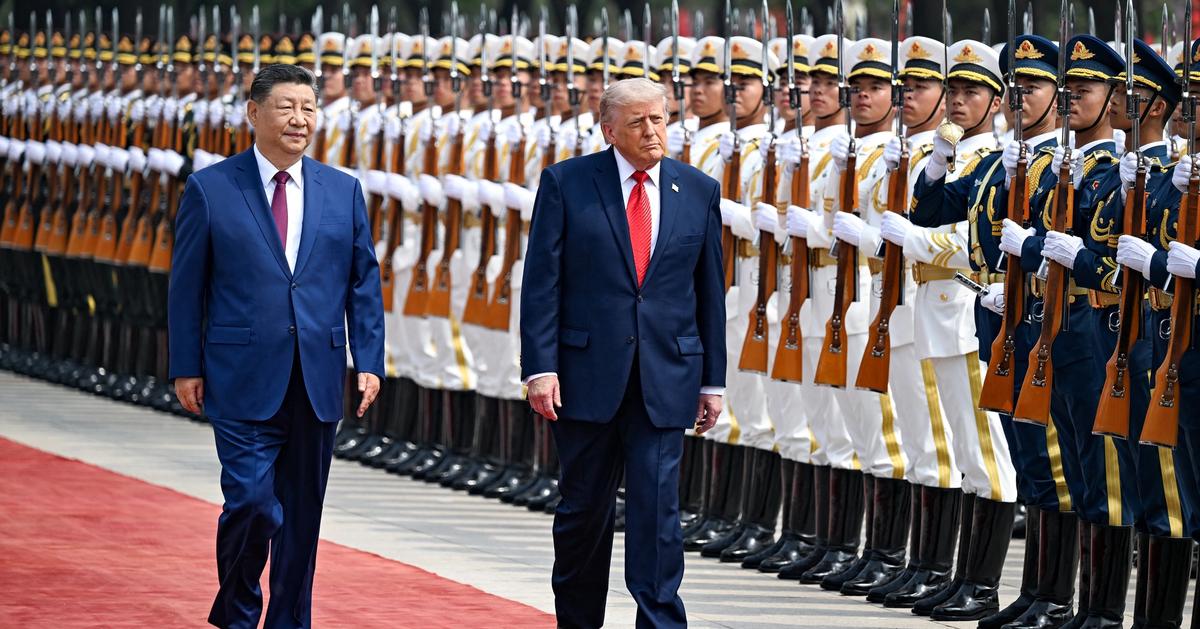
In the gilded halls of Beijing, President Donald Trump toasted “the rich and enduring ties between the American and Chinese people,” extending an invitation to Chinese leader Xi Jinping for a September visit to the White House. The optics were grand, the rhetoric effusive, and the White House proudly announced a staggering $250 billion in new deals during Trump’s November 2017 visit. Yet, beneath the celebratory toasts and photo opportunities, a more nuanced and, at times, skeptical reality began to emerge regarding the true nature and impact of these much-hyped agreements. Were these deals a genuine breakthrough, or merely a diplomatic flourish designed to project an image of progress while deeper structural issues remained unaddressed?
The Grand Announcement: Billions on Paper
The initial headlines painted a picture of unprecedented economic cooperation. The White House press office released a flurry of announcements, detailing agreements across various sectors, from energy and aviation to agriculture and technology. Companies like Boeing, General Electric, and Qualcomm were prominently featured, seemingly securing lucrative contracts that promised to boost American exports and create jobs. The sheer volume of the announced figure – a quarter of a trillion dollars – was designed to impress, signaling a new era of economic partnership and a potential rebalancing of the trade deficit, a key campaign promise of President Trump. For many, this was seen as a tangible outcome, proof that direct, high-level engagement could yield significant commercial benefits. However, a closer examination reveals that the majority of these agreements were not concrete, legally binding contracts in the traditional sense.
The Devil in the Details: MOUs and Non-Binding Pledges
Upon closer scrutiny, a significant portion of the announced deals were revealed to be Memoranda of Understanding (MOUs), letters of intent, or non-binding framework agreements. These are essentially expressions of interest or preliminary commitments, not finalized contracts with immediate financial implications. For instance, a major energy deal involving China Energy Investment Corp. and West Virginia was a long-term investment pledge over decades, not an immediate cash infusion. Similarly, many aviation deals were for planes already in Boeing's order backlog, simply being formally announced during the visit. This distinction is crucial: an MOU signifies an intention to negotiate, not a done deal. While they can lay the groundwork for future transactions, they carry no legal obligation and can easily fall through if conditions change or negotiations falter. This practice is common in international diplomacy, where leaders often seek to showcase progress through such preliminary agreements, but it also means that the immediate economic impact is often far less than the headline figures suggest. The "deal-making" narrative often overshadowed the actual substance, leading to an inflated perception of success.
Historical Context: A Pattern of Promises
This phenomenon is not unique to the Trump administration. Previous U.S. presidential visits to China have often been accompanied by similar announcements of large-scale commercial agreements. During President George W. Bush's visit in 2005, for example, Boeing announced a deal for 70 aircraft worth $4 billion. President Obama's 2009 trip saw similar pledges. This pattern suggests that such deal announcements are often a standard feature of high-level bilateral engagements, serving a dual purpose: to provide positive talking points for the visiting leader and to demonstrate goodwill from the host nation. China, in particular, has a history of using such opportunities to signal its openness to foreign investment and its commitment to international trade, even as underlying trade imbalances and market access issues persist. These announcements often reflect a carefully choreographed diplomatic dance, where both sides seek to maximize positive perceptions while navigating complex geopolitical and economic realities. The challenge for observers is to discern genuine progress from diplomatic theater.
Beyond Commerce: Geopolitical Undercurrents and Unresolved Tensions
While the economic deals dominated the headlines, the broader geopolitical context of the U.S.-China relationship remained fraught with tension. Issues such as intellectual property theft, forced technology transfer, market access barriers for American companies, and China's industrial policies (like "Made in China 2025") were largely sidestepped or addressed with vague promises. The Trump administration's focus on bilateral trade deficits, while politically resonant, often obscured these deeper, more systemic issues that continue to strain the relationship. Furthermore, human rights concerns, China's actions in the South China Sea, and its growing military assertiveness were also relegated to the background during the commercial fanfare. The transactional nature of the visit, heavily focused on immediate economic gains, arguably allowed China to avoid more substantive discussions on these contentious issues, which ultimately contribute to a less level playing field for American businesses and broader strategic competition. The "rich and enduring ties" lauded by Trump often felt conditional, dependent on China's willingness to make concessions on trade, rather than reflecting a deeper alignment of values or strategic interests.
The Long-Term Implications and a Path Forward
The true measure of these deals, and indeed of the entire visit, lies not in the immediate dollar figures but in their long-term impact on the U.S.-China economic relationship. Many analysts concluded that while the visit provided a temporary reprieve and a platform for dialogue, it did little to fundamentally alter the trajectory of trade imbalances or address the structural issues that fuel bilateral friction. The subsequent years saw the U.S. initiate a trade war with China, imposing tariffs on hundreds of billions of dollars worth of Chinese goods, demonstrating that the optimistic rhetoric of 2017 ultimately gave way to a more confrontational approach. This suggests that the underlying economic grievances were not resolved by the initial wave of deal announcements. For American businesses, the challenge remains navigating a complex and often opaque Chinese market, where foreign companies frequently face disadvantages compared to domestic counterparts. Moving forward, a sustainable U.S.-China economic relationship requires more than grand announcements; it demands consistent, robust negotiation on issues of market access, intellectual property protection, and fair competition. It also necessitates a clear-eyed understanding that economic engagement cannot exist in a vacuum, separate from geopolitical realities and fundamental differences in governance and values. The "enduring ties" must be built on a foundation of genuine reciprocity and a commitment to addressing the root causes of friction, rather than simply celebrating preliminary agreements.
Ultimately, while the Trump administration's Beijing visit generated significant commercial buzz, the reality of its deals was more symbolic than substantive. They served as a temporary balm, offering a narrative of progress but failing to address the deep-seated structural issues that continue to define the world's most critical bilateral relationship. The path to a truly balanced and mutually beneficial U.S.-China economic future remains long and fraught with challenges, requiring sustained diplomatic effort and a clear strategy beyond the allure of headline-grabbing figures.
Stay Informed
Get the world's most important stories delivered to your inbox.
No spam, unsubscribe anytime.
Comments
No comments yet. Be the first to share your thoughts!