Beyond the Screen: How GE Aerospace's AR Innovations are Revolutionizing Industry at CES
At CES in Las Vegas, GE Aerospace unveiled groundbreaking augmented reality (AR) applications, demonstrating how smart glasses are transforming complex industrial tasks. From intricate jet engine maintenance to advanced manufacturing, these innovations promise unprecedented efficiency and safety. This deep dive explores the technology's potential to redefine human-machine interaction across critical sectors, signaling a new era for industrial operations.
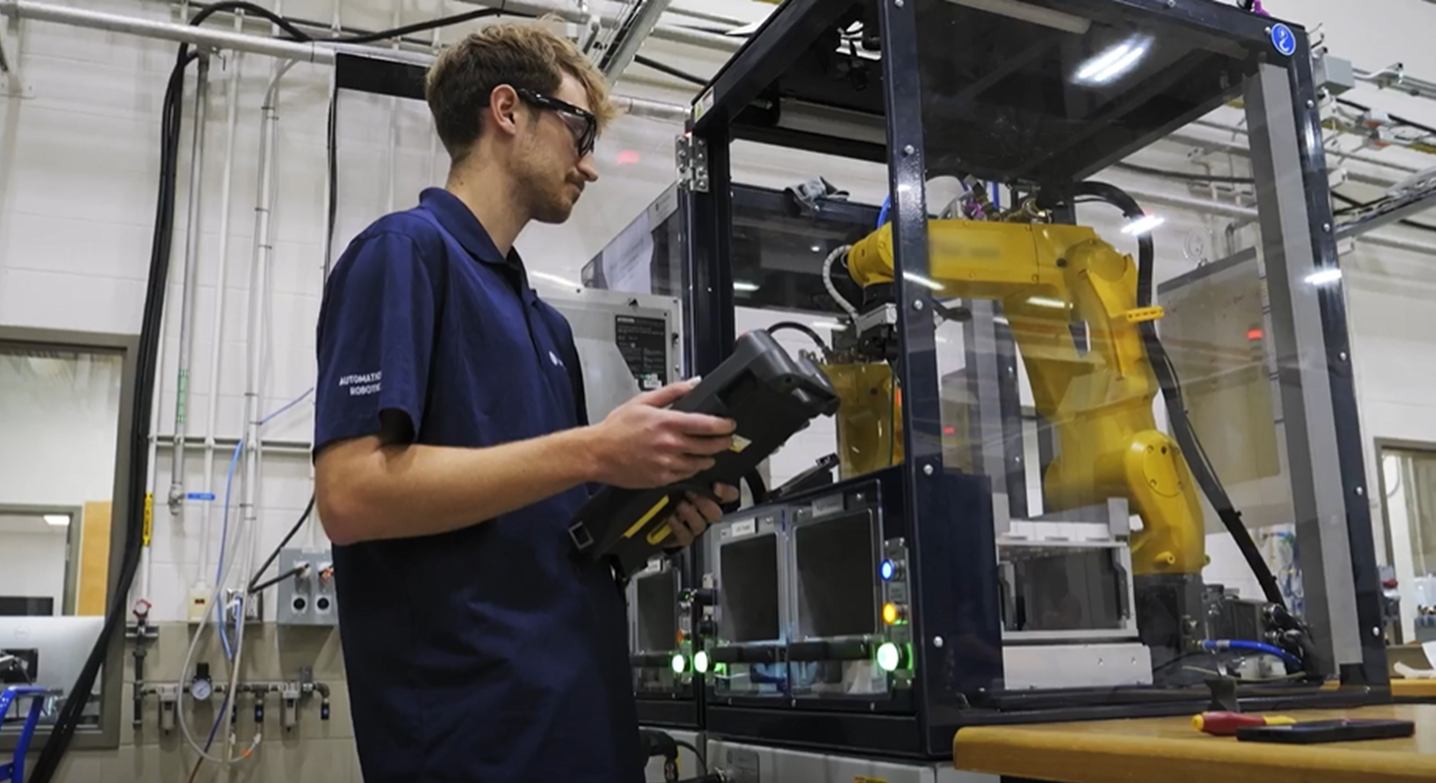
The Consumer Electronics Show (CES) in Las Vegas is often synonymous with sleek gadgets, futuristic smart homes, and the latest in personal tech. Yet, amidst the dazzling array of consumer innovations, a quiet revolution was brewing in PwC’s Business Acceleration Lounge this past January. Here, GE Aerospace showcased a suite of augmented reality (AR) demonstrations that transcended mere novelty, offering a profound glimpse into the future of industrial operations. Attendees, many donning "smart glasses," experienced firsthand how this technology is poised to redefine everything from complex maintenance procedures to advanced manufacturing processes.
The Dawn of Industrial AR: A Paradigm Shift
For decades, the industrial sector has grappled with the inherent complexities of its machinery and processes. From sprawling factories to intricate aircraft engines, the sheer volume of information and the precision required for maintenance, assembly, and training have presented significant challenges. Traditionally, these tasks relied on bulky manuals, static diagrams, and often, the slow, costly process of hands-on, one-on-one training. The introduction of augmented reality, particularly through devices like smart glasses, marks a pivotal shift. It’s not just about overlaying digital information onto the real world; it’s about creating an intuitive, hands-free interface that empowers workers with real-time, context-aware guidance.
GE Aerospace, a titan in aviation technology, is at the forefront of this transformation. Their demonstrations at CES were not theoretical concepts but practical applications designed to solve real-world industrial problems. Imagine a technician performing a meticulous inspection on a jet engine. Instead of flipping through pages or consulting a separate screen, their smart glasses project step-by-step instructions directly into their field of view, highlighting specific components, displaying torque specifications, and even offering visual cues for correct tool usage. This immediate access to critical data minimizes errors, reduces training time, and significantly boosts operational efficiency. This convergence of physical and digital realms, often termed cyber-physical systems, is no longer the stuff of science fiction but an emerging reality that promises to unlock unprecedented levels of productivity and precision.
From Jet Engines to Factory Floors: Diverse Applications
The versatility of GE Aerospace's AR solutions extends far beyond the confines of aircraft maintenance. The core principle – delivering critical information directly to the point of need – has implications across a spectrum of industrial applications. One compelling use case involves manufacturing assembly. In complex assembly lines, workers often need to follow intricate sequences, identify specific parts from a vast inventory, and ensure precise alignment. AR glasses can guide them through each step, overlaying virtual models onto physical components, confirming correct part selection, and even providing visual feedback on quality control.
Another significant area is remote assistance and collaboration. In a globalized world, expertise is often geographically dispersed. When a critical piece of machinery breaks down in a remote location, bringing an expert onsite can be time-consuming and expensive. With AR glasses, a local technician can share their live field of view with an expert thousands of miles away. The expert can then annotate the technician's view, draw arrows, highlight components, and provide verbal instructions, effectively guiding them through the repair process as if they were standing side-by-side. This capability drastically reduces downtime and enhances problem-solving efficiency, particularly in industries with high-value assets and dispersed operations.
The demonstrations also hinted at applications in training and skill development. Traditional industrial training can be resource-intensive, requiring specialized equipment and dedicated instructors. AR offers an immersive, interactive, and cost-effective alternative. Trainees can practice complex procedures in a safe, simulated environment, receiving real-time feedback and guidance. This accelerates the learning curve, improves knowledge retention, and ensures a highly skilled workforce ready to tackle the demands of modern industry. The potential for gamified training within AR environments also holds promise for engaging younger generations into technical fields.
The Technology Underpinning the Revolution
The efficacy of GE Aerospace's AR solutions hinges on several key technological advancements. At its core are the smart glasses themselves, which have evolved significantly from early, often clunky prototypes. Modern industrial AR headsets boast improved optics, wider fields of view, longer battery life, and enhanced processing power. Crucially, they integrate sophisticated computer vision algorithms that allow them to accurately track the user's environment and overlay digital content with remarkable precision. This spatial awareness is paramount for industrial applications where even millimeter-level discrepancies can have significant consequences.
Furthermore, the solutions leverage robust cloud computing infrastructure to store and deliver vast amounts of data, from 3D models and repair manuals to real-time sensor readings. Artificial intelligence (AI) plays an increasingly vital role, enabling predictive maintenance by analyzing equipment data and suggesting proactive interventions, or even recognizing complex patterns to assist in quality inspection. The seamless integration of these technologies – hardware, software, cloud, and AI – is what transforms a simple display into a powerful industrial tool. Data security and privacy are also paramount considerations, especially when dealing with proprietary industrial processes and sensitive operational data, necessitating robust encryption and access controls.
Challenges and the Road Ahead
While the potential of industrial AR is immense, its widespread adoption is not without challenges. Cost remains a significant factor, as high-end industrial AR headsets and custom software development can represent a substantial investment for businesses. Ergonomics and user acceptance are also critical; devices must be comfortable for extended wear and intuitive to use, especially for workers who may not be digitally native. Integration with existing legacy systems and IT infrastructure presents another hurdle, requiring careful planning and interoperability solutions.
Despite these challenges, the trajectory for industrial AR is unequivocally upward. Market research firm Statista projects the global augmented reality market to reach over $340 billion by 2028, with a significant portion attributed to enterprise and industrial applications. GE Aerospace's demonstrations at CES serve as a powerful testament to this future. By focusing on practical, problem-solving applications, they are paving the way for a new era of industrial efficiency, safety, and human empowerment. The vision is clear: AR will not replace human workers but augment their capabilities, transforming them into super-technicians, super-engineers, and super-assemblers, equipped with an unprecedented level of information and guidance. This isn't just about technology; it's about redefining the very nature of work in the industrial landscape, making it smarter, safer, and more productive than ever before.
Stay Informed
Get the world's most important stories delivered to your inbox.
No spam, unsubscribe anytime.
Comments
No comments yet. Be the first to share your thoughts!