Beyond the Summit: How Trump-Xi's 'Managed Stabilization' Reshapes the Horn of Africa
The Trump-Xi summit of May 2026, hailed as a 'managed stabilization,' has sent ripples far beyond Washington and Beijing. While avoiding major rupture, the delicate balance struck between the two superpowers is profoundly altering geopolitical dynamics, particularly in the strategically vital Horn of Africa. This region, already a crucible of international competition, now faces intensified peripheral contestation as global powers recalibrate their influence and proxy engagements.
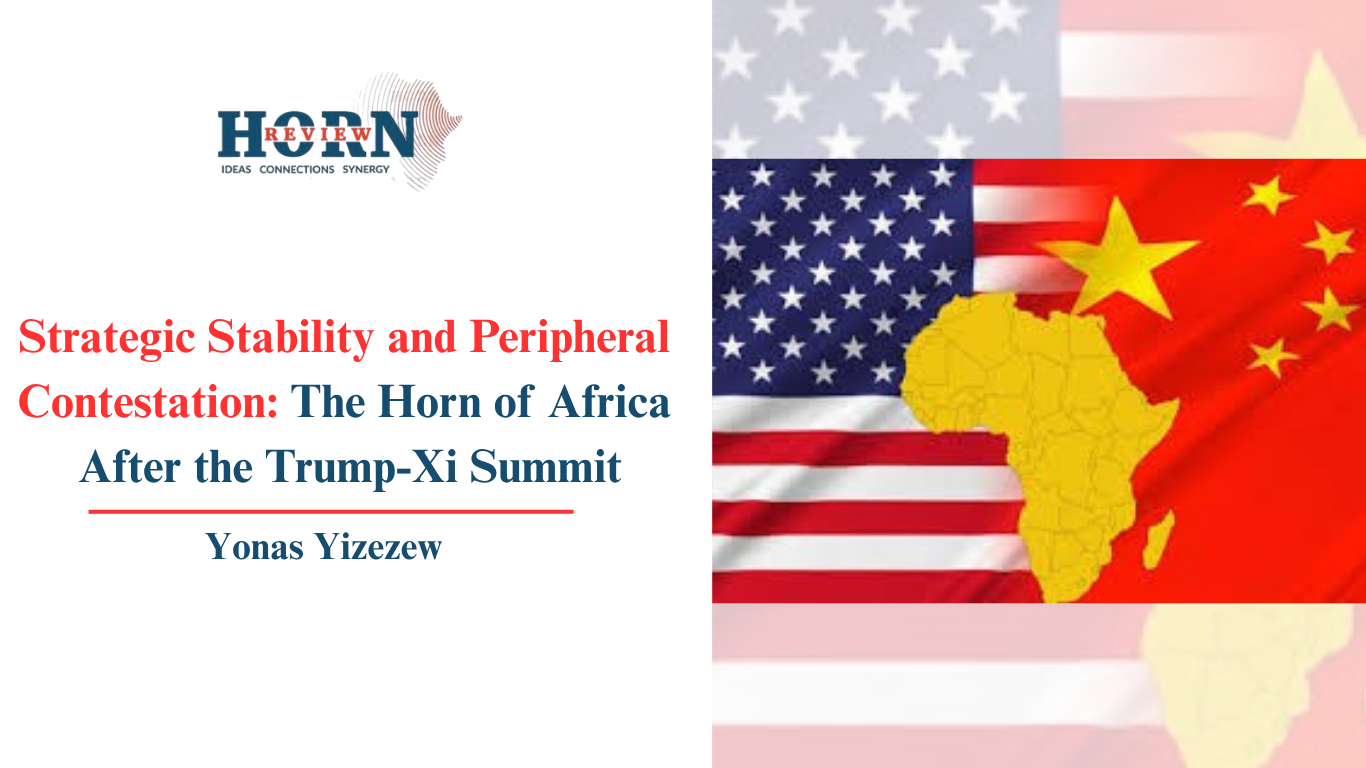
The highly anticipated Trump-Xi summit of May 14–15, 2026, concluded not with the dramatic breakthrough many hoped for, nor the catastrophic rupture some feared, but with a carefully orchestrated “managed stabilization.” Both Washington and Beijing quickly framed the outcome as a success, with China’s Foreign Ministry describing it as leaders agreeing on “a new vision of a constructive relationship.” Yet, beneath the veneer of diplomatic cordiality, the summit’s true implications are only now beginning to cascade across the globe, nowhere more acutely than in the strategically vital and historically volatile Horn of Africa. This region, already a complex mosaic of internal conflicts, external interventions, and burgeoning economic interests, finds itself at the epicenter of a recalibrated great power rivalry, where the pursuit of stability at the core translates into intensified contestation at the periphery.
The Delicate Balance: Summit Outcomes and Global Repercussions
The Trump-Xi summit’s primary achievement was the establishment of a “crisis management framework” designed to prevent direct confrontation between the United States and China. This framework includes new communication channels, protocols for military encounters, and a commitment to de-escalate trade disputes through structured dialogue. While this averted a potential global economic meltdown and reduced the immediate risk of military conflict, it did not resolve fundamental disagreements over Taiwan, the South China Sea, or technological supremacy. Instead, it created a tacit understanding: direct confrontation is too costly, but competition for influence is not only permissible but expected. This subtle shift has profound implications for regions where both powers seek to expand their footprint without directly clashing.
For the Horn of Africa, this managed stabilization means that the U.S. and China are now less likely to directly challenge each other’s core interests in the region, but more likely to engage in indirect competition through economic leverage, diplomatic maneuvering, and support for regional proxies. The summit’s outcome essentially greenlighted a continuation of the “Great Game” in a new guise, where the battle for resources, strategic ports, and political allegiance intensifies without drawing the direct attention of Washington or Beijing’s top leadership. The focus has shifted from overt confrontation to a more nuanced, yet equally potent, struggle for influence.
The Horn of Africa: A Crucible of Competing Interests
The Horn of Africa—comprising nations like Ethiopia, Eritrea, Somalia, Djibouti, and Sudan—is a geopolitical linchpin. Its strategic location astride the Bab-el-Mandeb strait, a crucial chokepoint for global shipping and energy transit, makes it indispensable for international trade and security. Furthermore, the region is rich in untapped natural resources and offers burgeoning markets, attracting significant foreign investment.
Historically, the Horn has been a battleground for external powers, from the Cold War superpowers to regional hegemons. In recent decades, China has emerged as a dominant economic player, investing heavily in infrastructure, mining, and energy projects. Its Belt and Road Initiative (BRI) has seen the construction of railways, ports, and industrial parks, significantly enhancing its economic and political sway. Djibouti, hosting China’s first overseas military base, exemplifies Beijing’s growing security footprint. The U.S., while maintaining a military presence (e.g., Camp Lemonnier in Djibouti), has traditionally focused on counter-terrorism and regional stability, often through security assistance and diplomatic engagement.
Post-summit, the U.S. strategy appears to be adapting. Rather than directly confronting China’s economic dominance, Washington is likely to focus on strengthening alliances with key regional partners, promoting alternative development models, and leveraging its soft power through humanitarian aid and democratic governance initiatives. This shift aims to counter China’s influence by offering a different kind of partnership, one that emphasizes transparency, human rights, and sustainable development, contrasting with China's often less conditional aid and investment.
Intensified Peripheral Contestation: New Battlegrounds
The managed stabilization at the core has inadvertently intensified peripheral contestation in the Horn. This manifests in several ways:
* Economic Competition: While China continues its large-scale infrastructure projects, the U.S. and its allies are likely to increase their own investment, often through multilateral institutions or private sector initiatives, focusing on sectors like technology, renewable energy, and digital infrastructure. The competition for contracts and market access will become fiercer, with regional governments caught between competing offers. * Security Dilemmas: Both powers will continue to support regional security forces, but with a renewed emphasis on strategic alignment. The U.S. might increase its military training programs and intelligence sharing with partners like Kenya and Ethiopia, while China could expand its security cooperation and arms sales to nations seeking to diversify their defense procurement. This could inadvertently fuel regional arms races and exacerbate existing conflicts. * Diplomatic Scramble: Expect a surge in high-level diplomatic visits, bilateral agreements, and multilateral engagements from both Washington and Beijing. Each will seek to win over regional leaders, offering incentives ranging from debt relief to technological assistance. The competition for votes in international forums and support for specific regional policies will intensify. * Proxy Engagements: The most concerning aspect is the potential for increased reliance on proxy actors. As direct confrontation is avoided, both the U.S. and China might subtly back different factions or political movements within the region, exacerbating internal divisions and potentially prolonging conflicts. For instance, in Sudan or Ethiopia, external support for one party over another could destabilize fragile peace processes.
Implications for Regional Actors and the Future
For the nations of the Horn of Africa, the post-summit landscape presents both opportunities and risks. On one hand, the intensified competition could lead to increased foreign investment, improved infrastructure, and greater diplomatic attention. Regional leaders might skillfully play one power against the other to secure better deals and concessions. On the other hand, the region risks becoming a pawn in a larger geopolitical game, with its internal conflicts potentially manipulated by external actors. The focus on strategic competition could overshadow genuine efforts to address pressing humanitarian crises, climate change impacts, and governance challenges.
The future of the Horn of Africa will largely depend on the ability of its leaders to navigate this complex environment. Developing diversified partnerships, strengthening regional institutions, and prioritizing internal stability will be crucial. The managed stabilization between Trump and Xi has not brought peace to the periphery; rather, it has redefined the terms of engagement, ushering in an era of more subtle, yet equally profound, geopolitical contestation. The world watches as the Horn of Africa grapples with its newfound centrality in a delicately balanced, yet intensely competitive, global order.
Stay Informed
Get the world's most important stories delivered to your inbox.
No spam, unsubscribe anytime.
Comments
No comments yet. Be the first to share your thoughts!