Binghamton's Innovation Ecosystem: From Lab Bench to Global Impact
Binghamton University's third annual Innovation to Impact Symposium recently celebrated groundbreaking advancements, honoring 20 inventors for their 2025 patents. This event highlights a robust ecosystem fostering cutting-edge research, from cancer cell vaccines to sustainable technologies. The symposium underscores the critical role of academic institutions in driving innovation that addresses pressing global challenges and translates scientific discovery into tangible societal benefits.
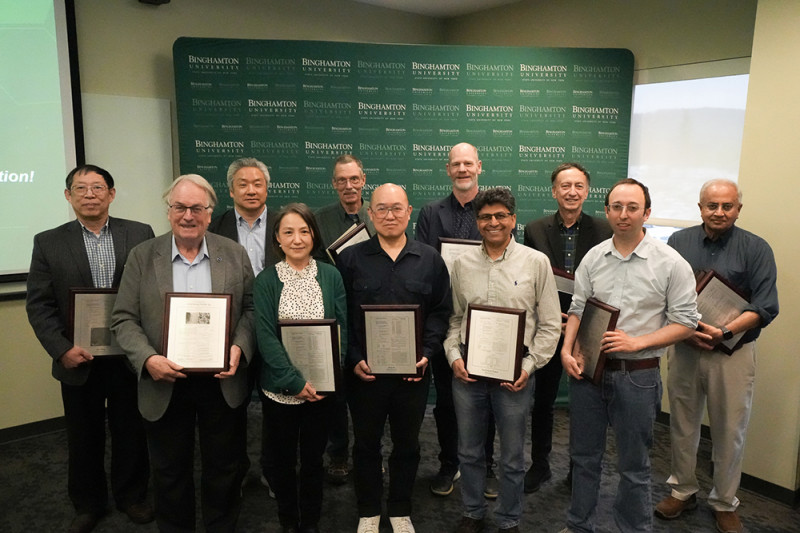
In an era defined by rapid technological advancement and complex global challenges, the ability to innovate is not merely an advantage but a necessity. Academic institutions, often seen as ivory towers of theoretical knowledge, are increasingly proving to be dynamic crucibles where groundbreaking ideas are forged and transformed into real-world solutions. Binghamton University, a leading public research university, recently underscored this vital role with its third annual Innovation to Impact Symposium, an event that not only celebrated past achievements but also cast a forward-looking gaze on the future of discovery.
The symposium, a cornerstone of Binghamton's commitment to fostering a vibrant research culture, brought together a diverse cohort of faculty and student researchers. The air buzzed with excitement as twenty Binghamton inventors were recognized for their 2025 patents – a testament to the university's prolific output in intellectual property. These patents, spanning a broad spectrum of disciplines, represent the culmination of years of dedicated research, experimentation, and perseverance. From novel approaches to cancer cell vaccines that promise to revolutionize oncology, to sustainable energy solutions and advanced materials, the breadth of innovation on display was truly remarkable. This annual gathering serves as a critical platform, bridging the gap between scientific inquiry and practical application, ensuring that academic breakthroughs don't remain confined to laboratories but instead make a tangible difference in society.
The Engine of Discovery: Fueling Future Breakthroughs
At the heart of Binghamton's success lies a deeply ingrained culture of curiosity and collaboration. The university actively encourages interdisciplinary research, understanding that many of today's most complex problems require insights from multiple fields. This approach is evident in the diverse nature of the patents recognized. For instance, developing a new cancer cell vaccine might involve expertise from immunology, molecular biology, bioengineering, and even data science for clinical trials. This collaborative spirit is not limited to faculty; student researchers are integral to this ecosystem, often working alongside seasoned professors, bringing fresh perspectives and boundless energy to projects.
Indeed, the recognition of student inventors at the symposium highlights a crucial aspect of Binghamton's strategy: nurturing the next generation of innovators. Providing students with early exposure to cutting-edge research, mentorship, and the patenting process instills a sense of purpose and equips them with invaluable skills. This hands-on experience transforms theoretical learning into practical application, preparing them for careers in research, industry, or entrepreneurship. The university's investment in state-of-the-art facilities, combined with robust funding opportunities and a supportive administrative framework, creates an environment where bold ideas can flourish without undue constraint. This commitment to fostering innovation from the ground up is a key differentiator, distinguishing Binghamton as a hub for future-forward thinking.
From Lab Bench to Market: The Commercialization Pathway
One of the most challenging, yet critical, aspects of innovation is translating a scientific discovery into a viable product or service that can benefit the wider public. This process, known as technology transfer or commercialization, requires a unique blend of scientific acumen, business savvy, and legal expertise. The Innovation to Impact Symposium directly addresses this challenge by celebrating not just the invention itself, but its potential for real-world impact. The 2025 patents honored at the symposium are not merely academic curiosities; they are intellectual assets with significant commercial potential.
Binghamton University has established robust mechanisms to support its researchers through the commercialization journey. This includes offices dedicated to intellectual property management, technology licensing, and entrepreneurship support. These resources help inventors navigate the complex landscape of patent applications, market analysis, business plan development, and securing venture capital. The goal is to ensure that promising technologies don't languish in university archives but instead find their way into the hands of industries and consumers who can benefit from them. Successful examples of this pathway include spin-off companies founded by faculty and students, licensing agreements with established corporations, and collaborative research partnerships that accelerate product development. This proactive approach to commercialization not only generates revenue for the university to reinvest in research but also creates jobs and stimulates economic growth in the region and beyond.
Addressing Grand Challenges: The Societal Imperative
Innovation is not an end in itself; its ultimate purpose is to address the grand challenges facing humanity. The patents recognized at the symposium reflect this profound societal imperative. The development of new cancer cell vaccines, for instance, speaks to the urgent need for more effective and less toxic treatments for one of the world's deadliest diseases. This research could potentially save millions of lives and significantly improve the quality of life for patients and their families. Similarly, innovations in sustainable technologies are crucial for mitigating climate change, ensuring energy security, and preserving natural resources for future generations. From advanced battery materials to novel water purification systems, these inventions hold the promise of a more sustainable and resilient future.
Beyond health and environment, Binghamton's innovators are tackling issues across various sectors, including advanced manufacturing, artificial intelligence, cybersecurity, and smart infrastructure. Each patent represents a piece of the puzzle in building a better, more efficient, and more equitable world. The university's commitment to research that has a direct societal benefit aligns with a broader global movement towards responsible innovation, where scientific progress is guided by ethical considerations and a clear vision of positive impact. This focus ensures that the intellectual capital generated at Binghamton is not just academically rigorous but also socially relevant and impactful.
A Forward-Looking Perspective: The Future of Innovation
The third annual Innovation to Impact Symposium serves as a powerful reminder that the journey of discovery is continuous. While celebrating the 2025 patents, the event also looked ahead, inspiring new generations of researchers to push the boundaries of knowledge. The pace of technological change is accelerating, and universities like Binghamton are at the forefront of this evolution, constantly adapting their research agendas to meet emerging needs and anticipate future challenges.
The future of innovation at Binghamton will likely be characterized by even greater interdisciplinary collaboration, increased integration of artificial intelligence and machine learning into research methodologies, and a continued emphasis on translating discoveries into practical applications. As global challenges become more interconnected, the demand for holistic, innovative solutions will only grow. Binghamton University, through its unwavering commitment to fostering a vibrant ecosystem of research and entrepreneurship, is well-positioned to remain a significant contributor to the global innovation landscape. The stories of the twenty inventors honored at this symposium are not just individual triumphs; they are beacons of hope, illuminating the path towards a future shaped by ingenuity, dedication, and a profound desire to make a lasting positive impact on the world. Their work exemplifies how academic innovation can indeed lead to transformative societal change, moving from the conceptual to the concrete, from the lab bench to global impact.
Stay Informed
Get the world's most important stories delivered to your inbox.
No spam, unsubscribe anytime.
Comments
No comments yet. Be the first to share your thoughts!