CENTCOM's Maritime Clampdown: 42 Vessels Redirected, Billions in Iranian Oil Unsellable
US Central Command (CENTCOM) has announced a significant success in enforcing maritime blockades against Iran, redirecting 42 commercial vessels attempting to breach sanctions. This operation has rendered an estimated 69 million barrels of Iranian oil unsellable, severely impacting Tehran's revenue streams. The aggressive interdiction efforts highlight escalating tensions and the strategic importance of maritime control in international diplomacy.
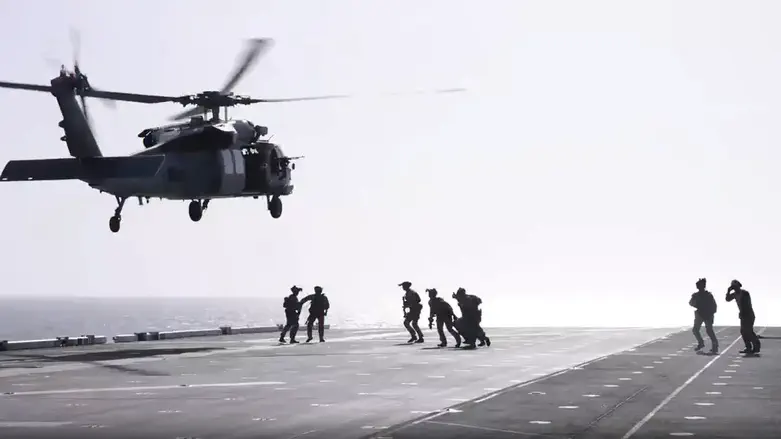
In a decisive move underscoring the relentless pressure on Iran's illicit oil trade, US Central Command (CENTCOM) Commander Admiral Brad Cooper revealed on Wednesday that American forces have successfully redirected 42 commercial vessels attempting to breach the maritime blockade on Iran. This unprecedented level of interdiction has effectively prevented an estimated 69 million barrels of Iranian oil from reaching global markets, dealing a substantial blow to Tehran's financial lifelines and its ability to fund regional proxies. The announcement marks a critical juncture in the ongoing efforts to enforce international sanctions and stabilize a volatile region.
Admiral Cooper's statement, delivered from CENTCOM headquarters, emphasized the strategic importance of these operations. "Today, US forces achieved a significant milestone after successfully redirecting 42 commercial vessels attempting to breach the maritime blockade on Iran," Cooper stated. "This sustained effort has directly resulted in 69 million barrels of Iranian oil becoming unsellable, representing a substantial blow to the regime's illicit revenue streams." The figure represents not just a quantity of oil, but a tangible impact on Iran's economy, estimated to be in the billions of dollars, depending on prevailing market prices. This aggressive posture by CENTCOM highlights a renewed commitment to maritime security and the enforcement of international law in critical waterways.
The Geopolitical Chessboard: Sanctions and Maritime Strategy
The maritime blockade on Iran is a cornerstone of international efforts to curb its nuclear ambitions and its destabilizing activities in the Middle East. Sanctions, primarily imposed by the United States, target Iran's oil exports, which are the primary source of revenue for the Islamic Republic. The redirection of these 42 vessels is not merely a tactical victory but a strategic one, demonstrating the effectiveness of naval power in enforcing economic pressure. The vessels, often operating under flags of convenience or engaging in deceptive shipping practices, attempt to transport Iranian crude oil to willing buyers, circumventing global restrictions. CENTCOM's operations involve a complex web of intelligence gathering, surveillance, and interdiction, often requiring precise identification and communication with commercial shipping.
Historically, maritime blockades have been powerful tools in international relations, capable of crippling an adversary's economy without direct military conflict. From the Napoleonic Wars to the Cuban Missile Crisis, control of the seas has often dictated the course of geopolitical events. In the modern context, with the proliferation of sophisticated tracking technologies and international cooperation, enforcing such blockades has become both more challenging and more effective. The Strait of Hormuz, a narrow chokepoint through which a significant portion of the world's oil supply passes, remains a critical area of focus for these operations. Iran's threats to close the strait, though often rhetorical, underscore the strategic value of maritime dominance in the region.
Economic Fallout and Regional Implications
The impact of 69 million barrels of oil becoming unsellable cannot be overstated. At an average price of $80 per barrel, this amounts to over $5.5 billion in lost revenue for Iran. This financial squeeze has direct implications for Iran's domestic economy, which is already grappling with high inflation, unemployment, and social unrest. Furthermore, it directly impacts the regime's ability to fund its proxies, such as Hezbollah in Lebanon, the Houthi rebels in Yemen, and various militia groups in Iraq and Syria. These groups rely heavily on Iranian financial and material support to sustain their operations, which often contribute to regional instability.
* Reduced Funding for Proxies: Less revenue means less support for groups that destabilize the Middle East. * Domestic Economic Strain: Exacerbates existing economic challenges within Iran, potentially fueling dissent. * Global Oil Market Dynamics: While 69 million barrels is a significant amount, the global oil market is vast. However, sustained interdiction efforts can contribute to supply tightness and price volatility, impacting consumers worldwide. * Diplomatic Leverage: The successful enforcement of sanctions strengthens the diplomatic hand of countries seeking to negotiate with Iran on its nuclear program and regional behavior.
This sustained pressure aims to compel Tehran to reconsider its foreign policy and comply with international norms. The success of these interdiction efforts also sends a clear message to other nations and commercial entities contemplating illicit trade with Iran: the international community is serious about enforcing sanctions.
The Role of Technology and International Cooperation
CENTCOM's success is not solely due to naval might but also to advanced intelligence, surveillance, and reconnaissance (ISR) capabilities. Satellite imagery, drone surveillance, and sophisticated data analytics are employed to track suspicious vessel movements, identify patterns of illicit trade, and predict attempts to evade sanctions. This technological edge allows for proactive interdiction rather than reactive responses. Furthermore, international cooperation plays a crucial role. While the US takes the lead, intelligence sharing and coordinated efforts with allies in the region, such as Saudi Arabia, the UAE, and other Gulf states, enhance the effectiveness of these operations.
The multinational Combined Maritime Forces (CMF), headquartered in Bahrain, is a prime example of this collaboration. Comprising 38 nations, the CMF operates across 3.2 million square miles of international waters, including the Red Sea, the Gulf of Aden, and the Arabian Sea. Their mandate includes counter-terrorism, counter-piracy, and ensuring maritime security. While CENTCOM's direct actions are distinct, they often complement the broader objectives of the CMF, creating a layered defense against illicit activities. The synergy between national and multinational efforts amplifies the deterrent effect and operational reach.
Looking Ahead: Sustained Pressure and Evolving Challenges
The redirection of 42 vessels and the rendering of 69 million barrels of oil unsellable represent a significant achievement, but the challenge of enforcing sanctions against Iran is ongoing. Tehran continually seeks new methods to bypass restrictions, including ship-to-ship transfers in open waters, altering vessel identities, and using complex financial networks. The cat-and-mouse game between sanction enforcers and evaders is dynamic and requires constant adaptation.
Moving forward, CENTCOM and its partners will need to maintain vigilance and innovate their strategies to counter evolving Iranian tactics. The long-term objective remains to pressure Iran into verifiable compliance with international agreements and to cease its destabilizing regional activities. This will likely involve a combination of continued maritime interdiction, cyber operations, and diplomatic engagement. The economic impact of these operations is a powerful lever, but its effectiveness ultimately depends on sustained commitment and a unified international front. The message from CENTCOM is clear: the seas will not be a free highway for illicit trade, and the financial spigot for Iran's destabilizing agenda will continue to be tightened.
The success of these operations underscores the enduring relevance of naval power and economic sanctions as tools of statecraft in the 21st century. As geopolitical tensions simmer, the maritime domain will remain a critical arena for asserting influence and enforcing international norms, with CENTCOM at the forefront of these efforts.
Stay Informed
Get the world's most important stories delivered to your inbox.
No spam, unsubscribe anytime.
Comments
No comments yet. Be the first to share your thoughts!