China's AI Retail Revolution: Fueling Domestic Demand and Global Tech Shifts
China is strategically leveraging AI-powered retail and a diversifying service sector to ignite its domestic consumption, aiming for sustainable economic growth. This shift, driven by technological innovation and strategic policy, is transforming the shopping experience and creating new economic opportunities. Experts highlight the profound implications for both China's economy and the global tech landscape, as AI integration becomes central to consumer engagement.
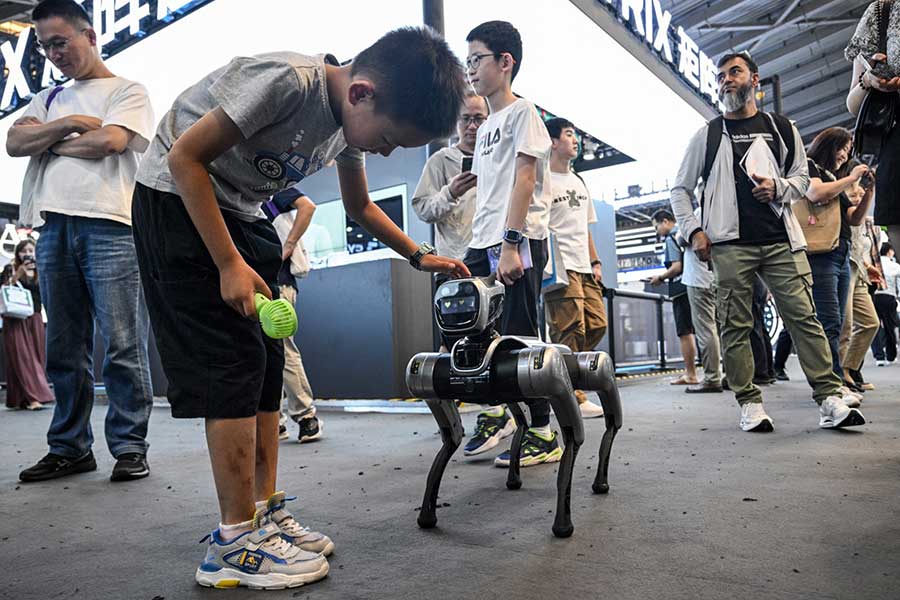
The bustling markets of China, long a global manufacturing powerhouse, are now undergoing a profound transformation. As the nation strategically pivots to bolster its internal economic engines, a new wave of consumption growth is emerging, powered by the potent combination of artificial intelligence-driven retail and a rapidly diversifying service sector. This isn't merely an incremental change; it's a fundamental reshaping of how Chinese consumers interact with goods and services, setting a precedent for future economic models worldwide.
For decades, China's economic miracle was largely fueled by exports and investment. However, as global dynamics shift and the domestic market matures, Beijing has placed a renewed emphasis on expanding domestic demand as a cornerstone of its long-term growth strategy. This strategic imperative is now finding its most dynamic expression in the burgeoning field of AI-powered commerce, where algorithms, data analytics, and smart logistics are creating an unprecedentedly efficient and personalized shopping ecosystem.
The Digital Silk Road to Consumption Growth
The narrative of China's economic ascent often highlights its early adoption of e-commerce, which leapfrogged traditional retail infrastructure. Today, that digital foundation is being supercharged by AI. From personalized product recommendations to predictive inventory management and automated customer service, AI is optimizing every facet of the retail value chain. This technological integration is not just about efficiency; it's about creating a more engaging, convenient, and ultimately, more consumption-driving experience for hundreds of millions of consumers.
Consider the evolution: what began with simple online marketplaces has evolved into sophisticated platforms that understand individual preferences, anticipate needs, and even influence purchasing decisions through highly targeted promotions and interactive content. Live-streaming e-commerce, for instance, has become a cultural phenomenon, with AI algorithms playing a crucial role in matching influencers with potential buyers and optimizing content delivery. This blend of entertainment and commerce, often referred to as 'shoppertainment,' is a powerful driver of impulse purchases and brand loyalty.
Moreover, the rise of 'new retail' concepts, seamlessly blending online and offline experiences, is heavily reliant on AI. Smart stores utilize facial recognition for payment, AI-powered cameras for foot traffic analysis, and robotic assistants for inventory checks. This integration blurs the lines between physical and digital, offering consumers unparalleled convenience and a richer, more immersive shopping journey. This is particularly evident in urban centers, where tech-savvy consumers are quick to adopt these innovative retail formats.
Diversifying Services: Beyond Goods to Experiences
While AI-powered retail captures significant attention, the equally important, yet often understated, component of China's consumption drive is the rapid diversification of its service sectors. As incomes rise and lifestyles evolve, Chinese consumers are increasingly spending on experiences, health, education, and leisure rather than solely on tangible goods. This shift represents a maturation of the economy, moving towards a more balanced and sustainable growth model.
AI is also playing a transformative role here. In healthcare, AI diagnostics and personalized treatment plans are improving access and quality. In education, intelligent tutoring systems and adaptive learning platforms are revolutionizing how students acquire knowledge. The tourism and hospitality sectors are leveraging AI for dynamic pricing, personalized travel recommendations, and efficient booking systems. Even in areas like financial services, AI-driven wealth management and credit scoring are expanding access and tailoring offerings to individual needs.
This diversification is not accidental; it's a deliberate policy choice to foster a more resilient and consumer-centric economy. The government has actively encouraged investment in high-value service industries, recognizing their potential to create jobs, boost innovation, and improve the overall quality of life for its citizens. The synergy between AI-enhanced retail and a robust service economy creates a powerful feedback loop, where increased disposable income from a thriving service sector fuels demand for sophisticated AI-driven products and experiences.
Historical Context and Policy Drivers
China's journey to this point is rooted in a long-term strategic vision. Following decades of export-led growth, policymakers recognized the need to rebalance the economy. The 'dual circulation' strategy, introduced in 2020, explicitly emphasizes strengthening domestic demand (internal circulation) while maintaining international trade and investment (external circulation). AI-powered retail and service sector expansion are direct manifestations of this strategy.
Government support for technological innovation has been unwavering. Massive investments in R&D, AI infrastructure, and digital literacy programs have created a fertile ground for tech companies to experiment and scale. Policies encouraging entrepreneurship, particularly in the digital economy, have led to the emergence of tech giants like Alibaba, Tencent, and JD.com, who are at the forefront of implementing AI in retail and services. These companies, often with government backing or strategic alignment, act as powerful accelerators for technological adoption across the economy.
Furthermore, China's vast population and high smartphone penetration provide an unparalleled testing ground for AI applications. The sheer volume of data generated by Chinese consumers offers an invaluable resource for training and refining AI algorithms, creating a virtuous cycle of innovation and improvement. This data advantage, combined with a supportive regulatory environment (albeit one that is also increasingly focused on data governance), gives Chinese tech firms a unique competitive edge.
Implications for Global Markets and Future Trends
The implications of China's AI-driven consumption boom extend far beyond its borders. For global businesses, it presents both immense opportunities and significant challenges.
* Market Access: Foreign brands must adapt to China's sophisticated digital retail ecosystem, often requiring partnerships with local tech giants and deep integration of AI tools for marketing and sales. * Innovation Benchmarking: China's rapid advancements in AI retail serve as a benchmark for innovation. Companies worldwide are closely watching and learning from Chinese models of 'new retail' and 'shoppertainment.' * Supply Chain Resilience: AI-powered logistics and supply chain management developed in China could offer blueprints for greater efficiency and resilience globally. * Technological Competition: The emphasis on AI in consumption underscores the broader technological competition between nations, particularly in areas like data science, machine learning, and robotics.
Looking ahead, the trend towards hyper-personalization, seamless O2O (online-to-offline) integration, and the gamification of shopping experiences will only intensify. We can expect further advancements in areas like virtual and augmented reality (VR/AR) shopping, where consumers can virtually try on clothes or furnish their homes, and AI-driven emotional intelligence that can better understand and respond to consumer moods. The convergence of AI, 5G, and the Internet of Things (IoT) will create even more interconnected and intelligent retail environments.
In conclusion, China's strategic embrace of AI-powered retail and its commitment to diversifying service sectors are not just driving its domestic consumption; they are charting a course for the future of global commerce. This is a story of innovation, strategic foresight, and the relentless pursuit of economic evolution. As the world watches, China is demonstrating how technology, when harnessed effectively, can unlock unprecedented levels of consumer engagement and economic vitality, reshaping the very fabric of how we buy, sell, and experience the world around us.
Stay Informed
Get the world's most important stories delivered to your inbox.
No spam, unsubscribe anytime.
Comments
No comments yet. Be the first to share your thoughts!