China's Landmark Ruling: AI Cannot Be a Pretext for Layoffs, Setting a Global Precedent
A recent court ruling in China has declared it illegal for employers to lay off staff solely to replace them with AI, establishing a significant legal precedent. This decision underscores a growing global concern about job displacement due to automation and the ethical responsibilities of corporations. The case highlights the tension between technological advancement and worker protection, urging a re-evaluation of labor laws in the age of artificial intelligence. It signals a potential shift in how countries regulate the adoption of AI in the workplace.
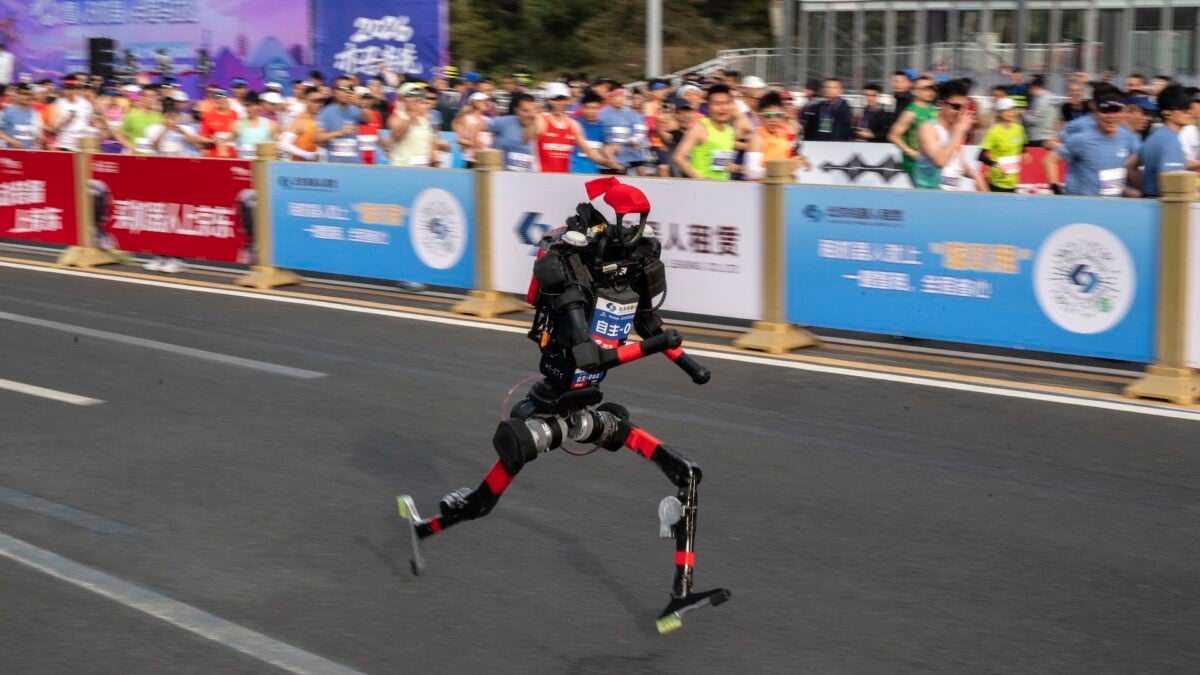
The rapid ascent of artificial intelligence into the workplace has ignited a fierce debate about the future of employment. While proponents champion AI's potential to boost productivity and foster innovation, a darker undercurrent of fear regarding job displacement has steadily grown. This tension recently culminated in a landmark decision in China, where a court ruled it illegal for employers to lay off staff with the explicit intention of replacing them with AI. This judgment, though specific to one jurisdiction, sends a powerful message across the globe: the human element in the workforce cannot be unilaterally discarded in favor of algorithms without legal consequence.
This ruling, which stems from the principle that "employers are prohibited from shifting operating costs to employees," as articulated by the source, marks a critical juncture. It underscores a burgeoning legal and ethical framework attempting to grapple with the economic and social ramifications of advanced automation. For years, the narrative has been dominated by predictions of widespread job losses, with estimates varying wildly but consistently pointing to significant disruption. Now, a major economic power has drawn a line in the sand, suggesting that the transition to an AI-driven economy must be managed with a strong consideration for worker protection.
The Unfolding AI Revolution and Job Displacement Concerns
The integration of AI into industries ranging from manufacturing to finance, and even creative fields, is not a futuristic fantasy but a present reality. AI-powered systems are taking over repetitive tasks, optimizing supply chains, enhancing customer service, and even assisting in complex decision-making. This has led to substantial efficiency gains and cost reductions for businesses, driving the adoption rate of AI technologies. However, the flip side of this efficiency coin is the potential for job redundancy. The Brookings Institution's Darrell West, quoted in Politico, succinctly captured the disconnect: "The stock market could be doing great, but if unemployment is high, people are not going to feel good about the economy." This sentiment perfectly encapsulates the societal challenge posed by unchecked automation.
Reports from organizations like the World Economic Forum have consistently highlighted that while AI will create new jobs, it will also automate existing ones. A 2020 WEF report, for instance, predicted that 85 million jobs could be displaced by automation by 2025, even as 97 million new roles emerge. The challenge lies in the mismatch between the skills required for new jobs and the skills possessed by displaced workers. The Chinese court's decision directly addresses the most immediate and painful aspect of this transition: the direct replacement of human labor by machines as a cost-cutting measure.
Legal Precedents and Ethical Imperatives
The Chinese ruling is not an isolated incident but rather a significant step in a global conversation. While specific details of the case are not fully elaborated in the source, the core principle – that employers cannot unilaterally offload operational costs onto employees through AI replacement – is profound. It suggests that the economic benefits of AI must be balanced against the social costs of unemployment and economic instability. This could set a precedent for other nations grappling with similar issues, especially in regions with strong labor protections or where social welfare is a key government priority.
Historically, technological advancements have always led to shifts in the labor market. The Industrial Revolution, for example, saw widespread displacement of agricultural workers, but also the creation of new factory jobs. The key difference with AI is the pace and scope of change, and the cognitive nature of some tasks now amenable to automation. This ruling implies that governments and legal systems are beginning to view AI-driven layoffs not merely as a consequence of market forces, but as potentially unjust or illegal practices if the primary motivation is cost-shifting rather than a fundamental change in business operations that genuinely renders a human role obsolete without a direct AI replacement.
Implications for Businesses and Policy Makers
For businesses, this ruling serves as a stark warning. Companies can no longer assume a free pass to replace human workers with AI solely for financial gain without facing legal challenges. It necessitates a more strategic and ethical approach to AI adoption, focusing on augmentation rather than pure substitution. This might involve retraining programs for employees, re-evaluating job roles to integrate AI as a tool rather than a replacement, and fostering a culture of human-AI collaboration. Companies that prioritize short-term cost savings through immediate AI-driven layoffs risk not only legal repercussions but also significant reputational damage and employee morale issues.
Policy makers, on the other hand, are faced with the urgent task of updating labor laws for the 21st century. The existing legal frameworks, often designed for industrial-era economies, are ill-equipped to handle the complexities introduced by advanced AI. This Chinese precedent highlights the need for: * Clear definitions: What constitutes an AI replacement versus a genuine business restructuring? * Worker protections: How can employees be safeguarded against unfair dismissal due to automation? * Reskilling initiatives: Who bears the responsibility for training workers for new AI-enabled roles? * Ethical guidelines: Establishing clear ethical boundaries for AI deployment in the workplace.
The ruling could also spur discussions around universal basic income (UBI) or other social safety nets, as a long-term strategy to mitigate the broader economic impacts of automation, even if direct replacements are legally restricted.
The Path Forward: Balancing Innovation and Equity
The Chinese court's decision is a powerful reminder that the future of work is not solely determined by technological capabilities, but also by societal values and legal frameworks. It challenges the purely economic rationale often driving AI adoption and injects a crucial element of humanistic consideration. While the specific legal nuances will vary by country, the underlying message is universal: the transition to an AI-powered economy must be managed thoughtfully, ethically, and with a strong commitment to social equity.
This ruling could inspire similar legal challenges and legislative efforts in other parts of the world, particularly in Europe where data privacy and worker rights are highly valued, and potentially in the United States, where labor unions are increasingly advocating for protections against automation. The challenge lies in striking a delicate balance: fostering innovation and economic growth through AI, while simultaneously ensuring that the benefits are broadly shared and that workers are not left behind. This landmark decision from China is not just about a single court case; it's a significant step towards defining the ethical and legal boundaries of the AI revolution, shaping a future where technology serves humanity, rather than displacing it without recourse.
Stay Informed
Get the world's most important stories delivered to your inbox.
No spam, unsubscribe anytime.
Comments
No comments yet. Be the first to share your thoughts!