Claude Projects: Unlocking AI's Full Potential for Unprecedented Productivity Gains
Many early adopters found AI tools clunky for productivity, requiring constant re-explanation. Claude Projects emerges as a game-changer, offering persistent, context-aware workspaces that revolutionize how professionals interact with AI. This deep dive explores how this innovative feature transforms AI from a mere assistant into a true collaborative partner, boosting efficiency and fostering deeper engagement across various industries. Discover why Claude Projects is the productivity booster you might be overlooking.
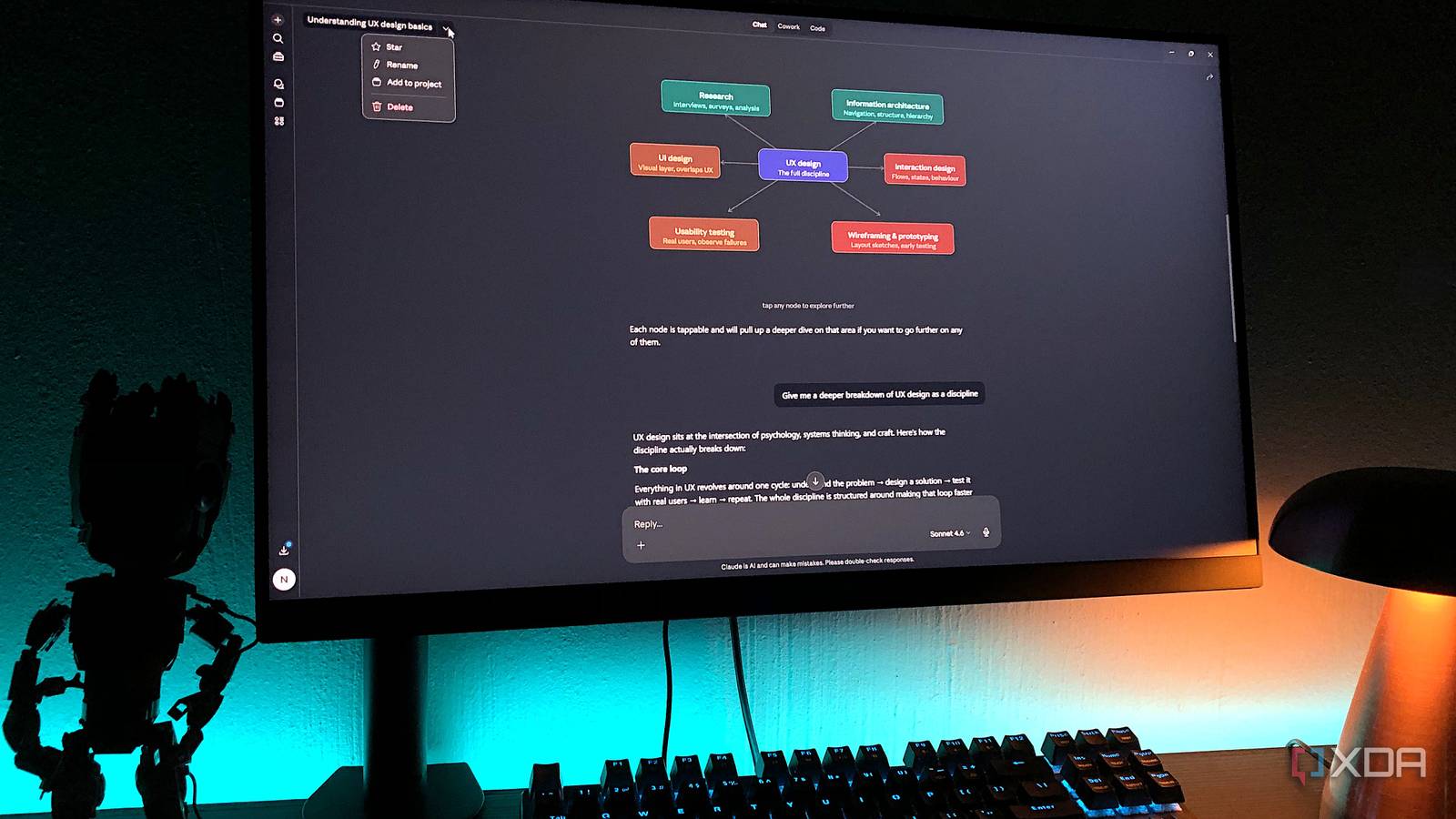
The promise of Artificial Intelligence to revolutionize productivity has been a pervasive theme in recent years. Yet, for many early adopters, the reality has often fallen short of the hype. The initial experience with AI tools, particularly large language models, frequently involved a frustrating cycle of re-explanation. Each new chat, each fresh inquiry, demanded a complete re-contextualization of the task at hand, forcing users to repeatedly outline their goals, their project scope, and their previous interactions. This repetitive setup, while seemingly minor, accumulated into a significant friction point, hindering the seamless integration of AI into daily workflows. It was akin to having a brilliant, but amnesiac, assistant who needed to be brought up to speed on every single meeting.
This inherent limitation often relegated AI to a quick query tool rather than a true collaborative partner. Users would leverage it for isolated tasks – drafting a quick email, brainstorming a single idea, or summarizing a short document – but the deeper, more sustained engagement required for complex projects remained elusive. The cognitive load of constantly feeding the AI context meant that the very productivity gains it promised were often eroded by the overhead of managing the interaction itself. This is where Claude Projects steps onto the scene, not just as another AI feature, but as a fundamental paradigm shift in how we interact with intelligent systems, promising to unlock the full, persistent potential of AI for unprecedented productivity.
The Evolution of AI Interaction: From Ephemeral Chats to Persistent Workspaces
To truly appreciate the innovation behind Claude Projects, it's essential to understand the journey of human-AI interaction. Early AI, from expert systems to rudimentary chatbots, operated on a transactional model: input, process, output, then forget. The advent of large language models brought conversational capabilities, but these conversations were largely stateless, or at best, short-term memory-bound within a single chat session. This meant that if you were working on a complex report, for instance, and needed the AI to help with different sections over several hours or days, each new interaction would necessitate reminding the AI about the overall objective, the style guide, the previous sections it had already helped with, and the specific nuances of your project. This was the "annoying" aspect many users encountered – the constant need to start from scratch.
Claude Projects directly addresses this core limitation by introducing the concept of persistent, context-aware workspaces. Imagine a digital folder where all your project-related documents, notes, previous AI interactions, and specific instructions reside. When you engage with Claude within a Project, it doesn't just remember the last few turns of conversation; it has access to the entire repository of information associated with that project. This includes files you've uploaded, previous drafts it helped create, and even your overarching project brief. This persistent memory transforms the AI from a short-term consultant into a long-term, deeply informed collaborator. It's a leap from fragmented interactions to a cohesive, evolving partnership, where the AI accumulates knowledge and understanding of your specific project over time.
Beyond Simple Recall: The Power of Deep Contextual Understanding
The true power of Claude Projects extends far beyond mere memory recall. It enables a much deeper level of contextual understanding and application. Consider a scenario where you're developing a marketing strategy for a new product launch. Within a Claude Project, you could upload your market research, competitor analysis, brand guidelines, and initial product descriptions. As you then ask Claude to brainstorm campaign ideas, draft social media posts, or even analyze potential taglines, it doesn't operate in a vacuum. It leverages all the uploaded documents, understanding the target audience, the brand voice, and the unique selling propositions. This means the AI's output is not just grammatically correct, but also strategically aligned and highly relevant to your specific goals.
This capability is particularly transformative for tasks requiring iterative refinement. For example, a journalist working on a complex investigative piece could use a Project to store interview transcripts, research notes, and previous drafts. When asking Claude to help structure an argument or refine a particular paragraph, the AI can draw upon the entirety of the research, ensuring consistency and accuracy across the evolving narrative. This eliminates the need for users to constantly copy-paste information or reiterate constraints, freeing up cognitive resources for higher-level strategic thinking and creative problem-solving. The AI becomes an extension of the user's thought process, building upon shared knowledge rather than constantly being re-educated.
Real-World Impact: Revolutionizing Workflows Across Industries
The implications of Claude Projects are far-reaching, promising to revolutionize workflows across a multitude of industries. In software development, teams can create projects for specific features or modules, storing code snippets, documentation, and bug reports. Claude can then assist with code generation, debugging, or even drafting technical specifications, all while understanding the existing codebase and project requirements. This can significantly accelerate development cycles and improve code quality.
For legal professionals, managing vast amounts of documentation is a daily challenge. A Project could house case files, legal precedents, and client communications. Claude could then assist in drafting legal briefs, summarizing complex documents, or identifying relevant clauses, with an inherent understanding of the case's specifics. This could dramatically reduce research time and enhance the precision of legal arguments.
Creative industries, from content creation to graphic design, also stand to benefit immensely. A marketing agency could have a Project for each client, containing brand assets, campaign histories, and target demographic profiles. Claude could then generate tailored content, brainstorm creative concepts, or even assist in scriptwriting, maintaining brand consistency and strategic focus. The ability to maintain a consistent brand voice and messaging across various outputs, guided by a deeply informed AI, is a powerful advantage.
The Future of Collaboration: AI as a True Partner
The introduction of Claude Projects marks a significant milestone in the journey towards more sophisticated human-AI collaboration. It moves AI beyond being a mere tool for discrete tasks and positions it as a genuine partner capable of sustained, intelligent contribution to complex, evolving projects. This shift is not just about efficiency; it's about enabling deeper engagement, fostering more ambitious undertakings, and ultimately, augmenting human potential in unprecedented ways.
As AI models continue to advance in their reasoning capabilities and understanding of nuance, the persistent context provided by Projects will become even more critical. It lays the groundwork for AI systems that can anticipate needs, proactively offer insights, and even take on more autonomous roles within a defined project scope. The future of work will likely see professionals seamlessly integrating AI projects into their daily routines, much like they currently use cloud storage or project management software. The key will be to leverage these intelligent workspaces to offload cognitive burdens, accelerate creative processes, and focus human ingenuity on the most challenging and rewarding aspects of their work. Claude Projects is not just a feature; it's a glimpse into a future where AI is not just a productivity booster, but a fundamental pillar of collaborative innovation, making it an indispensable tool for anyone looking to truly harness the power of artificial intelligence today.
Stay Informed
Get the world's most important stories delivered to your inbox.
No spam, unsubscribe anytime.
Comments
No comments yet. Be the first to share your thoughts!