Courtroom Chaos: Trial of Anti-Arms Activists Delayed Amidst Communication Dispute in Germany
The highly anticipated trial of an Irish man and four other activists, accused of breaking into a German subsidiary of an Israeli arms company, hit an immediate snag on its opening day. A significant dispute erupted in court regarding the defendants' right to communicate privately with their lawyers, leading to an abrupt adjournment. This incident underscores the complex legal and ethical battlegrounds surrounding arms manufacturing and protest, drawing international attention to both the activists' cause and the judicial process.
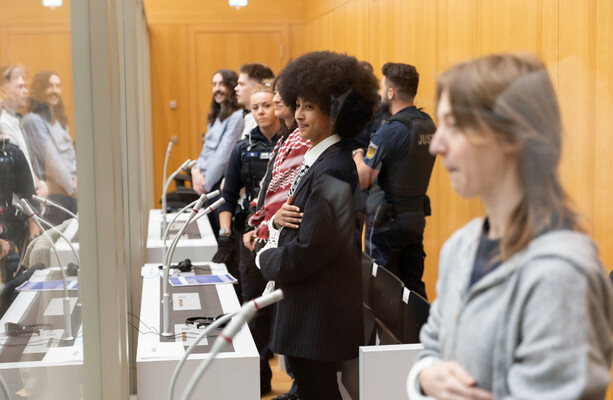
The hushed anticipation in the German courtroom quickly dissolved into a tense standoff, marking an inauspicious start to a trial with significant international implications. On its opening day, the legal proceedings against an Irish man and four fellow activists, accused of an alleged break-in at a German subsidiary of an Israeli arms company, were abruptly postponed. The cause of the delay was not a procedural technicality, but a fundamental dispute over the defendants' right to communicate privately with their legal counsel – a cornerstone of fair trial principles. This unexpected turn of events has cast a spotlight not only on the individuals involved but also on the broader issues of corporate accountability, freedom of protest, and the intricacies of international law.
The Incident and the Accusations
The case centers on an alleged incident in November 2022, when Daniel Tatlow-Devally, an Irish citizen, along with four other activists, reportedly gained entry to the premises of Hensoldt Optronics, a German company with significant ties to the Israeli defense industry. Hensoldt Optronics is a subsidiary of the larger Hensoldt group, a major European defense contractor. The activists are accused of breaking into the company's facility in Oberkochen, Germany. Their alleged actions, which they maintain were a form of non-violent direct action, were intended to protest the company's role in supplying technology that they claim is used in military operations causing harm to civilians, particularly in the context of the Israeli-Palestinian conflict.
The specific charges against the group include trespassing, property damage, and disrupting public order. While the full extent of the alleged damage has not been publicly detailed, such actions, even if symbolic, carry serious legal consequences under German law. The activists have openly stated their motivations, framing their actions as a moral imperative to highlight what they perceive as complicity in human rights abuses. This narrative positions the trial as more than just a criminal case; it's a platform for a debate on ethical investment, corporate responsibility, and the boundaries of legitimate protest in a democratic society.
Courtroom Drama: The Communication Dispute
The immediate adjournment of the trial stemmed from a heated disagreement over the conditions under which the defendants could consult with their lawyers. The core issue revolved around the presence of security personnel during these consultations. The defense team argued vehemently that the presence of guards during private lawyer-client discussions violated the fundamental principle of attorney-client privilege and the defendants' right to a fair defense. They contended that such surveillance would inhibit open and honest communication, crucial for preparing an effective defense strategy.
Conversely, the prosecution and potentially the court's security protocols likely cited security concerns or standard procedures for high-profile cases involving multiple defendants. However, the insistence on surveillance during private legal consultations is highly unusual in many democratic legal systems and is often seen as a breach of due process. The judge's decision to adjourn the trial to allow for a resolution of this dispute underscores the gravity of the issue. It reflects a recognition that proceeding under such conditions could compromise the fairness of the entire trial and potentially lead to grounds for appeal. This procedural hiccup has not only delayed justice but has also drawn criticism from legal observers and human rights advocates, who view secure and private legal counsel as an inalienable right.
The Broader Context: Arms Trade and Activism
This trial is not an isolated incident but rather a microcosm of a much larger global debate surrounding the international arms trade and the ethics of defense manufacturing. Companies like Hensoldt play a vital role in the global supply chain for military technology, producing everything from sensors and optronics to avionics. While these companies assert their adherence to national and international export laws, activists often argue that the end-use of their products can contribute to conflict and human rights violations, regardless of legal compliance.
* Global Arms Market: The global arms market is a multi-billion dollar industry, with Germany being one of the world's leading arms exporters. According to the Stockholm International Peace Research Institute (SIPRI), Germany consistently ranks among the top five global arms suppliers. This economic reality often clashes with ethical considerations. * Activist Movements: Groups like those involved in this case are part of a long tradition of anti-war and anti-arms activism. From the nuclear disarmament movements of the Cold War to contemporary protests against specific military interventions or arms sales, activists often employ direct action to draw attention to issues they believe are being ignored by mainstream politics and media. Their methods, while sometimes legally contentious, are designed to disrupt the status quo and force public discourse. * Legal Challenges: These actions frequently lead to legal confrontations, where the activists' moral arguments often butt heads with established laws concerning property, public order, and national security. The outcomes of such trials can set precedents for future protest actions and influence public perception of civil disobedience.
Implications for Future Protests and Corporate Accountability
The outcome of this trial, once it eventually proceeds, will have significant implications. For the activists, a conviction could mean substantial fines or even imprisonment, potentially deterring similar actions in the future. Conversely, if the defense successfully highlights the ethical dimensions of their protest, it could galvanize further anti-arms movements and draw greater scrutiny to the defense industry.
For companies like Hensoldt, such incidents, regardless of the legal outcome, inevitably bring unwanted public attention. While they operate within legal frameworks, the court of public opinion can be a powerful force. Increased scrutiny from activists, media, and the public can pressure companies to re-evaluate their ethical guidelines, supply chain transparency, and engagement with human rights considerations. Investors, too, are increasingly looking at ESG (Environmental, Social, and Governance) factors, and controversies can impact a company's reputation and stock performance.
Moreover, the procedural dispute itself highlights the ongoing tension between state security concerns and individual rights within the judicial system. How this specific issue of lawyer-client communication is ultimately resolved could influence legal practices in Germany and potentially beyond, particularly in cases involving politically motivated defendants. It serves as a stark reminder that the fight for justice often involves not just the substance of the charges, but also the procedural integrity of the legal process itself.
Conclusion: A Lingering Question of Justice and Dissent
The abrupt postponement of the trial leaves many questions unanswered and underscores the deep complexities at play. Is the right to protest, even through direct action, adequately protected when it challenges powerful corporate and state interests? How far can activists go to highlight perceived injustices before they cross the line into criminal activity? And how will the German legal system balance the need for security with the fundamental rights of defendants?
As the world grapples with escalating conflicts and the pervasive influence of the arms industry, cases like this serve as crucial barometers of societal values. They force a confrontation between legal boundaries and moral imperatives, between corporate interests and civilian protection. The eventual resumption of the trial will undoubtedly be watched closely by human rights organizations, legal scholars, and activists worldwide, as it will offer insights into the evolving landscape of protest, justice, and accountability in the 21st century. The initial courtroom drama has merely set the stage for what promises to be a protracted and highly scrutinized legal battle, one that will resonate far beyond the walls of the German courthouse.
Stay Informed
Get the world's most important stories delivered to your inbox.
No spam, unsubscribe anytime.
Comments
No comments yet. Be the first to share your thoughts!