Dangote's East Africa Refinery Gambit: Shifting Sands in Regional Energy Ambitions
Africa's wealthiest man, Aliko Dangote, has thrown his considerable weight behind a new East African oil refinery, sending ripples through the region's energy landscape. This move puts significant pressure on Uganda's long-delayed facility, raising questions about its viability and the future of regional energy independence. The announcement, made during a high-profile summit, signals a potential realignment of East African energy strategies and investment priorities.
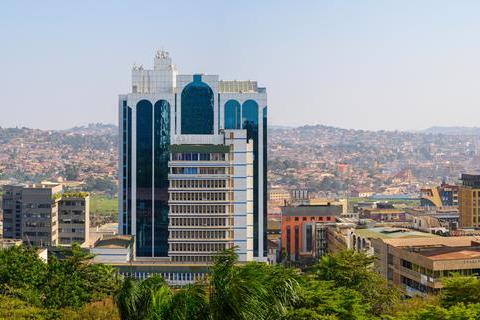
The air in Nairobi crackled with anticipation, but few expected the seismic announcement that would follow. Africa’s richest man, Aliko Dangote, known for his audacious industrial ventures, stood alongside East African heads of state and delivered a statement that has since sent shockwaves through the region's energy sector. His declaration of support for a new, privately funded oil refinery in East Africa, potentially in Kenya, has not only reshaped the narrative around regional energy independence but also cast a long shadow over Uganda's long-cherished, yet beleaguered, refinery project.
For years, Uganda has championed its own refinery, envisioning it as a cornerstone of its economic development and a symbol of its newfound oil wealth. However, Dangote's intervention, coupled with his formidable track record in large-scale infrastructure, has introduced a powerful new dynamic. This isn't merely about refining oil; it's about geopolitical influence, economic sovereignty, and the strategic direction of a rapidly developing continent.
The Dangote Effect: A New Player, New Rules
Aliko Dangote's presence at the Africa Financial Sector Regulators Consultative Dialogue, sharing a panel with Ugandan President Yoweri Museveni and Kenyan President William Ruto, was already a significant event. His subsequent pronouncement, however, elevated it to a pivotal moment. Dangote, whose business empire spans cement, sugar, and now increasingly oil refining with his massive Dangote Refinery in Nigeria, articulated a vision for a new, privately financed refinery in East Africa. This proposed facility, with a projected capacity of 60,000 barrels per day (bpd), would be strategically located to serve the entire region, including Kenya, Uganda, Rwanda, Burundi, and Tanzania.
His rationale is compelling: East Africa, despite its burgeoning oil discoveries, remains heavily reliant on imported refined petroleum products. A regional refinery, built with private capital and managed with efficiency, could drastically reduce import costs, stabilize fuel prices, and create thousands of jobs. Dangote emphasized the importance of private sector-led development and the need for African solutions to African problems. His commitment to investing in such a venture underscores the immense potential he sees in the region, but it also directly challenges existing, state-backed initiatives.
Uganda's Refinery Dream: A Rocky Road
Uganda's journey towards its own oil refinery has been fraught with challenges. Discovered in 2006, the country's vast oil reserves in the Albertine Graben have been a source of both hope and frustration. The government's ambitious plan for a 60,000 bpd refinery in Hoima, Western Uganda, was conceived to process a portion of its crude oil domestically, ensuring energy security and adding value to its natural resources. The estimated cost of this project is a staggering $4.5 billion, a figure that has escalated over the years.
Despite the government's unwavering commitment, the project has faced numerous hurdles:
* Funding Difficulties: Securing adequate financing has been a persistent issue, with several potential investors withdrawing over concerns about project viability and environmental impact. * Partner Challenges: The initial lead investor, a consortium led by Russia's RT Global Resources, pulled out in 2016. A new consortium, Albertine Graben Refinery Consortium (AGRC), led by General Electric, was later formed, but progress has been slow. * Infrastructure Gaps: The lack of robust infrastructure, including pipelines and storage facilities, has added to the complexity and cost. * Regional Competition: The prospect of other regional refineries, including Dangote's proposal, further complicates Uganda's ability to attract investors and secure off-take agreements.
Crucially, Uganda recently 'saved' the $820 million offer from collapse by acquiring a 20.15% stake, worth $255.42 million, in the refinery project. This significant government investment underscores the strategic importance Kampala places on the facility, but it also highlights the difficulty in attracting purely private capital without substantial state backing.
Geopolitical Chessboard: East Africa's Energy Future
Dangote's proposal introduces a fascinating geopolitical dimension. A privately funded refinery, potentially in Kenya, could shift the regional energy balance. Kenya, with its established port infrastructure in Mombasa and its own nascent oil discoveries, presents a strong logistical case for such a facility. The implications are far-reaching:
* Economic Competition: A Kenyan-based refinery could directly compete with Uganda's planned facility for market share, potentially rendering the Ugandan project less economically attractive, especially if it faces higher production costs or logistical hurdles. * Regional Integration vs. National Ambition: While both projects aim for regional energy independence, they represent different approaches. Dangote's proposal emphasizes a market-driven, privately financed model, potentially fostering greater regional integration through shared infrastructure. Uganda's project, while also aiming for regional supply, is more rooted in national economic sovereignty. * Investment Climate: Dangote's involvement could signal to other international investors that East Africa is ripe for large-scale energy infrastructure, but it also raises questions about which projects will ultimately secure the necessary capital.
The East African Community (EAC) has long championed regional infrastructure projects. However, the reality on the ground often involves a delicate balance between individual member states' national interests and broader regional goals. Dangote's move forces a re-evaluation of this balance.
Expert Analysis and Implications
Energy analysts are divided on the long-term implications. Some argue that the region can sustain multiple refineries, especially given the growing demand for petroleum products driven by rapid urbanization and industrialization. Others contend that a single, strategically located, and efficiently run refinery, like the one Dangote proposes, could be more economically viable and prevent overcapacity.
Dr. Ken Opalo, a political economist specializing in East African development, suggests that "Dangote's intervention is a game-changer. It forces Uganda to seriously re-evaluate the economics of its refinery. While national pride is important, economic realities often dictate the ultimate success of such mega-projects." He adds, "The private sector, particularly an African giant like Dangote, can bring efficiency and speed that state-led projects often lack."
The environmental aspect is also crucial. Building new refineries, regardless of location, raises concerns about carbon emissions and climate change. However, proponents argue that local refining reduces the carbon footprint associated with shipping refined products from distant markets. The challenge lies in ensuring these facilities adopt the latest green technologies and adhere to stringent environmental standards.
For consumers, the outcome could be positive. Increased refining capacity, whether from one or multiple facilities, should ideally lead to more stable and potentially lower fuel prices, reducing the burden on households and businesses. However, the path to achieving this is complex and fraught with political and economic considerations.
The Road Ahead: A Test of Resolve
The coming months will be critical. Uganda faces immense pressure to demonstrate the viability and progress of its refinery project. Its recent acquisition of a significant stake shows its determination, but it will need to attract more private investment and accelerate construction to compete effectively.
Dangote's proposal, while still in its early stages, has the potential to fundamentally alter East Africa's energy landscape. It underscores a broader trend in Africa: the increasing role of indigenous African capital in shaping the continent's industrial future. This isn't just about oil; it's about the strategic direction of East Africa's economic development, its commitment to regional integration, and its ability to navigate the complex interplay between national ambition and market forces. The ultimate winner will be the project that can deliver reliable, affordable energy to the people of East Africa most efficiently and sustainably. The race is on, and the stakes couldn't be higher.
Stay Informed
Get the world's most important stories delivered to your inbox.
No spam, unsubscribe anytime.
Comments
No comments yet. Be the first to share your thoughts!