DeepL Cuts 25% of Workforce Amid AI 'Structural Shift,' Raising Industry Questions
Leading AI translation firm DeepL has announced a significant workforce reduction, cutting approximately 25% of its staff. CEO Jarek Kutylowski attributed the move to a "massive structural shift" driven by artificial intelligence, signaling a paradox where the very technology they champion is reshaping their operational needs. This decision sparks critical discussions about the future of AI development, workforce automation, and the competitive landscape of the translation industry.
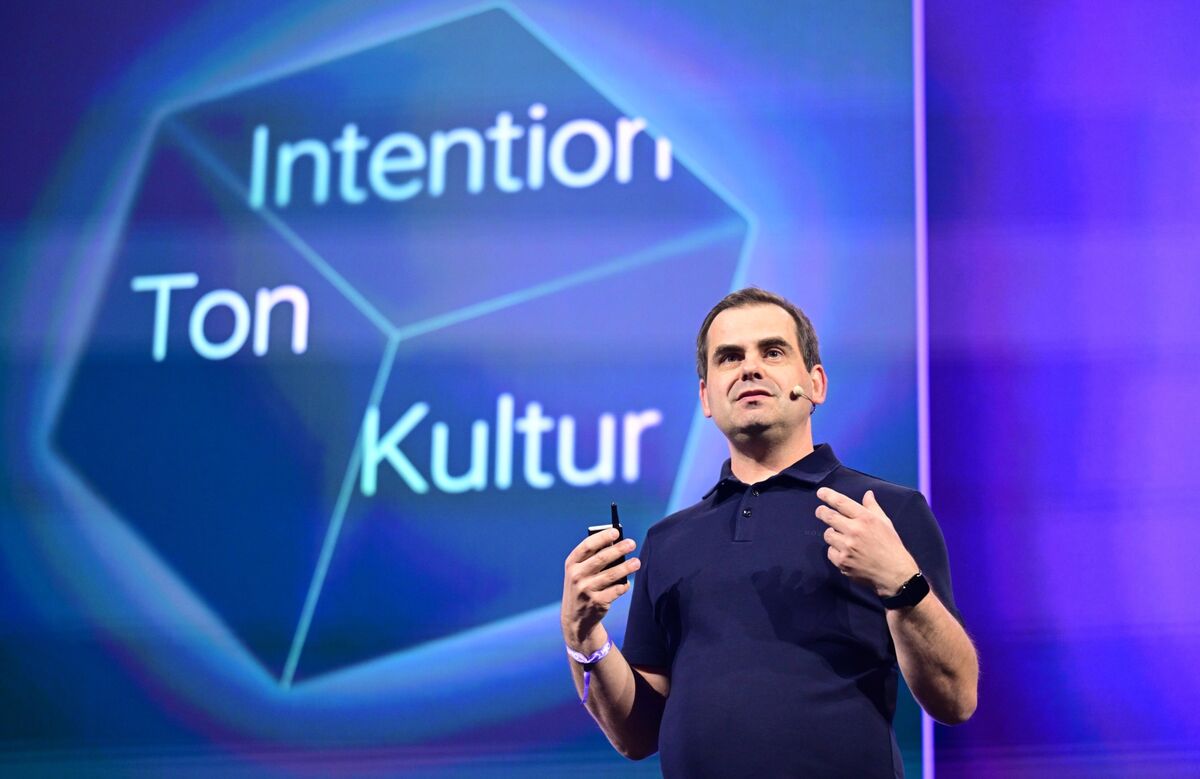
In a move that has sent ripples through the artificial intelligence and technology sectors, DeepL, the German startup renowned for its advanced translation tools, has announced a substantial reduction in its workforce. Approximately 25% of its staff, reportedly around 250 employees, are set to be laid off. This decision, conveyed by CEO Jarek Kutylowski, is attributed to a “massive structural shift” brought about by artificial intelligence itself – a stark paradox for a company whose core business is built on AI innovation.
This development is not merely an isolated corporate restructuring; it serves as a potent indicator of the profound and often unpredictable ways AI is reshaping industries, even those at its vanguard. For DeepL, a company celebrated for often outperforming Google Translate in terms of nuance and accuracy, this pivot suggests a re-evaluation of its operational model in a rapidly evolving technological landscape.
The Paradox of Progress: AI's Double-Edged Sword
DeepL’s announcement highlights a critical, albeit uncomfortable, truth: the very technology designed to enhance efficiency and productivity can, in turn, lead to significant workforce adjustments within the companies developing it. Kutylowski's statement about a "massive structural shift" implies that advancements in AI have reached a point where certain human roles are being automated or streamlined at an accelerated pace, even within the AI development ecosystem itself. This isn't just about AI replacing human translators; it's about AI potentially optimizing the development and maintenance of AI systems, leading to leaner organizational structures.
Historically, technological revolutions have always brought about shifts in employment. The Industrial Revolution mechanized agriculture and manufacturing, displacing manual labor but creating new opportunities in factories and service industries. The digital age saw the rise of software engineers and IT professionals, while traditional administrative roles diminished. AI, however, presents a unique challenge due to its cognitive capabilities, which extend beyond mere automation of repetitive tasks to encompass complex problem-solving, language processing, and even creative generation. DeepL, by its own admission, is experiencing this at an internal level.
DeepL's Journey and Market Position
Founded in 2017, DeepL quickly established itself as a formidable competitor to industry giants like Google and Microsoft in the machine translation space. Its proprietary neural network architecture, often touted for its ability to grasp context and produce more natural-sounding translations, garnered a loyal user base among professionals, businesses, and individuals seeking higher quality output than traditional statistical or rule-based systems. The company's growth trajectory was steep, fueled by significant venture capital investments and a reputation for superior linguistic accuracy.
DeepL's success was built on the promise of leveraging AI to bridge linguistic divides more effectively. Its initial expansion involved hiring top talent in AI research, engineering, and linguistic expertise to continuously refine its models and expand its language offerings. The decision to cut staff now, after years of rapid growth and investment, suggests that the efficiency gains from their own AI advancements are so substantial that they necessitate a smaller human footprint for certain functions. This could involve roles in data annotation, quality assurance, or even aspects of model development that are becoming increasingly automated.
Broader Implications for the Tech Industry and Workforce
This development at DeepL sends a strong signal across the entire technology sector. If a leading AI company is streamlining its operations due to AI-driven efficiencies, what does this portend for other industries? The implications are far-reaching:
* Acceleration of Automation: Expect other tech companies, especially those in AI-adjacent fields, to re-evaluate their workforce needs in light of increasingly sophisticated AI tools. This could lead to similar restructuring efforts. * Skills Gap Evolution: The demand for new skills will intensify. While some roles may diminish, there will be a surge in demand for professionals who can develop, manage, and ethically deploy advanced AI systems. This includes AI ethicists, prompt engineers, and specialists in AI governance. * Economic Disruption: Governments and educational institutions will face increased pressure to adapt to these shifts, providing retraining programs and fostering new educational pathways to prepare the workforce for an AI-centric economy. * Competitive Landscape: For DeepL's competitors, this could be seen as both a warning and an opportunity. They must either accelerate their own AI integration to achieve similar efficiencies or risk being outpaced. It also raises questions about market saturation and the sustainability of current growth models in the AI translation space.
Expert Analysis and Future Outlook
Industry analysts are closely watching DeepL's situation. Some view it as a necessary, albeit painful, adjustment in a hyper-competitive market where efficiency is paramount. "This isn't necessarily a sign of failure, but rather a sign of successful AI integration," says Dr. Anya Sharma, a leading AI economist. "DeepL is essentially practicing what it preaches: using AI to optimize its own operations. The challenge is managing the human cost of that optimization."
Others express concern about the precedent this sets. "We're seeing a pattern where companies are quick to embrace AI for its potential, but less prepared for the societal impact of widespread automation," notes Professor David Chen, a labor market expert. "The 'structural shift' Kutylowski mentions is a euphemism for jobs being rendered obsolete by technology, and we need robust strategies to address this at a macro level."
For DeepL itself, the path forward will involve navigating this transition while maintaining its competitive edge. The company will likely focus on leveraging its now even more efficient AI models to expand into new markets, enhance existing products, or even develop entirely new AI-driven services. The expectation is that the reduced workforce will be complemented by a more powerful, autonomous AI infrastructure, allowing for continued innovation with fewer human resources in certain areas.
Conclusion: A Glimpse into AI's Transformative Power
DeepL's decision to cut 25% of its staff is a stark reminder of the transformative, and sometimes disruptive, power of artificial intelligence. It underscores that AI is not just a tool for external application but a force that reshapes internal organizational structures and operational paradigms. While painful for those affected, this move could be seen as a harbinger of things to come across various industries as AI continues its relentless march towards greater sophistication and autonomy.
Companies, policymakers, and individuals alike must confront the reality that the AI revolution is not just about creating new jobs; it's also about fundamentally redefining existing ones and demanding a proactive approach to workforce adaptation. DeepL, a pioneer in AI translation, now finds itself a reluctant pioneer in the evolving narrative of AI's impact on employment, offering a compelling case study for the future of work in an increasingly intelligent world. The question is no longer if AI will change our jobs, but how quickly and to what extent, and how we, as a society, will respond to this accelerating "structural shift."
Stay Informed
Get the world's most important stories delivered to your inbox.
No spam, unsubscribe anytime.
Comments
No comments yet. Be the first to share your thoughts!