Digital Delights: How 'Food Porn' on Social Media Curbs Cravings, New Study Reveals
A groundbreaking study from the University of Bristol challenges conventional wisdom, revealing that viewing tempting food content online can actually help people resist cravings, rather than encourage indulgence. This research suggests 'digital feasting' acts as a substitute for actual consumption, offering a novel approach to managing dietary desires. The findings have significant implications for public health, marketing, and understanding our digital relationship with food.
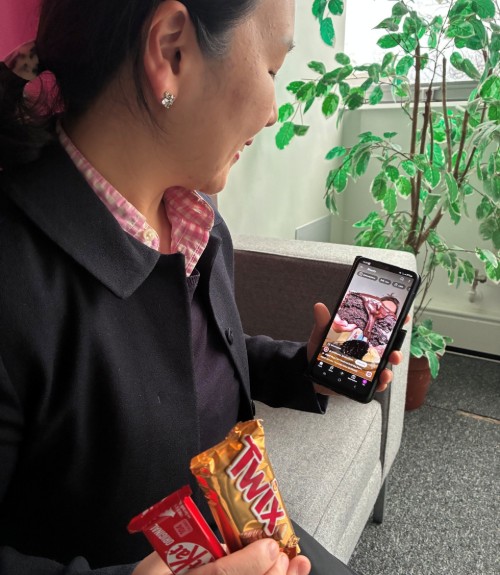
In an era saturated with curated culinary imagery, from gourmet dishes to decadent desserts, a new study is turning the traditional understanding of food cravings on its head. For years, conventional wisdom, and indeed many health campaigns, have warned that exposure to tempting, often unhealthy, food visuals on social media and advertising could trigger overeating and indulgence. However, groundbreaking research led by the University of Bristol in the UK suggests precisely the opposite: "digital feasting" on these alluring images might actually help people curb their cravings and resist the urge to eat the real thing.
This counter-intuitive finding, detailed in a recent publication, opens up a fascinating dialogue about the complex interplay between our digital lives, psychological responses, and dietary habits. It posits that the act of visually consuming highly palatable food content serves as a substitute for physical consumption, offering a novel, low-calorie strategy for managing temptation.
The Paradox of Digital Indulgence: A Deeper Look
The study, spearheaded by Dr. Esther Kang, a Lecturer in Marketing at the University of Bristol, meticulously investigated how individuals attempting to resist food cravings interact with and respond to digital food content. Participants, many of whom were actively trying to manage their diets or reduce intake of specific foods, were exposed to various forms of food imagery. The researchers observed their subsequent craving levels, self-control, and actual eating behaviors.
What emerged was a compelling pattern: instead of succumbing to increased desire, many participants reported a reduction in their cravings after prolonged or focused viewing of the tempting food. This phenomenon, which the researchers term "sensory-specific satiety" in a digital context, suggests that our brains can, to some extent, be tricked into feeling satisfied simply by processing the visual and imagined sensory details of food. It's akin to the feeling of being full after a large meal, but achieved without a single bite.
Historically, the concept of food porn – the aesthetic glorification of food in media – has been largely viewed through a negative lens, often associated with promoting unhealthy eating habits and contributing to a culture of instant gratification. This new research challenges that narrative, proposing that this very visual abundance could be harnessed as a tool for self-regulation. The study's methodology involved carefully controlled experiments, including eye-tracking technology and self-reported craving scales, to provide robust evidence for their claims.
Psychological Mechanisms Behind Digital Satiety
How exactly does gazing at a perfectly glazed donut on Instagram translate into less desire for an actual donut? The answer lies in several psychological mechanisms.
* Cognitive Simulation: When we see highly detailed images of food, our brains engage in a sophisticated process of cognitive simulation. We don't just see the image; we mentally simulate the taste, texture, and aroma. Repeated simulation of these sensory experiences can lead to a form of mental satiation. * Habituation and Desensitization: Constant exposure to a stimulus can lead to habituation, where our response to it diminishes over time. If we repeatedly 'consume' the visual experience of a particular food, its novelty and allure may fade, reducing its power to trigger a strong craving. * Displacement Activity: For individuals actively trying to resist cravings, engaging with digital food content might serve as a displacement activity. Instead of focusing on the deprivation, they channel their attention and desire into a harmless, non-caloric substitute. * Self-Efficacy and Control: Successfully navigating a craving by using digital content might also boost an individual's sense of self-efficacy and control over their eating habits, reinforcing positive behaviors.
Dr. Kang emphasizes that this isn't a license to endlessly scroll through food feeds without consequence, but rather an insight into a potential coping mechanism. "Our findings suggest that for some, particularly those actively managing their diets, the digital world offers a unique avenue for managing temptation," she states. "It's about understanding the nuances of how our minds process visual information related to food."
Implications for Public Health, Marketing, and Personal Wellness
The ramifications of this research are far-reaching, touching upon various sectors:
* Public Health and Dietetics: This study could revolutionize how dietary advice is framed. Instead of strictly avoiding tempting visuals, dietitians might explore incorporating controlled exposure to digital food content as a strategy for craving management, especially for individuals struggling with specific food addictions or restrictive diets. It could offer a less punitive, more engaging approach to self-control. * Food Marketing and Advertising: Marketers, traditionally focused on driving consumption, might need to re-evaluate the long-term impact of their highly appetizing campaigns. While initial exposure might pique interest, prolonged or excessive exposure could, paradoxically, reduce desire. This could lead to more strategic, less saturating advertising approaches. * Technology and App Development: Imagine apps designed not just to track calories, but to help users 'digitally feast' on specific foods in a controlled manner to reduce real-world cravings. This opens up a new frontier for wellness technology, integrating psychological insights with digital tools. * Personal Wellness: For the average person, this offers a practical, albeit unconventional, tool. Feeling an intense craving for chocolate? Instead of reaching for a bar, perhaps spending a few minutes browsing high-quality images of chocolate desserts could help diminish the urge without any caloric intake.
However, the researchers also caution that the effectiveness of this strategy likely varies among individuals and depends on factors such as the intensity of the craving, the individual's dietary goals, and their susceptibility to visual stimuli. It's also crucial to distinguish between merely seeing food images and actively engaging with them as a coping mechanism.
The Future of Food and Digital Interaction
The Bristol study is a significant step in understanding our evolving relationship with food in an increasingly digital world. As our lives become more intertwined with screens, the boundaries between real and simulated experiences blur. This research suggests that our brains are remarkably adaptable, capable of deriving a form of satisfaction from purely visual stimuli.
Looking ahead, further research will undoubtedly explore the optimal duration and type of digital exposure, individual differences in response, and the long-term efficacy of this 'digital feasting' strategy. Could virtual reality or augmented reality experiences take this to the next level, offering even more immersive and satisfying 'virtual meals'? The potential is immense.
Ultimately, this study invites us to reconsider our assumptions about food, cravings, and the powerful, often surprising, influence of our digital environment. It underscores that sometimes, the best way to resist temptation isn't to avoid it entirely, but to engage with it in a controlled, virtual space, proving that in the digital age, a feast for the eyes might indeed be enough to satisfy the stomach.
Stay Informed
Get the world's most important stories delivered to your inbox.
No spam, unsubscribe anytime.
Comments
No comments yet. Be the first to share your thoughts!