Drishti: India's GalaxEye Launches World's First OptoSAR Satellite, Revolutionizing Earth Observation
Bengaluru-based space startup GalaxEye has successfully launched Drishti, hailed as the world's first OptoSAR satellite, aboard SpaceX's Falcon-9 rocket. This groundbreaking hybrid sensor technology combines optical and Synthetic Aperture Radar imaging, promising unprecedented data collection capabilities. Drishti is set to transform industries from defense and agriculture to urban planning, offering continuous, all-weather, and all-light monitoring of Earth. This milestone solidifies India's growing prominence in the global private space sector.
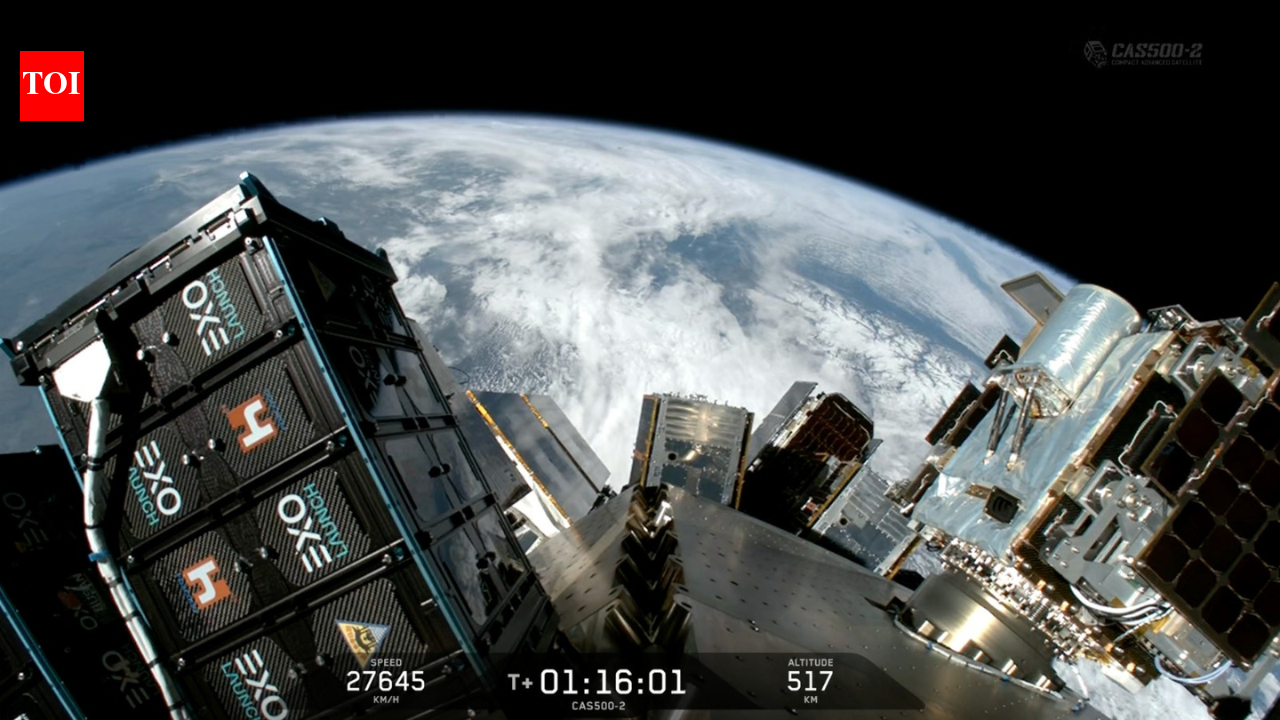
The dawn of a new era in Earth observation has arrived with the successful launch of Drishti, the world's first OptoSAR satellite, by Bengaluru-based space startup GalaxEye. Propelled into orbit aboard SpaceX’s formidable Falcon-9 rocket, this achievement marks a significant leap forward in satellite technology, promising to redefine how we monitor our planet. Drishti, which translates to 'vision' in Sanskrit, truly lives up to its name, offering an unparalleled dual-sensor capability that combines the best of optical and Synthetic Aperture Radar (SAR) imaging.
For decades, satellite imagery has been a cornerstone of global intelligence, environmental monitoring, and economic forecasting. However, traditional optical satellites are hampered by cloud cover and darkness, while SAR satellites, though capable of penetrating clouds and operating at night, often lack the fine detail and spectral information of optical sensors. GalaxEye's innovation lies in seamlessly integrating these two distinct technologies into a single, compact satellite, providing a holistic and continuous view of Earth regardless of atmospheric conditions or time of day. This hybrid approach is not merely an incremental improvement; it is a paradigm shift with profound implications across numerous sectors.
The Genesis of a Vision: GalaxEye's Journey
The story of GalaxEye and Drishti is one of ambitious innovation born from a burgeoning private space sector. Founded by a team of young, visionary engineers from the Indian Institute of Technology Madras, GalaxEye emerged from the fertile ground of India's rapidly expanding space ecosystem. For years, India's space endeavors were primarily dominated by the Indian Space Research Organisation (ISRO), a state-run entity renowned for its cost-effective missions and technological prowess. However, recent policy changes and a supportive regulatory environment have spurred the growth of private space companies, allowing startups like GalaxEye to flourish.
GalaxEye’s journey began with a clear identification of a critical gap in the Earth observation market: the need for reliable, all-weather, and high-resolution data. Traditional methods often required combining data from multiple satellites, leading to complexities in data fusion, latency, and increased costs. The concept of an OptoSAR satellite, which had been theorized but not practically realized in a commercial capacity, became their audacious goal. The development process involved overcoming significant engineering challenges, miniaturizing complex sensor systems, and ensuring their seamless integration and synchronization in a compact satellite platform. The successful launch of Drishti is a testament to the team's perseverance, ingenuity, and the robust support infrastructure now available to private space ventures in India.
Unpacking OptoSAR: A Technological Marvel
The core innovation of Drishti lies in its OptoSAR payload. This integrated system allows the satellite to simultaneously capture high-resolution optical images and SAR data. Let's break down why this is revolutionary:
* Optical Imaging: Provides detailed visual information, color data, and spectral analysis, crucial for tasks like land classification, vegetation health monitoring, and urban mapping. Its limitation is its dependence on clear skies and daylight. * Synthetic Aperture Radar (SAR): Emits microwave pulses and processes the reflected signals to create images. SAR can penetrate clouds, smoke, and even some foliage, and operates equally well day or night. It's excellent for detecting changes in terrain, monitoring ground deformation, and tracking vessels at sea, but typically lacks the visual richness of optical data.
By combining these, Drishti offers a comprehensive dataset that was previously unattainable from a single platform. Imagine monitoring agricultural fields: optical data can assess crop health and identify specific plant diseases, while SAR can simultaneously measure soil moisture levels and detect subtle changes in plant structure, even through cloud cover. For disaster response, optical imagery can show the extent of flooding, while SAR can pinpoint submerged structures or assess damage in smoke-filled areas. This synergistic data collection provides a richer, more accurate, and more timely understanding of events on the ground.
Furthermore, the data fusion capabilities inherent in Drishti's design mean that clients receive pre-processed, integrated insights rather than raw, disparate datasets. This significantly reduces the burden on end-users, making advanced Earth observation data more accessible and actionable for a wider range of industries.
Far-Reaching Implications Across Industries
The applications of Drishti's OptoSAR technology are vast and transformative, poised to impact numerous sectors globally:
* Defense and Intelligence: Continuous, all-weather surveillance capabilities are invaluable for national security, border monitoring, and strategic intelligence gathering. Drishti can track movements, monitor infrastructure, and assess changes in sensitive regions without being hindered by adverse weather conditions or darkness. * Agriculture: Farmers and agricultural agencies can benefit from precise crop health monitoring, yield prediction, and irrigation management. The ability to assess soil moisture and plant stress through clouds means more resilient and efficient farming practices, especially in regions prone to unpredictable weather patterns. * Urban Planning and Infrastructure: Detailed mapping and monitoring of urban expansion, infrastructure development, and environmental changes. This data can inform smart city initiatives, disaster preparedness, and resource allocation. * Disaster Management: Rapid assessment of damage from floods, earthquakes, wildfires, and other natural calamities. First responders can gain immediate, comprehensive insights into affected areas, facilitating more effective rescue and relief operations. * Environmental Monitoring: Tracking deforestation, glacier melt, coastal erosion, and pollution. Drishti's continuous monitoring capabilities provide critical data for climate research and environmental conservation efforts. * Maritime Surveillance: Enhanced detection and tracking of vessels, including illegal fishing, piracy, and maritime traffic management, regardless of visibility conditions.
The ability to gather high-quality data continuously, day or night, and through any weather, translates directly into improved decision-making, increased operational efficiency, and enhanced safety across these critical domains.
India's Ascending Star in the Global Space Race
GalaxEye's achievement with Drishti is not an isolated incident but rather a powerful indicator of India's burgeoning private space sector. Over the past few years, India has actively encouraged private participation in space activities, leading to a vibrant ecosystem of startups focused on everything from satellite manufacturing and launch services to data analytics and space debris management. This strategic shift, championed by the Indian government, aims to unlock the full potential of the country's scientific and engineering talent, fostering innovation and creating new economic opportunities.
India's competitive advantage lies in its skilled workforce, lower operational costs, and a growing domestic market for space-based services. The success of GalaxEye, following in the footsteps of other Indian space startups like Skyroot Aerospace and Agnikul Cosmos, demonstrates that the country is rapidly becoming a significant player in the global commercial space arena. This trend is attracting international investment and collaboration, further cementing India's position as a reliable and innovative partner in space exploration and utilization. The launch of Drishti not only showcases Indian technological prowess but also signals a future where private Indian companies will play an increasingly pivotal role in shaping the global space landscape.
The Road Ahead: What's Next for OptoSAR and GalaxEye
The successful deployment of Drishti is merely the first step for GalaxEye. The company plans to build out a constellation of OptoSAR satellites, which will significantly increase the revisit rate and data collection capacity. A constellation would enable near real-time monitoring of global events, providing an even more dynamic and responsive Earth observation system. This expansion will be crucial for meeting the growing demand for high-fidelity, continuous geospatial intelligence across various industries.
Furthermore, the data generated by Drishti will fuel advancements in artificial intelligence and machine learning. By feeding vast quantities of integrated optical and SAR data into AI models, GalaxEye and its partners can develop sophisticated algorithms for automated feature detection, predictive analytics, and anomaly identification. This will transform raw satellite data into actionable intelligence, empowering users to make faster, more informed decisions.
GalaxEye's Drishti represents a monumental achievement, not just for the company or for India, but for the entire field of Earth observation. By breaking down the traditional barriers of visibility and weather, OptoSAR technology promises a future where our understanding of the planet is clearer, more comprehensive, and more immediate than ever before. As Drishti begins its mission, the world watches, anticipating the transformative insights it will undoubtedly provide, ushering in a new era of planetary intelligence.
Stay Informed
Get the world's most important stories delivered to your inbox.
No spam, unsubscribe anytime.
Comments
No comments yet. Be the first to share your thoughts!