EIZO's OLED Revolution: A New Benchmark for Professional Color Grading and Editing
EIZO, long revered for its high-quality IPS LCD displays, is poised to disrupt the professional monitor market with its inaugural OLED ColorEdge monitor. This highly anticipated release promises unparalleled color accuracy, true blacks, and exceptional contrast, setting a new potential benchmark for photo and video editing. Professionals are eagerly awaiting the full specifications, which could redefine visual fidelity in creative workflows.
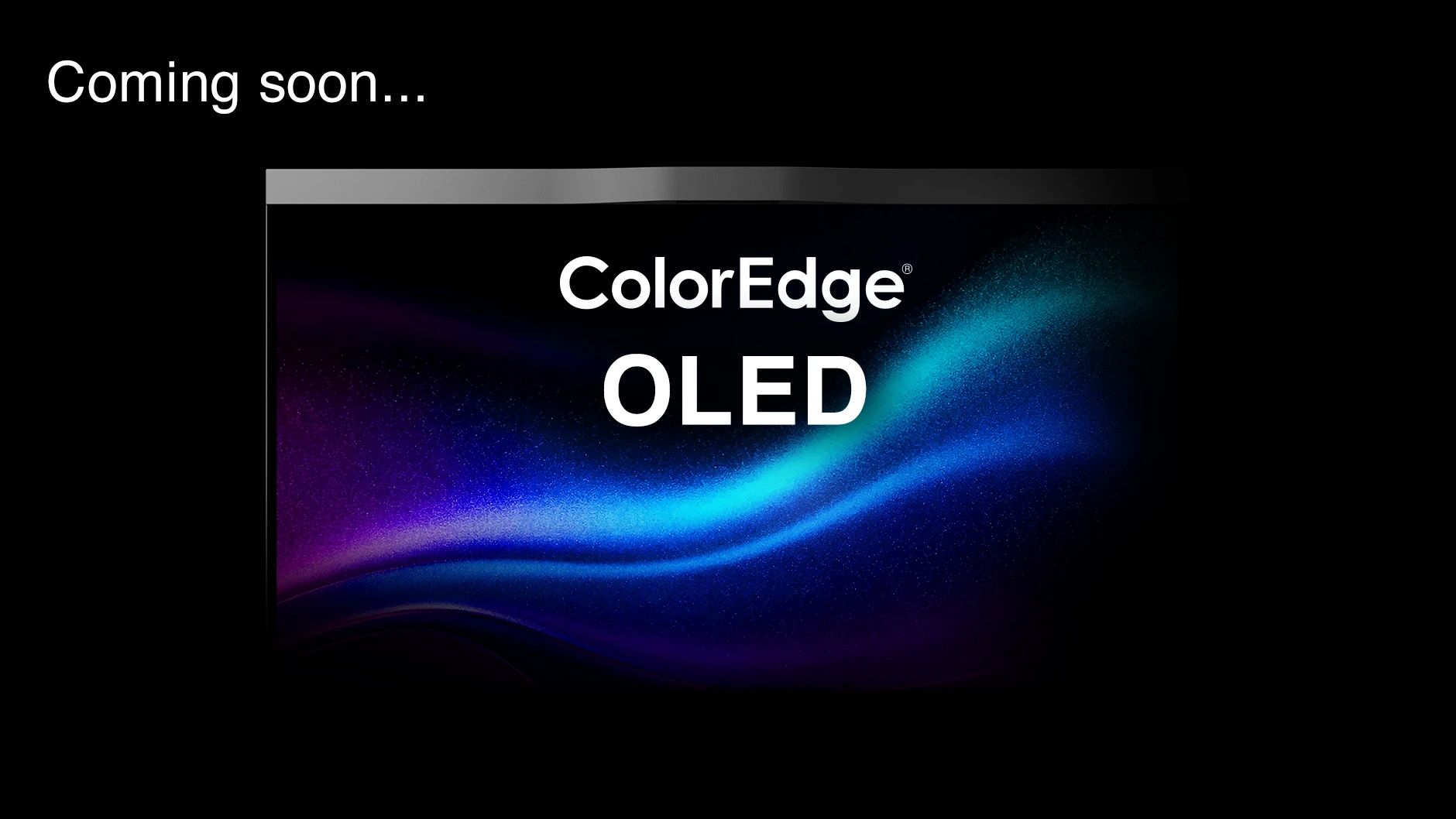
In the demanding world of professional visual arts, where color accuracy and image fidelity are paramount, certain names command an almost legendary status. EIZO is unequivocally one of them. For decades, the Japanese manufacturer has been the gold standard for monitors in photography, video production, graphic design, and medical imaging, primarily through its acclaimed ColorEdge series. These displays, known for their meticulous calibration, exceptional uniformity, and long-term reliability, have historically relied on advanced In-Plane Switching (IPS) LCD technology. However, a seismic shift is on the horizon: EIZO is set to unveil its first-ever OLED ColorEdge monitor, a move that could fundamentally redefine the expectations for professional-grade displays.
This announcement isn't just another product launch; it's a statement. It signals EIZO's strategic embrace of Organic Light-Emitting Diode (OLED) technology, a display paradigm celebrated for its ability to produce perfect blacks, infinite contrast ratios, and vibrant, saturated colors. For creative professionals, particularly those involved in high-end color grading, visual effects, and print production, the implications are profound. The transition from IPS to OLED, especially from a brand as meticulous as EIZO, suggests that the technology has matured sufficiently to meet, and perhaps even exceed, the stringent demands of professional workflows.
The OLED Advantage: Beyond IPS Limitations
For years, IPS LCD panels have been the workhorse of professional displays. They offer wide viewing angles, good color reproduction, and reasonable brightness. However, even the best IPS panels struggle with true black levels. Because they rely on a backlight that is filtered by liquid crystals, some light inevitably leaks through, resulting in blacks that appear as dark gray. This limitation has always been a compromise for professionals who need to accurately perceive shadow detail and contrast, especially in HDR (High Dynamic Range) content.
OLED technology, by contrast, is emissive. Each pixel generates its own light and can be individually turned off completely. This fundamental difference is the source of OLED's most celebrated attributes: absolute blacks and an infinite contrast ratio. When a pixel is off, it emits no light, creating a black that is indistinguishable from the monitor's bezel. This capability is critical for tasks like color grading films or photos with deep shadows, where subtle nuances can be lost on an LCD. Furthermore, OLED panels typically boast faster response times and wider viewing angles without the color shift sometimes seen on IPS panels, ensuring consistent visual fidelity across different perspectives.
While OLED has been prevalent in consumer televisions and high-end smartphones for some time, its adoption in professional monitors has been slower. Concerns about burn-in (permanent image retention) and brightness limitations have historically made manufacturers cautious. However, recent advancements in OLED panel technology, coupled with sophisticated pixel-shifting and compensation algorithms, have significantly mitigated these risks. EIZO's decision to enter this space suggests confidence in these technological improvements, indicating that they have found a way to deliver the benefits of OLED without compromising the longevity and reliability that ColorEdge users expect.
EIZO's Legacy of Precision: A Foundation for OLED Excellence
EIZO's reputation isn't built on panel technology alone; it's built on their comprehensive approach to display engineering. Their ColorEdge monitors are renowned for features like factory calibration, which ensures accurate color out of the box, and built-in self-calibration sensors that maintain accuracy over time. They also provide sophisticated software for color management, precise uniformity compensation across the screen, and robust build quality. These are the elements that elevate an EIZO monitor from a mere display to a critical professional tool.
Bringing this level of precision to an OLED panel is where EIZO truly stands to differentiate itself. Imagine an OLED panel's inherent advantages — perfect blacks, infinite contrast, and wide color gamut — combined with EIZO's legendary calibration accuracy, uniformity, and long-term stability. This combination could be revolutionary. For instance, a professional working on a high-stakes film project requiring precise HDR color grading would benefit immensely from an EIZO OLED. The ability to discern subtle details in both the brightest highlights and the deepest shadows, with colors rendered with absolute fidelity, is invaluable. This could lead to more efficient workflows, fewer revisions, and ultimately, higher quality output.
Moreover, EIZO's expertise in addressing potential panel issues, such as uniformity variations (a common challenge even in high-end displays), will be crucial. Their proprietary Digital Uniformity Equalizer (DUE) technology, which compensates for brightness and chroma uniformity errors, could be adapted and enhanced for OLED, ensuring a consistent viewing experience across the entire screen – a critical factor for large-format prints or multi-monitor setups.
Implications for Creative Professionals and the Industry
The introduction of an EIZO OLED ColorEdge monitor has several significant implications. Firstly, it validates OLED as a viable and superior technology for the most demanding professional applications. Other manufacturers of high-end professional displays, such as ASUS ProArt or Dell UltraSharp, may feel compelled to accelerate their own OLED offerings to remain competitive. This could lead to a broader adoption of OLED in professional studios, eventually driving down costs and increasing accessibility.
Secondly, for photographers, videographers, graphic designers, and VFX artists, this monitor promises an unprecedented level of visual accuracy. Consider a fashion photographer meticulously retouching an image where the subtle textures and tones of fabric are crucial. An EIZO OLED would allow them to see every nuance, ensuring that the final print or digital output perfectly matches their creative vision. Similarly, video editors working with cinematic footage can make more precise color grading decisions, confident that what they see on screen is an accurate representation of the final product.
Thirdly, it pushes the boundaries of what is possible in HDR content creation. With true blacks and high peak brightness (though OLED peak brightness is still typically lower than high-end LCDs, its per-pixel control makes it feel brighter in many scenarios), an EIZO OLED could become an indispensable tool for mastering HDR content, ensuring that the dynamic range is accurately preserved and displayed.
The Road Ahead: What to Expect
While EIZO has only teased the existence of this monitor, the industry is buzzing with anticipation. Key specifications that professionals will be looking for include: the panel size and resolution (will it be 4K, 5K, or even 8K?), the color gamut coverage (likely 100% Adobe RGB and DCI-P3), peak brightness, and, crucially, the price point. EIZO monitors are premium products, and an OLED variant is expected to carry an even higher price tag, positioning it as an investment for top-tier professionals and studios.
We can also anticipate EIZO to implement advanced features to mitigate OLED-specific concerns. This might include sophisticated pixel refresh cycles, static image detection, and perhaps even a longer warranty specifically addressing burn-in, demonstrating their commitment to the product's longevity. The full reveal will undoubtedly detail these protective measures.
In conclusion, EIZO's foray into OLED is more than just an incremental upgrade; it represents a potential paradigm shift in professional display technology. By combining the inherent advantages of OLED with EIZO's unparalleled expertise in color management and display engineering, this new ColorEdge monitor is poised to become the new benchmark for visual fidelity in creative industries. It promises to empower professionals with tools that allow them to see their work with unprecedented accuracy, pushing the boundaries of artistic expression and technical precision. The future of professional visual editing looks brighter, and darker, than ever before.
Stay Informed
Get the world's most important stories delivered to your inbox.
No spam, unsubscribe anytime.
Comments
No comments yet. Be the first to share your thoughts!