Elon Musk's Dual Persona in China: Visionary Innovator or Controversial Figure?
Elon Musk's presence in China is a study in contrasts, where he is simultaneously revered as a technological pioneer and scrutinized by regulators and the public. This article delves into the intricate relationship between the Tesla CEO and the world's second-largest economy, exploring how his ventures navigate a landscape of opportunity, intense competition, and stringent oversight. From the early days of Gigafactory Shanghai to recent regulatory challenges, we examine the factors shaping Musk's evolving image and the implications for foreign businesses in China.
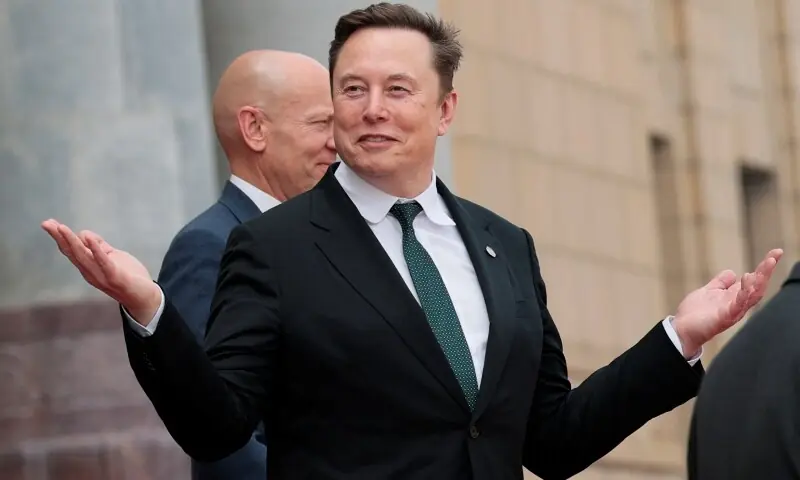
In the annals of global business, few figures command as much attention and generate as much debate as Elon Musk. Yet, nowhere is this dichotomy more pronounced than in China, a nation that has simultaneously embraced his technological ambitions and challenged his corporate practices. For the Chinese public and government alike, Musk is a complex character: a visionary innovator who brought cutting-edge electric vehicles to their shores, but also an occasional villain whose companies have faced significant criticism over customer service, data security, and regulatory compliance. This intricate dance between admiration and apprehension defines Musk's unique standing in the world's second-largest economy.
The Allure of the Visionary: Tesla's Grand Entrance
Tesla's journey in China began with a flourish, marked by the unprecedented speed of the Gigafactory Shanghai construction. This facility, built in record time and largely financed by Chinese state banks, symbolized a new era of foreign investment and technological collaboration. For many Chinese consumers, Tesla represented the pinnacle of electric vehicle (EV) technology – a symbol of modernity, environmental consciousness, and aspirational luxury. Musk himself was frequently lauded in state media and by the public, seen as a trailblazer pushing the boundaries of what was possible. His early interactions, including dancing on stage at the Gigafactory opening, resonated deeply, fostering an image of a charismatic leader genuinely invested in the Chinese market.
This initial honeymoon period saw Tesla dominate the premium EV segment, benefiting from substantial government subsidies and a burgeoning middle class eager for advanced technology. The company's direct sales model and cutting-edge software updates captivated a tech-savvy populace. Tesla's success was not just commercial; it also served as a powerful catalyst, spurring domestic Chinese EV manufacturers like BYD, Nio, and XPeng to accelerate their own innovation and production, ultimately contributing to China's global leadership in the EV sector. Musk's vision, therefore, wasn't just about Tesla; it was about transforming the entire automotive landscape, a vision that China, with its strategic focus on new energy vehicles, was keen to embrace.
Navigating Regulatory Scrutiny and Public Outcry
However, the path of a foreign titan in China is rarely smooth, and Musk's narrative quickly acquired shades of gray. As Tesla's market share grew, so did the scrutiny. Incidents involving customer complaints – ranging from alleged brake failures to disputes over vehicle quality – began to surface with increasing frequency. Unlike in Western markets, where such issues might be handled through standard legal channels, in China, public opinion, often amplified by social media and state media, plays a crucial role. A notable incident involved a protestor at the Shanghai Auto Show in 2021, who climbed atop a Tesla vehicle to decry brake failures, leading to widespread negative publicity and a rare public apology from Tesla China.
Chinese regulators, known for their stringent oversight, also began to take a closer look. Concerns over data security emerged, particularly regarding the vast amounts of data collected by Tesla vehicles, including GPS coordinates, driving habits, and even camera footage. In a country where data sovereignty is paramount, this led to restrictions on Tesla vehicles entering military compounds and government facilities. The Chinese government's approach is often characterized by a delicate balance: welcoming foreign investment and technology while ensuring national security and consumer protection. Musk, accustomed to operating with a relatively free hand in the West, found himself navigating a much more controlled and sensitive environment. The expectation was not just compliance, but also a deep understanding and respect for Chinese cultural and political norms.
The Cryptocurrency Conundrum and Geopolitical Tensions
Beyond Tesla's operational challenges, Musk's broader ventures and personal pronouncements have also drawn attention. His significant influence in the cryptocurrency market, particularly his vocal support for Bitcoin and Dogecoin, created friction with Beijing's increasingly severe crackdown on digital assets. China's government has a long-standing policy of discouraging speculative investments and maintaining tight control over its financial system, viewing decentralized cryptocurrencies as a threat to financial stability and capital controls. Musk's tweets and market manipulations, while perhaps seen as playful in some quarters, were likely viewed with suspicion and concern by Chinese authorities, further complicating his image.
Moreover, the broader geopolitical tensions between the US and China inevitably cast a shadow over any prominent American business leader operating in China. While Musk has generally maintained a pragmatic stance, avoiding direct political commentary, his companies' deep ties to both nations make him a potential flashpoint. The perception of foreign companies as potential conduits for espionage or as instruments of foreign policy is a constant undercurrent in China, requiring careful navigation and a keen awareness of the political climate. This complex interplay of business, technology, and geopolitics means that Musk's every move is observed through multiple lenses.
Adapting to the Chinese Market: A Learning Curve
Despite the challenges, Tesla has demonstrated a willingness to adapt. Following the widespread criticism, the company significantly ramped up its efforts to localize its operations, hiring more Chinese executives, establishing a data center in China to store all local data, and improving its customer service response. This adaptation is crucial, as the Chinese market is not merely a revenue stream but a strategic battleground for technological supremacy. Companies that succeed in China often do so by understanding and integrating local preferences, regulatory frameworks, and cultural nuances into their core strategy.
Musk's ability to maintain a strong presence in China, despite the occasional setbacks, speaks to the enduring appeal of his brand and the strategic importance of Tesla's technology. However, it also underscores the reality that even the most powerful global entrepreneurs must bend to the will of Beijing. The Chinese government's approach is often characterized by a carrot-and-stick methodology: offering immense opportunities for those who comply and innovate locally, while swiftly penalizing those who fail to meet expectations or challenge established norms.
The Future of Musk in China: A Balancing Act
Looking ahead, Elon Musk's relationship with China will likely remain a dynamic and closely watched affair. As China continues its push for technological self-reliance and global leadership in EVs and AI, companies like Tesla will find themselves in an increasingly competitive and regulated environment. The rise of formidable domestic competitors means that Tesla's initial advantage is diminishing, requiring continuous innovation and a deeper integration into the local ecosystem.
Musk's ability to maintain his status as a visionary will depend not just on his technological prowess but also on his capacity to navigate the intricate political and cultural landscape of China. His occasional missteps serve as a stark reminder that in China, even a figure of his stature is subject to the collective will of the public and the firm hand of the state. The future will demand an even more nuanced approach, balancing global ambitions with local sensitivities, ensuring that the 'love' for his innovations continues to outweigh the 'loathing' for his controversies. For foreign businesses, Musk's journey in China offers invaluable lessons in resilience, adaptation, and the delicate art of operating in a truly unique market.
Stay Informed
Get the world's most important stories delivered to your inbox.
No spam, unsubscribe anytime.
Comments
No comments yet. Be the first to share your thoughts!