Energy Secretary Wright's Gas Price Reversals Spark Debate Amidst Geopolitical Tensions
Energy Secretary Chris Wright faced intense scrutiny over his shifting predictions on gas prices, particularly in light of the ongoing conflict with Iran. His recent 'I don't know' response to clarifying past claims has fueled public skepticism and highlighted the complex interplay between energy policy, geopolitical events, and consumer costs. This article delves into the implications of these reversals and the broader challenges facing global energy markets.
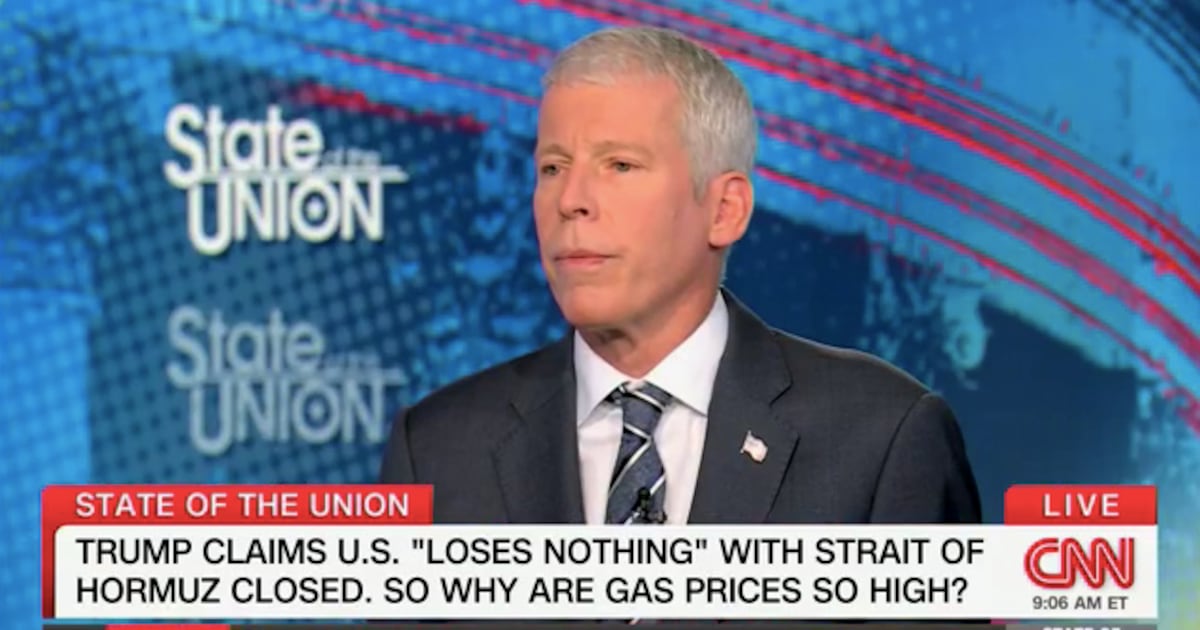
In the volatile landscape of global energy, few topics ignite public discourse as fiercely as gasoline prices. For weeks, American consumers have grappled with rising costs at the pump, a financial strain exacerbated by the specter of international conflict. Amidst this backdrop, Energy Secretary Chris Wright found himself in a precarious position, struggling to reconcile past assurances with present realities, particularly concerning the war with Iran.
Appearing on CNN’s State of the Union, Wright was directly confronted by host Jake Tapper regarding his previous, more optimistic forecasts. Just six weeks prior, the Secretary had confidently predicted a stabilization, if not a decline, in gas prices. Yet, as the geopolitical chessboard shifted, so too did the economic pressures, leading to a noticeable uptick in costs for everyday Americans. When pressed to clarify this discrepancy, Wright's response – a hesitant, almost evasive, “Uh, I don’t know” – sent ripples through political and economic circles, raising questions about the administration's grasp on energy policy and its communication strategy during times of crisis.
This incident is more than just a momentary gaffe; it underscores the profound challenges inherent in forecasting energy markets, especially when intertwined with unpredictable geopolitical events. The public's trust in official pronouncements is a fragile commodity, and such perceived reversals can erode it significantly, fostering cynicism about government competence and transparency.
The Shifting Sands of Global Energy
The global energy market is a complex tapestry woven from supply and demand dynamics, geopolitical tensions, technological advancements, and environmental policies. The recent surge in gas prices cannot be attributed to a single factor but rather a confluence of interconnected forces. The conflict with Iran, for instance, introduces a significant element of uncertainty into the Middle Eastern oil supply, a region that remains a cornerstone of global petroleum production. Any perceived threat to shipping lanes, production facilities, or political stability in this area can send crude oil prices soaring on international markets.
Historically, such conflicts have invariably led to price spikes. The 1973 oil crisis, the 1990 Gulf War, and even more localized conflicts have demonstrated the immediate and dramatic impact of geopolitical instability on energy costs. Consumers, often far removed from the intricacies of international diplomacy, feel these effects directly at the gas pump, translating global events into tangible household expenses. This makes the role of an Energy Secretary particularly challenging, as they must navigate the technicalities of energy policy while simultaneously managing public expectations and political narratives.
Furthermore, post-pandemic economic recovery has seen a resurgence in demand for fuel, while supply chains, still reeling from disruptions, have struggled to keep pace. This imbalance, combined with strategic decisions by OPEC+ nations regarding production quotas, contributes significantly to price volatility. The administration's energy policies, including approaches to domestic drilling and renewable energy investments, also play a role, albeit often with a longer-term impact than immediate geopolitical shocks.
The Peril of Predictions: A History of Miscalculations
Energy forecasting is notoriously difficult, a field fraught with variables that can change overnight. Experts often rely on sophisticated models, but even the most advanced algorithms struggle to account for human factors, political decisions, or unforeseen 'black swan' events. Secretary Wright's predicament is not unique; history is replete with examples of officials and analysts making confident predictions that ultimately proved incorrect.
Consider the varying projections on oil demand during the initial phases of the COVID-19 pandemic, or the underestimation of the speed at which renewable energy technologies would penetrate the market. These examples highlight a fundamental truth: the energy sector is inherently unpredictable. However, the public expects a degree of foresight and, crucially, honesty when predictions fail to materialize. The 'I don't know' response, while perhaps an honest admission of uncertainty, can be perceived as a lack of control or even competence, especially when juxtaposed with earlier, more definitive statements.
For consumers, these fluctuations are not abstract economic theories; they are real costs impacting their daily lives. Higher gas prices mean less disposable income, increased transportation costs for businesses, and potential inflationary pressures across the economy. The perception that officials are either out of touch or deliberately obscuring the truth can lead to a broader erosion of trust in government institutions.
Implications for Policy and Public Trust
Secretary Wright's recent performance raises critical questions about the administration's communication strategy regarding energy policy. In an era of instant information and widespread skepticism, transparency and consistent messaging are paramount. When officials offer firm predictions that are later contradicted by events, it creates a credibility gap that can be difficult to bridge.
Key implications include:
* Erosion of Public Trust: Repeated instances of shifting narratives or unfulfilled promises can lead to a cynical public less likely to believe official statements, even when they are accurate. * Policy Uncertainty: Inconsistent messaging can create uncertainty for businesses and investors, potentially hindering long-term planning and investment in the energy sector. * Political Vulnerability: Opposing political parties are quick to seize upon such missteps, using them to question the administration's economic stewardship and overall competence. * Need for Nuance: The incident highlights the importance of communicating the inherent uncertainties in energy markets, rather than offering overly confident or simplistic forecasts. A more nuanced approach, acknowledging the complexities, might better serve both the public and the administration.
Moving forward, the administration will need to recalibrate its approach to discussing energy prices. This might involve a greater emphasis on explaining the underlying factors driving costs, rather than making specific price predictions. It also necessitates a more robust strategy for addressing geopolitical shocks and their inevitable impact on global markets.
The Road Ahead: Navigating Energy Volatility
As the world continues to grapple with geopolitical instability, climate change imperatives, and evolving energy demands, the role of energy leadership becomes ever more critical. The incident involving Secretary Wright serves as a stark reminder of the delicate balance between informing the public, managing expectations, and navigating the unpredictable currents of global events.
The path forward for energy policy must involve a multi-pronged approach:
* Diversification of Energy Sources: Reducing reliance on volatile fossil fuel markets through increased investment in renewable energy and alternative fuels can offer long-term stability. * Strategic Reserves Management: Thoughtful management of national strategic petroleum reserves can help buffer against sudden supply shocks. * International Diplomacy: Proactive diplomatic efforts to de-escalate conflicts and foster stability in key oil-producing regions remain crucial. * Transparent Communication: A commitment to honest, nuanced, and consistent communication with the public, even when the news is challenging, is essential for maintaining trust.
The 'I don't know' moment, while perhaps embarrassing for Secretary Wright, offers a valuable lesson: in the face of complex global challenges, humility and transparency may ultimately serve the public interest better than confident but ultimately fallible predictions. The energy future is uncertain, but a clear-eyed, honest assessment of its challenges is the first step towards a resilient and sustainable path.
Stay Informed
Get the world's most important stories delivered to your inbox.
No spam, unsubscribe anytime.
Comments
No comments yet. Be the first to share your thoughts!