Faith, Politics, and the Papacy: How Trump's Rhetoric Divides American Catholics
Donald Trump's recent verbal sparring with Pope Leo has ignited a complex debate within the American Catholic community, particularly in swing states like Georgia. Parishioners find themselves grappling with the intersection of their faith, political loyalties, and the Church's teachings. This article explores the deep divisions and nuanced perspectives among Catholics as they navigate a politically charged religious landscape.
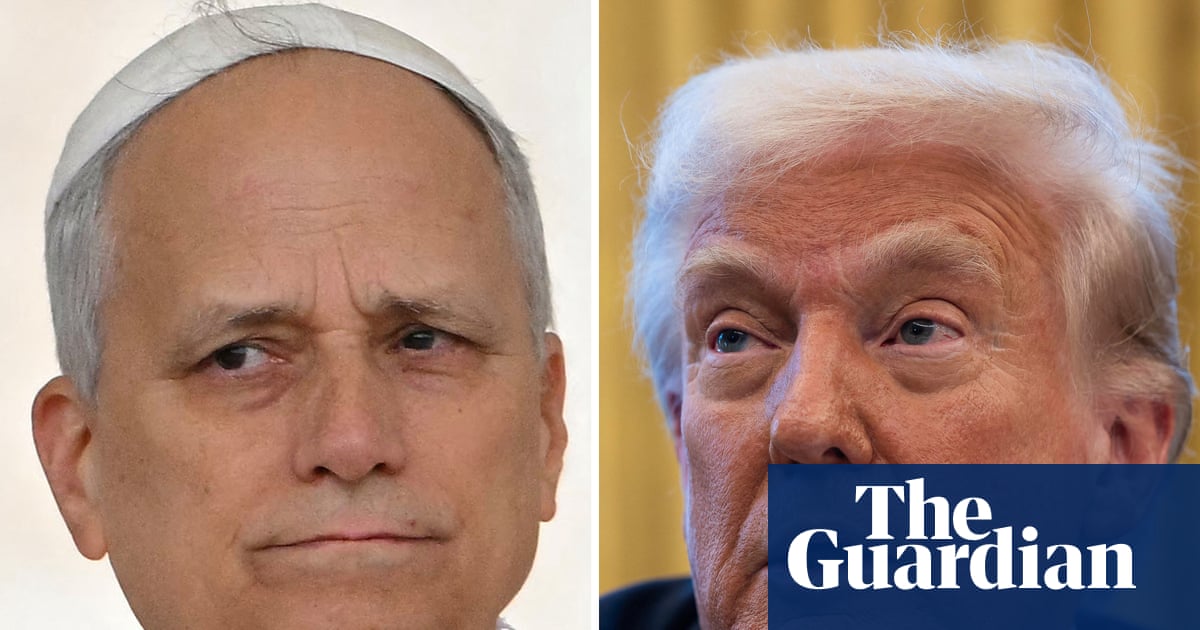
In the quiet suburban sprawl of Duluth, Georgia, where the scent of incense still lingers from a traditional Latin mass, Alex Sullivan found himself wrestling with a modern dilemma. Surrounded by his five children on the lawn of the Catholic Church of Saint Monica, his thoughts drifted from divine contemplation to the earthly realm of politics, specifically the escalating rhetorical skirmish between Donald Trump and Pope Leo. Sullivan, a self-described 'Catholic first,' embodies the complex and often contradictory loyalties of millions of American Catholics caught between their spiritual leaders and their political allegiances. This tension, amplified by Trump's populist appeal and the Church's evolving stance on social issues, is reshaping the religious and political landscape of the United States.
The Unholy Alliance: Faith and Political Identity
The American Catholic experience has long been a tapestry woven with threads of immigration, social justice, and conservative values. Historically, Catholics have been a significant voting bloc, often swinging between parties depending on the issues of the day. However, the Trump era has seen a hardening of political lines, forcing many to choose, or at least reconcile, their faith with their political identity. The current 'feud' with Pope Leo, though perhaps more a war of words than a true theological schism, highlights the deep fissures within the Church itself. For many, like Sullivan, the question becomes: when the political leader you support clashes with the spiritual leader you revere, where does your primary loyalty lie?
This isn't a new phenomenon. Throughout history, political figures have sought to align themselves with religious institutions, and religious leaders have often found themselves navigating treacherous political waters. What makes the current situation particularly acute is the highly polarized nature of American politics and the pervasive reach of social media, which amplifies every pronouncement and retort. Trump's base, which includes a significant number of white Catholics, often views his actions through a lens of cultural conservatism, seeing him as a bulwark against what they perceive as secular overreach and moral decay. For them, criticisms from the Pope might be dismissed as out-of-touch or even politically motivated, rather than a spiritual admonition.
The Pope's Authority vs. Political Pragmatism
Pope Leo, like his predecessors, often speaks on matters of social justice, poverty, migration, and environmental stewardship – issues that frequently intersect with political policy. When a political figure like Trump, known for his strong stance on immigration or his skepticism towards climate change, finds himself at odds with papal pronouncements, it creates a direct challenge to the authority of the Holy See in the minds of some adherents. The phrase 'We're Catholic first,' uttered by many parishioners, suggests an inherent belief in the Pope's spiritual leadership. Yet, the practical application of this belief often falters when it conflicts with deeply held political convictions or perceived economic interests.
Consider the historical context: the Catholic Church has always maintained a delicate balance between its spiritual mission and its engagement with temporal powers. From the Holy Roman Empire to the modern nation-state, popes have asserted moral authority, sometimes clashing with secular rulers. However, in a democratic society where individual conscience is paramount, the dynamic shifts. American Catholics, especially, have a strong tradition of independent thought and action, often separating their religious beliefs from their voting habits. This internal conflict is not merely about Trump; it's about the broader question of how much influence the Church should wield over political choices in a pluralistic society.
Generational and Ideological Divides
Interviews with Catholics across Atlanta reveal a spectrum of opinions, often correlated with age, political leaning, and even the type of mass attended. Younger, more progressive Catholics tend to align more closely with Pope Leo's social justice teachings, viewing his critiques of nationalist policies or economic inequality as integral to their faith. They might express frustration with fellow parishioners who seem to prioritize political loyalty over papal guidance. Conversely, older, more conservative Catholics, particularly those drawn to traditional Latin mass communities, often express a strong affinity for Trump's policies, especially on issues like religious freedom and the appointment of conservative judges. They might view the Pope's interventions as venturing too far into partisan politics, or even as a departure from traditional Catholic doctrine.
This generational and ideological divide is not unique to Catholicism but is particularly pronounced given the Church's hierarchical structure and its global reach. The Second Vatican Council, for instance, introduced reforms that led to different interpretations of Catholic identity and engagement with the modern world. Today, these historical currents converge with contemporary political polarization, creating a complex tapestry of belief and action. The challenge for the Church, and for individual Catholics, is to find common ground or, at the very least, mutual respect amidst these divergent viewpoints.
The Future of Faith and Politics in America
As the United States heads into another election cycle, the intersection of faith and politics will undoubtedly remain a critical battleground. For American Catholics, the ongoing tension between their spiritual home and their political leanings is a deeply personal and often agonizing one. The 'Trump vs. Pope Leo' narrative is more than just a headline; it's a microcosm of the larger struggle to reconcile deeply held values with the realities of political power. The Church, as an institution, faces the challenge of maintaining its moral authority without alienating significant portions of its flock. Individual Catholics must navigate their consciences, deciding how to live out their faith in a world that increasingly demands political alignment.
Ultimately, the varied responses from Catholics in Atlanta underscore a fundamental truth: faith, while offering universal principles, is lived out in diverse and often contradictory ways. The idea of being 'Catholic first' is a powerful declaration, but its practical implications are as varied as the individuals who utter it. Whether this period of intense political-religious friction will lead to a realignment of Catholic voting patterns, a deeper introspection within the Church, or simply a continued, uneasy coexistence of disparate views, remains to be seen. What is clear is that the conversation around faith, politics, and papal authority will continue to shape the American Catholic identity for years to come, demanding thoughtful engagement from all who participate in this complex dialogue.
Stay Informed
Get the world's most important stories delivered to your inbox.
No spam, unsubscribe anytime.
Comments
No comments yet. Be the first to share your thoughts!