Fatal Bangkok Train-Bus Crash: Driver's Drug Test Raises Alarms on Rail Safety
A devastating collision between a freight train and a public bus in Bangkok has claimed eight lives and left dozens injured. Authorities report the train driver tested positive for drugs and faces reckless driving charges, sparking a national conversation on transportation safety. This incident highlights long-standing issues within Thailand's railway system, from infrastructure to operational protocols. The tragedy underscores the urgent need for comprehensive reforms to prevent future calamities.
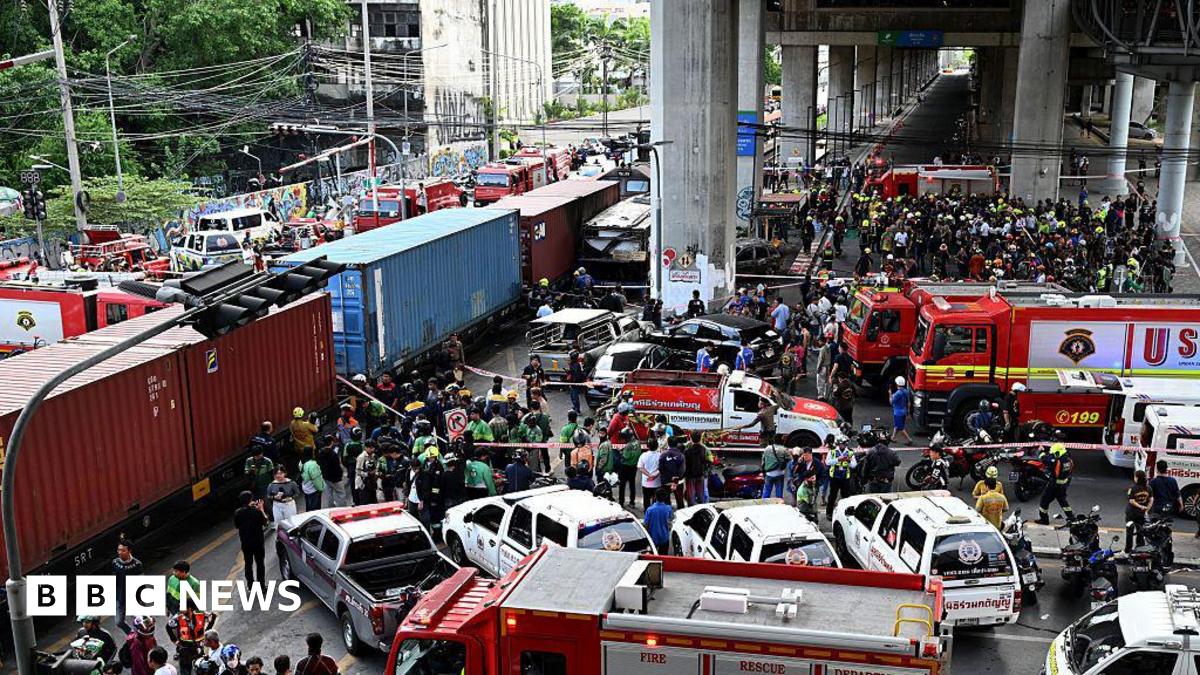
The tranquil morning commute in Bangkok was shattered by a horrific collision that has sent shockwaves across Thailand and beyond. A freight train, thundering along its tracks, slammed into a public bus at the Asoke-Din Daeng railway crossing, a busy intersection in the heart of the capital. The immediate aftermath was a scene of utter devastation: mangled metal, shattered glass, and the cries of the injured. Eight lives were tragically cut short, and dozens more sustained injuries, some critical, in an incident that has once again cast a harsh spotlight on the perennial issues of transportation safety in the Southeast Asian nation.
What began as a tragic accident quickly evolved into a national scandal as authorities revealed a disturbing detail: the driver of the freight train tested positive for drugs. This revelation has not only led to charges of reckless driving but has also ignited a fierce public debate about accountability, regulatory oversight, and the systemic vulnerabilities within Thailand's crucial railway network. The incident at Asoke-Din Daeng is more than just a local tragedy; it is a stark reminder of the human cost when safety protocols falter and individual responsibilities are neglected.
A Catastrophic Morning: The Details Unfold
The collision occurred just after 8:00 AM local time, a peak hour for commuters heading into the city center. The public bus, reportedly carrying a significant number of passengers, was attempting to cross the railway tracks when it was struck by the oncoming freight train. Eyewitness accounts describe a chaotic scene, with the bus being dragged several meters before the train came to a halt. Emergency services, including police, paramedics, and rescue workers, swiftly converged on the site, working tirelessly to extract victims from the wreckage and provide immediate medical attention. The injured were rushed to nearby hospitals, where many remain in critical condition, fighting for their lives.
Initial investigations quickly focused on the circumstances leading to the crash. While railway crossings in Thailand are often equipped with warning signals and barriers, questions have arisen regarding their functionality at the time of the accident. However, the most damning piece of evidence came from the toxicology report of the train driver. Police confirmed that the driver, whose identity has been withheld pending further investigation, tested positive for illicit substances. This finding immediately shifted the narrative from a potential infrastructure failure to a grave breach of operational safety protocols, placing immense pressure on both the individual involved and the railway authority responsible for oversight.
Thailand's Railway System: A History of Challenges
Thailand's State Railway of Thailand (SRT) operates an extensive network spanning over 4,000 kilometers, connecting major cities and provinces. While it serves as a vital mode of transport for millions, the system has long been plagued by challenges. Aging infrastructure, much of which dates back to the early 20th century, is a primary concern. Single-track lines, manual signaling systems, and a lack of modern safety technologies contribute to a higher risk profile compared to more developed railway networks globally. Despite ongoing efforts to modernize, including high-speed rail projects, the foundational issues persist.
Accidents, though not always as fatal as the Bangkok collision, are not uncommon. Data from the Ministry of Transport often points to a combination of factors: human error, inadequate maintenance, and the proliferation of unprotected railway crossings. According to a 2022 report by the Thai Road Safety Center, railway crossing accidents account for a significant percentage of rail-related fatalities, often involving vehicles attempting to beat oncoming trains or due to malfunctioning warning systems. The Asoke-Din Daeng incident tragically encapsulates these vulnerabilities, underscoring the urgent need for a holistic approach to safety that addresses both human factors and technological upgrades.
The Human Element: Drugs, Discipline, and Oversight
The revelation of the train driver's positive drug test has intensified scrutiny on the hiring practices, regular testing protocols, and disciplinary measures within the SRT. For a profession that demands unwavering focus and precision, the presence of illicit substances in a driver's system is an egregious breach of trust and safety. Experts in transportation psychology emphasize that drug impairment significantly degrades cognitive functions, reaction times, and decision-making abilities, all critical for operating heavy machinery like a train.
* Cognitive Impairment: Drugs can distort perception, impair judgment, and reduce alertness. * Reaction Time: Even slight delays in reaction can have catastrophic consequences at high speeds. * Risk Assessment: Impaired individuals may underestimate risks or make reckless decisions.
This incident raises difficult questions for the SRT: Are drug tests regular and stringent enough? What support systems are in place for employees struggling with substance abuse? And what level of accountability is expected from management to ensure a drug-free operational environment? The charges of reckless driving against the driver are a legal consequence, but the broader implications for the organization's safety culture are far-reaching. Public confidence, already fragile, demands immediate and transparent action.
Implications and the Path Forward
The Bangkok train-bus collision serves as a grim wake-up call, demanding immediate and sustained action from Thai authorities. Beyond the ongoing investigation and legal proceedings, several critical areas require urgent attention:
1. Enhanced Drug Testing and Rehabilitation Programs: Implementing more frequent, random, and comprehensive drug testing for all operational staff, coupled with confidential support and rehabilitation programs for those who test positive, could foster a safer work environment. 2. Modernization of Railway Crossings: Prioritizing the upgrade of high-risk railway crossings with automated barriers, advanced warning systems, and potentially grade separations (overpasses or underpasses) in densely populated areas. 3. Strengthening Regulatory Oversight: A thorough review of SRT's internal safety protocols, training modules, and disciplinary frameworks is essential. Independent audits could provide an unbiased assessment of current practices and recommend improvements. 4. Public Awareness Campaigns: Educating the public on railway safety, particularly at crossings, can reduce incidents caused by pedestrian or vehicle encroachment.
The tragedy at Asoke-Din Daeng is a stark reminder that transportation safety is a multi-faceted challenge, requiring continuous vigilance, investment, and a commitment to a culture of safety at all levels. While the wounds of this incident are still fresh, it presents an opportunity for Thailand to undertake meaningful reforms that will not only prevent future calamities but also restore public trust in its vital railway system. The lives lost and the injuries sustained demand nothing less than a resolute commitment to ensuring that such a catastrophe is never repeated. The path forward is arduous, but the imperative to protect lives on the tracks is paramount.
Stay Informed
Get the world's most important stories delivered to your inbox.
No spam, unsubscribe anytime.
Comments
No comments yet. Be the first to share your thoughts!