Fiji's Democratic Crossroads: FWRM Demands End to Military Immunity and Civilian Control
The Fiji Women's Rights Movement (FWRM) has submitted a powerful appeal to the Constitution Review Commission, advocating for an end to immunity provisions protecting unconstitutional actions and demanding firm civilian control over the Republic of Fiji Military Forces. This pivotal moment in Fiji's constitutional review process highlights deep-seated concerns about democratic governance, human rights, and the military's historical role in politics. The FWRM's proposals aim to safeguard future democratic stability and ensure accountability, reflecting a broader societal yearning for a truly civilian-led state.
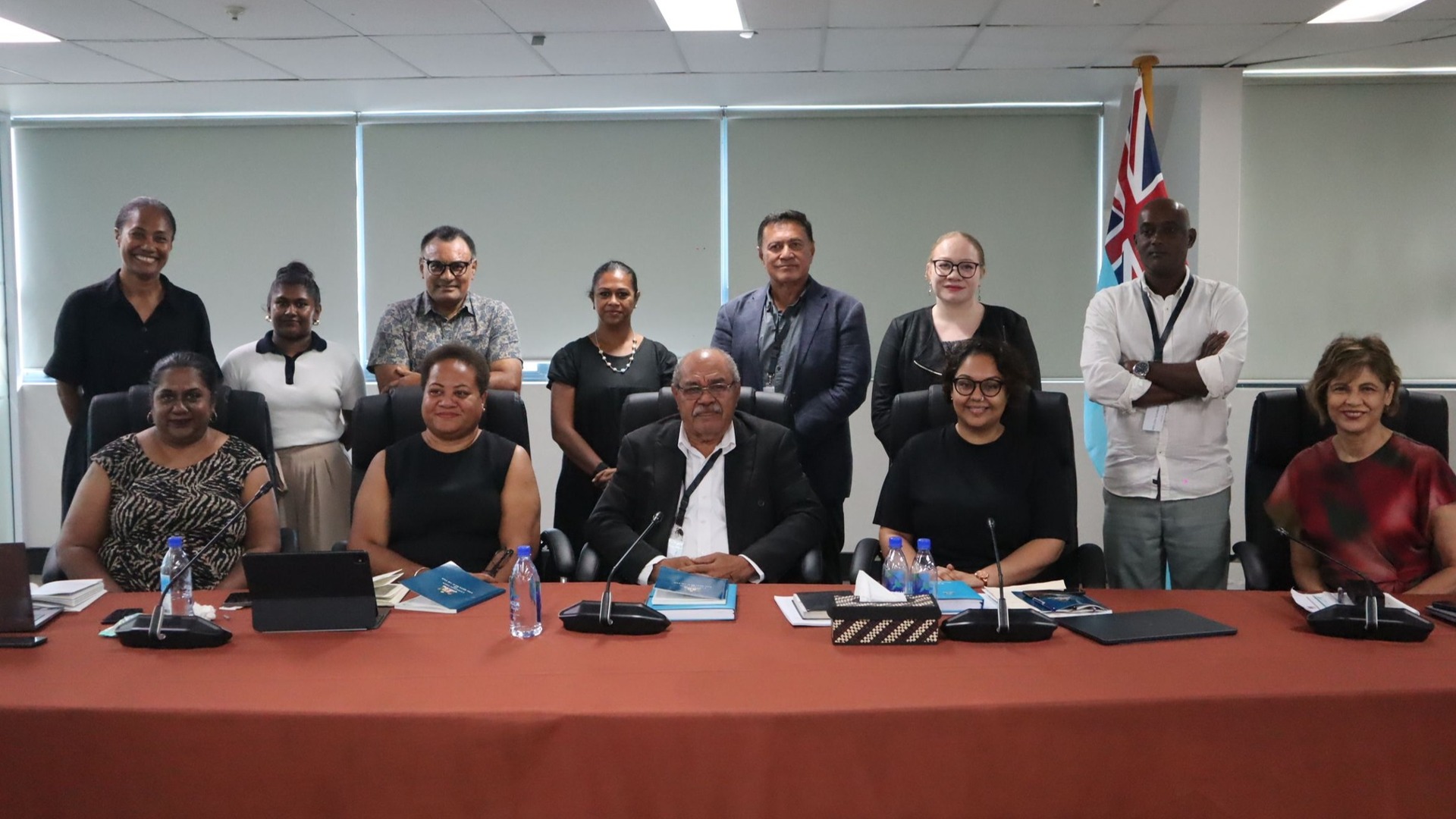
In the vibrant, yet often tumultuous, political landscape of Fiji, a significant voice has emerged, calling for fundamental reforms that could reshape the nation's democratic future. The Fiji Women's Rights Movement (FWRM) has presented a compelling and comprehensive submission to the Constitution Review Commission, advocating for the unequivocal termination of constitutional immunity provisions for future unconstitutional actions and demanding the unwavering civilian control of the Republic of Fiji Military Forces (RFMF). This bold stance underscores a critical juncture in Fiji's journey towards consolidating democratic governance and ensuring accountability, echoing sentiments of a populace weary of past political instability and military interventions.
A Legacy of Instability: Fiji's Coup History
Fiji, a jewel of the Pacific, has unfortunately been no stranger to political upheaval. Since gaining independence in 1970, the island nation has experienced four military coups and numerous attempted coups, significantly disrupting its democratic trajectory and leaving deep scars on its social and political fabric. The first coup in 1987, led by then-Lieutenant Colonel Sitiveni Rabuka, overthrew the newly elected Labour government, ostensibly to protect indigenous Fijian rights. This was followed by another coup later that year, establishing a republic and severing ties with the British monarchy. The year 2000 saw George Speight's civilian-led coup, which was eventually quelled by the military, only for the military itself to seize power in 2006 under Commodore Voreqe Bainimarama. Each of these events was characterized by the suspension of constitutional rule, human rights abuses, and a period of international isolation and economic hardship.
Crucially, following these coups, successive governments have often granted immunity provisions to those involved in the unconstitutional takeovers. These provisions, often embedded within new constitutional frameworks or decrees, have been a contentious issue, perceived by many as undermining the rule of law and perpetuating a cycle of impunity. The FWRM's call to end such provisions is a direct challenge to this historical pattern, seeking to establish a robust legal framework that deters future attempts to subvert democracy.
The FWRM's Stance: Pillars of Reform
The FWRM's submission is multifaceted, addressing several critical areas beyond just immunity. At its core, it champions gender equality and human rights, advocating for a constitution that is not only gender-responsive but also explicitly protects the rights of all Fijians, especially women and marginalized groups. Their proposals include:
* Abolition of Immunity for Unconstitutional Acts: This is perhaps the most significant demand, aiming to ensure that no individual or group, regardless of their position, can escape accountability for subverting the constitution. This would serve as a powerful deterrent against future coups and uphold the supremacy of the rule of law. * Civilian Control of the Military: The FWRM insists that the Republic of Fiji Military Forces must operate strictly under civilian authority. This means clear constitutional provisions defining the military's role as subservient to the elected government, with no independent political power or right to intervene in civilian affairs. This is a crucial step towards professionalizing the military and depoliticizing its command structure. * Strengthening Democratic Institutions: The submission also calls for robust independent institutions, including the judiciary, electoral commission, and human rights bodies, to act as checks and balances against executive overreach and protect democratic processes. * Gender-Responsive Constitution: Emphasizing the need for a constitution that actively promotes and protects women's rights, ensuring equal representation, non-discrimination, and addressing issues like gender-based violence within the legal framework.
The FWRM argues that these reforms are not merely theoretical but essential for building a stable, just, and equitable society where the rights and dignity of all citizens are respected. The organization's long-standing advocacy for women's rights and good governance lends significant weight to its current proposals, positioning them as a voice for genuine democratic renewal.
The Role of the Military in a Democratic Society
The question of the military's role in a democratic society is a perennial one, particularly in nations with a history of military intervention. In Fiji, the RFMF has historically seen itself as a guardian of national interests, sometimes interpreting this role as extending to intervening in civilian politics when it perceives a threat to stability or indigenous rights. This self-perception, coupled with the absence of strong constitutional safeguards, has often led to a blurring of lines between military and civilian authority.
Civilian control of the military is a cornerstone of any functioning democracy. It ensures that the armed forces remain an instrument of the state, accountable to the elected representatives of the people, rather than an independent political actor. This involves:
* Clear Chain of Command: The military leadership must be subordinate to the civilian Minister of Defence and the Head of Government. * Budgetary Oversight: Civilian control over the military budget prevents the armed forces from becoming financially autonomous. * Legislative Scrutiny: Parliament must have the power to legislate on military matters, including deployment and doctrine. * Judicial Review: Military actions must be subject to the review of civilian courts, especially concerning human rights.
The FWRM's demands are thus aligned with international best practices for democratic governance and civil-military relations. They seek to redefine the RFMF's mandate, shifting it from a potential political player to a professional, apolitical force dedicated to national defense and security under strict civilian oversight.
Implications and Forward Look
The Constitution Review Commission now faces the monumental task of distilling diverse submissions into a framework that can guide Fiji's future. The FWRM's proposals, particularly those concerning immunity and military control, are likely to be among the most debated. Their adoption would signal a profound commitment to learning from past mistakes and building a more resilient democracy.
For Fiji, the stakes are incredibly high. A constitution that effectively ends immunity for unconstitutional acts and firmly establishes civilian control over the military would send a powerful message both domestically and internationally. It would reassure citizens that their votes matter and that their democratic institutions are protected. It would also enhance Fiji's standing on the global stage, attracting greater investment and fostering stronger international partnerships based on shared democratic values.
Conversely, a failure to address these issues decisively could leave the door open for future instability, perpetuating the cycle of coups and undermining the progress made since the last general election. The FWRM's advocacy represents not just the voice of women, but a broader aspiration for a Fiji where the rule of law reigns supreme, where accountability is paramount, and where the military serves the nation, not dictates its destiny. The path forward for Fiji hinges on the courage and foresight of its leaders to embrace these fundamental reforms, ensuring a future of peace, stability, and genuine democratic governance for all its people.
Stay Informed
Get the world's most important stories delivered to your inbox.
No spam, unsubscribe anytime.
Comments
No comments yet. Be the first to share your thoughts!