Fragile Hope: Israel and Lebanon Extend Ceasefire Amidst Lingering Tensions
In a significant diplomatic development, Israel and Lebanon have agreed to a 45-day extension of a US-brokered ceasefire, initially declared on April 16. This extension, announced by the US State Department, aims to provide crucial time for further negotiations on long-standing border disputes and maritime claims. While offering a glimmer of hope for de-escalation, the agreement underscores the deeply entrenched historical animosities and the complex geopolitical landscape of the Middle East. Analysts caution that true peace remains elusive, with numerous internal and external factors capable of derailing this fragile truce.
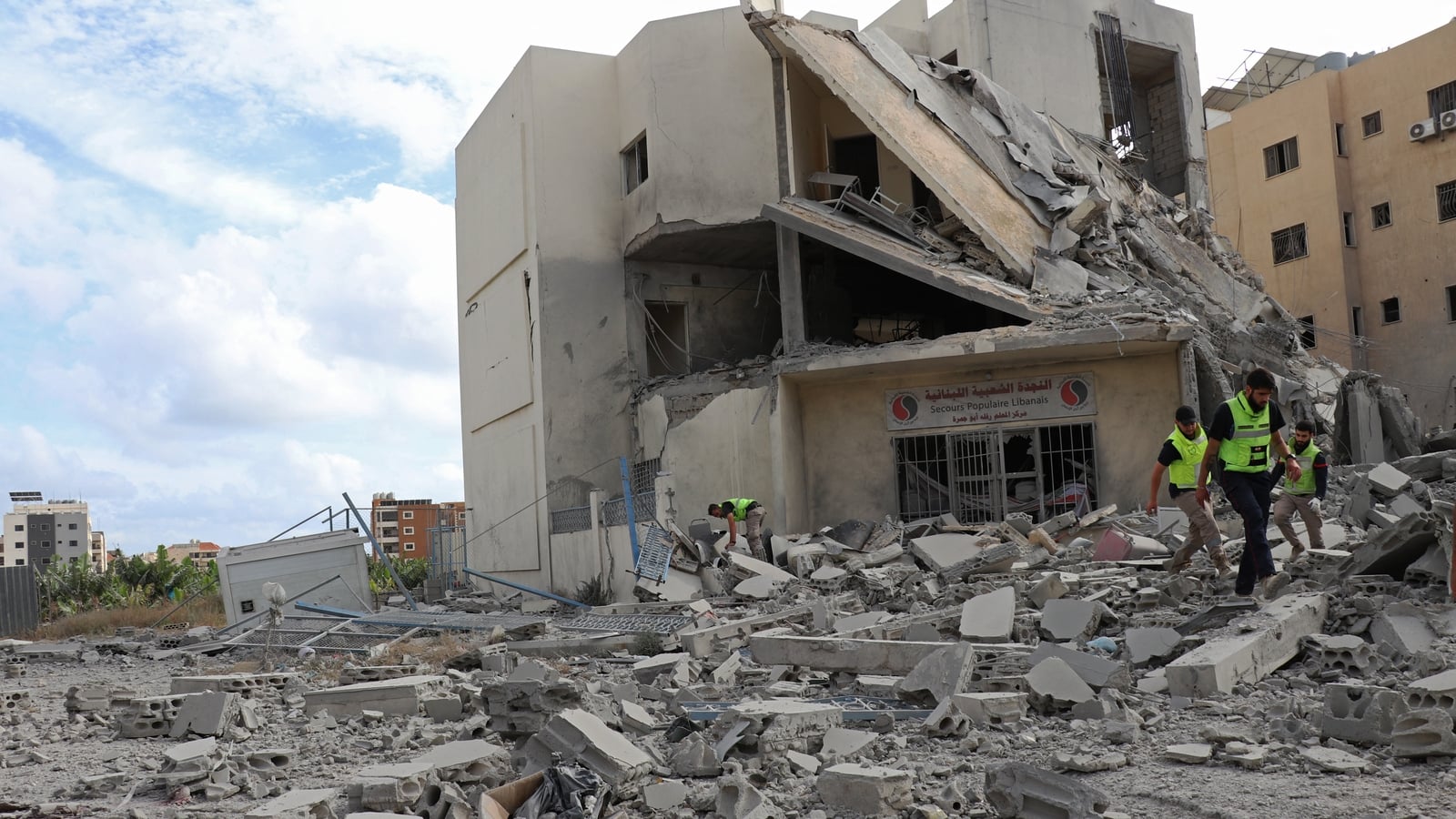
The Middle East, a region perpetually on the brink, has once again offered a moment of cautious optimism. In a move that surprised many observers, Israel and Lebanon have formally agreed to a 45-day extension of a ceasefire, initially brokered by US President Donald Trump and declared on April 16. The announcement, made by the US State Department, signals a concerted effort to de-escalate tensions and potentially pave the way for more substantive peace talks. This development, while seemingly minor in its duration, carries significant weight given the deeply entrenched historical animosities and the complex geopolitical dynamics that have long defined the relationship between these two nations.
The original cessation of hostilities, a testament to persistent US diplomatic efforts, sought to halt a recent flare-up of cross-border incidents that threatened to spiral into a wider conflict. The extension, as stated by the US, is designed "to enable further progress" – a phrase that hints at ongoing, sensitive negotiations behind closed doors. For decades, the absence of a formal peace treaty has meant that any agreement, even a temporary ceasefire, is a delicate balancing act, constantly susceptible to internal political pressures and external regional shifts.
A History of Hostilities and Unresolved Borders
The relationship between Israel and Lebanon has been characterized by decades of conflict, punctuated by periods of uneasy calm. Since the 1948 Arab-Israeli War, the two nations have technically remained in a state of war, with their shared border, known as the Blue Line, being a flashpoint for numerous skirmishes and full-scale wars. The Blue Line itself is not an internationally recognized border but rather a demarcation line established by the United Nations in 2000 following Israel's withdrawal from Southern Lebanon.
Key historical conflicts include: * 1978 Litani Operation: Israel's invasion of Southern Lebanon to push back Palestinian militants. * 1982 Lebanon War: A major Israeli invasion that led to a prolonged occupation of southern Lebanon and the rise of Hezbollah. * 2006 Lebanon War: A 34-day conflict between Israel and Hezbollah, resulting in significant casualties and infrastructure damage on both sides.
Beyond land disputes, maritime border demarcation in the Mediterranean has emerged as a critical issue, particularly with the discovery of significant offshore natural gas reserves. Both countries lay claim to potentially lucrative gas fields, leading to heated rhetoric and naval posturing. The current ceasefire extension is widely believed to be linked to attempts to resolve these maritime disputes, which hold immense economic implications for both nations.
The Role of US Diplomacy and Regional Implications
The United States has historically played a pivotal role in mediating conflicts in the Middle East, and this latest ceasefire extension is no exception. President Trump's administration, despite its controversial approach to regional diplomacy, has evidently invested significant effort in bringing both sides to the table. The US State Department's involvement underscores the belief that stability on the Israeli-Lebanese border is crucial for broader regional security.
However, the path to lasting peace is fraught with challenges. Lebanon's internal political landscape is highly fragmented, with Hezbollah, a powerful Shi'ite political party and militant group backed by Iran, wielding significant influence. Hezbollah's stance on Israel is unequivocally hostile, and any Lebanese government agreement with Israel faces an uphill battle for domestic legitimacy. This internal dynamic makes any long-term peace agreement incredibly difficult to achieve, as Hezbollah's actions often operate independently of the official Lebanese state.
For Israel, security concerns along its northern border are paramount. The presence of Hezbollah, with its estimated arsenal of over 100,000 rockets and missiles, represents a direct and existential threat. Any agreement must address these security concerns comprehensively, a task that has proven intractable for decades.
Economic Pressures and the Search for Stability
Beyond security, economic factors are increasingly driving both sides towards seeking some form of stability. Lebanon is currently grappling with one of the worst economic crises in modern history, marked by hyperinflation, widespread poverty, and a collapsing financial system. The potential for offshore gas exploration offers a lifeline, but this cannot proceed without a clear resolution of maritime boundaries. A stable border with Israel, even if just a temporary ceasefire, could attract much-needed foreign investment and aid, crucial for Lebanon's recovery.
Israel, while economically robust, also benefits from regional stability. The prospect of developing its own gas fields without constant threat, and potentially exporting gas to Europe, is a significant economic incentive. Moreover, reduced tensions on its northern front allow Israel to focus on other strategic challenges, including Iran's regional ambitions.
The Path Forward: Cautious Optimism and Persistent Challenges
The 45-day extension offers a window, albeit a narrow one, for continued dialogue. It suggests that both parties, despite their deep-seated differences, recognize the mutual benefits of de-escalation. The immediate goal is likely to formalize the maritime border, which could unlock billions in energy revenues for both countries. However, transforming a temporary ceasefire into a durable peace agreement requires addressing far more complex issues, including:
* Hezbollah's Disarmament: A non-starter for Hezbollah, but a key Israeli demand. * Land Border Demarcation: Resolving disputes along the Blue Line. * Refugee Issues: The fate of Palestinian refugees in Lebanon. * Sovereignty Concerns: Lebanon's desire for full control over its territory.
Expert analysis suggests that while a full peace treaty remains a distant dream, incremental steps, such as this ceasefire extension and potential maritime agreements, are vital. "Every day without conflict is a victory," noted Dr. Elias Khoury, a Middle East analyst. "But the underlying issues are so profound that we must temper our expectations. This is a pause, not a resolution." The international community, particularly the US and the UN, will need to maintain sustained diplomatic pressure and offer incentives to keep both sides engaged. The next 45 days will be a critical test of whether this fragile hope can evolve into something more substantial, or if the region will once again revert to its familiar cycle of tension and conflict.
Stay Informed
Get the world's most important stories delivered to your inbox.
No spam, unsubscribe anytime.
Comments
No comments yet. Be the first to share your thoughts!