Fragile Peace Holds: Israel and Lebanon Extend Ceasefire Amidst Cautious Optimism
In a significant diplomatic breakthrough, Israel and Lebanon have agreed to extend their fragile ceasefire by an additional three weeks, following high-stakes talks in Washington. Mediated by US President Donald Trump, the agreement aims to solidify the initial 10-day truce between Israel and Hezbollah, which had been set to expire. This extension offers a glimmer of hope for de-escalation in a perennially volatile region, though deep-seated historical tensions persist.
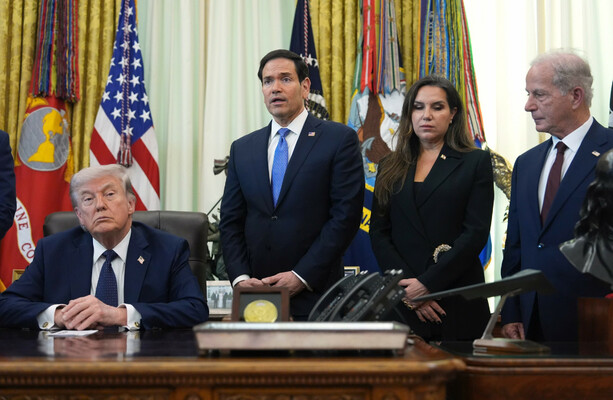
The Middle East, a region perpetually on the brink, has witnessed a rare moment of cautious optimism as Israel and Lebanon, through their respective ambassadors, agreed to extend a critical ceasefire agreement by an additional three weeks. The announcement, made by US President Donald Trump following intensive talks in Washington, D.C., breathes new life into an initial 10-day truce that had been set to expire, offering a fragile but significant window for de-escalation between Israel and the powerful Lebanese militant group Hezbollah.
This extension is more than just a procedural formality; it represents a crucial diplomatic achievement in a landscape often dominated by conflict and entrenched animosity. The initial ceasefire, which took effect last Friday, was a testament to urgent international efforts to prevent a wider conflagration. Its successful, albeit brief, implementation paved the way for this extended period, underscoring the potential for dialogue even between historical adversaries.
A Diplomatic Tightrope Walk in Washington
The negotiations that led to this extension were reportedly intense, occurring behind closed doors at the White House. While details remain sparse, President Trump confirmed the agreement, highlighting the active role played by American diplomacy in brokering the deal. "We've had very productive discussions," Trump stated, emphasizing the commitment of both Israeli and Lebanese delegations to finding common ground. The presence of ambassadors from both nations at the negotiating table, rather than higher-level political figures, might suggest a pragmatic approach, allowing for technical discussions without the immediate pressure of high-profile political grandstanding.
For the United States, this diplomatic success serves multiple purposes. It reinforces Washington's role as a key mediator in the Middle East, a position that has at times been questioned. It also demonstrates a capacity to foster dialogue even amidst complex geopolitical challenges, particularly concerning the intricate web of alliances and rivalries that define the region. The US administration will undoubtedly leverage this achievement as evidence of its commitment to regional stability, even as broader peace efforts between Israel and other Arab states continue to face significant hurdles.
The Shadow of Hezbollah: A Complex Dynamic
Central to this ceasefire is the involvement of Hezbollah, the Shiite political party and militant group in Lebanon. Recognized by many Western nations, including the US, as a terrorist organization, Hezbollah wields significant political and military influence within Lebanon, often acting as a state within a state. Its extensive arsenal and close ties to Iran make it a formidable adversary for Israel, and a key player in any discussion of Lebanese security.
Israel's primary concern has always been Hezbollah's military capabilities and its presence along the northern border. Past conflicts, most notably the 2006 Lebanon War, underscore the destructive potential of direct confrontation. Therefore, any agreement that temporarily halts hostilities with Hezbollah is viewed by Israel as a strategic necessity, even if it does not address the fundamental issues of disarmament or border security in the long term.
For Lebanon, the calculus is equally complex. The country is grappling with a severe economic crisis, political instability, and the lingering aftermath of the Beirut port explosion. A renewed conflict with Israel would be catastrophic, further destabilizing an already fragile nation. While the Lebanese government officially denies direct control over Hezbollah's military actions, it implicitly benefits from any cessation of hostilities that prevents further damage to its infrastructure and economy. The extension of the ceasefire, therefore, provides a much-needed reprieve, allowing the government to focus on internal challenges, however fleeting that peace may be.
Historical Context and Future Implications
The relationship between Israel and Lebanon has been defined by decades of conflict, proxy wars, and unresolved border disputes. From the Israeli invasion of Lebanon in 1982 to the 2006 war, the two nations have technically remained in a state of war. The absence of a formal peace treaty means that any agreement, even a temporary ceasefire, is a significant departure from the norm and often relies on indirect communication channels and third-party mediation.
This extended ceasefire, while welcome, does not signal a fundamental shift in the underlying dynamics. It is a tactical pause, a moment for both sides to regroup and reassess, rather than a step towards a comprehensive peace agreement. The core issues – Hezbollah's armament, the disputed Shebaa Farms territory, and the broader Israeli-Palestinian conflict – remain unresolved. However, every period of calm, no matter how brief, offers an opportunity for trust-building, albeit minimal, and prevents immediate escalation.
Looking forward, the three-week extension provides a critical window for further diplomatic efforts. The challenge will be to translate this temporary cessation of hostilities into more durable arrangements. This could involve discussions on border demarcation, mechanisms for de-escalation, or even indirect talks on the future of Hezbollah's military wing. The international community, particularly the United States, will need to maintain sustained pressure and engagement to prevent a relapse into conflict.
Ultimately, the success of this extended ceasefire will be measured not just by the absence of violence during this period, but by whether it can lay the groundwork for more substantive dialogue. The path to lasting peace in the Middle East is fraught with obstacles, but this agreement, however modest, serves as a reminder that even in the most entrenched conflicts, diplomacy can sometimes carve out a space for hope.
Stay Informed
Get the world's most important stories delivered to your inbox.
No spam, unsubscribe anytime.
Comments
No comments yet. Be the first to share your thoughts!