Ghana Forges Landmark Partnership with Cambridge Education to Revolutionize National Learning
Ghana's Ministry of Education has inked a pivotal Memorandum of Understanding with Cambridge Education, signaling a new era for the nation's ambitious education reform agenda. This collaboration aims to leverage global best practices to uplift educational standards, curriculum development, and teacher training across the country. The initiative underscores Ghana's commitment to fostering a knowledge-based economy and preparing its youth for future challenges.
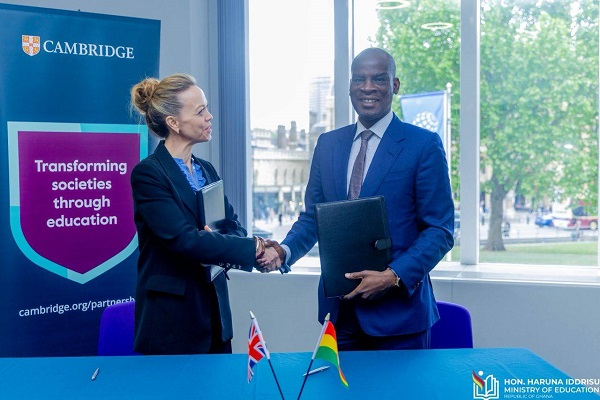
In a move poised to reshape the educational landscape of West Africa, Ghana's Ministry of Education has officially signed a landmark Memorandum of Understanding (MoU) with Cambridge Education. This strategic partnership, announced by the Minister for Education, Haruna Iddrisu, is designed to inject new impetus into Ghana’s ongoing and ambitious education reform agenda, promising a future where quality learning is accessible and globally competitive.
The agreement, forged at a critical juncture in global education, signifies Ghana's proactive approach to addressing systemic challenges and embracing international best practices. Cambridge Education, renowned for its expertise in educational consultancy and reform across diverse contexts, will now lend its considerable experience to support Ghana in areas ranging from curriculum development and assessment frameworks to teacher professional development and digital learning integration. This collaboration is not merely an exchange of ideas but a deep, structural engagement aimed at creating sustainable, impactful change from the ground up.
A Vision for Educational Transformation
Ghana has long recognized education as the cornerstone of its national development and economic prosperity. Over the past decades, the nation has made significant strides in increasing access to education, particularly at the primary level. However, challenges persist in areas such as curriculum relevance, teacher quality, infrastructure, and the integration of technology. The current reform agenda seeks to address these gaps comprehensively, moving beyond mere access to focus on quality, equity, and relevance in a rapidly evolving global economy.
Minister Iddrisu emphasized that the partnership with Cambridge Education is a testament to Ghana's commitment to "building a resilient, future-ready education system." He highlighted the importance of aligning Ghana's educational outcomes with international benchmarks, ensuring that Ghanaian graduates are equipped with the skills and knowledge necessary to thrive in the 21st century. This includes critical thinking, problem-solving, digital literacy, and entrepreneurship – competencies that are increasingly vital in a knowledge-driven world.
The MoU outlines several key areas of cooperation. Firstly, it will focus on curriculum review and development, ensuring that what is taught in Ghanaian classrooms is not only culturally relevant but also globally competitive and aligned with industry needs. Secondly, there will be a strong emphasis on teacher training and professional development, recognizing that the quality of an education system is intrinsically linked to the quality of its educators. Investment in continuous professional learning, mentorship programs, and upskilling teachers in modern pedagogical approaches will be paramount. Thirdly, the partnership will explore ways to enhance assessment and examination systems, making them more robust, fair, and reflective of actual learning outcomes, moving beyond rote memorization towards a deeper understanding and application of knowledge.
The Role of Cambridge Education: A Global Perspective
Cambridge Education brings to this partnership a wealth of experience gained from working with governments and educational institutions across more than 80 countries. Their approach is typically characterized by a blend of rigorous research, evidence-based policy advice, and practical implementation support. This global perspective is crucial for Ghana, as it allows the nation to draw lessons from diverse educational contexts and adapt successful strategies to its unique socio-cultural and economic environment.
Representatives from Cambridge Education expressed their enthusiasm for the collaboration, noting Ghana's strong political will and clear vision for educational reform. They underscored their commitment to a "collaborative and co-creative process," ensuring that solutions are locally owned and sustainable. This involves working closely with Ghanaian educators, policymakers, and communities to develop tailored interventions that resonate with local needs and aspirations. The partnership is expected to facilitate knowledge transfer, capacity building within the Ministry of Education, and the establishment of robust monitoring and evaluation frameworks to track progress and ensure accountability.
Historical Context and Future Implications
Ghana's journey in education reform has a rich history, marked by various initiatives aimed at improving access and quality since independence. From the Accelerated Development Plan for Education in the 1950s to the Free Compulsory Universal Basic Education (FCUBE) policy in the 1990s and the more recent Free Senior High School (Free SHS) policy, the nation has consistently prioritized education. However, each reform has brought its own set of challenges, often related to funding, implementation, and quality assurance.
This latest partnership with Cambridge Education signals a move towards a more integrated and internationally benchmarked approach. It acknowledges that while access is vital, the quality of education delivered is equally, if not more, important for national development. The implications are far-reaching:
* Enhanced Human Capital: A better-educated workforce will drive economic growth, innovation, and competitiveness. * Reduced Inequality: Improved educational quality, especially in underserved areas, can help bridge socio-economic disparities. * Global Recognition: Alignment with international standards can boost the reputation of Ghanaian educational institutions and qualifications. * Sustainable Development: Education is a key enabler for achieving the United Nations Sustainable Development Goals, particularly SDG 4 (Quality Education).
The success of this MoU will hinge on several factors, including consistent political commitment, adequate funding, effective implementation strategies, and continuous engagement with all stakeholders – teachers, parents, students, and communities. The integration of digital learning technologies, particularly in a post-pandemic world, will also be a critical component, ensuring that Ghana's education system is resilient and adaptable to future disruptions.
A Path Towards a Brighter Future
As Ghana embarks on this significant educational journey with Cambridge Education, the aspirations are high. This partnership represents more than just an agreement; it embodies a shared commitment to nurturing the potential of Ghana's youth and building a foundation for sustained national progress. The coming years will be crucial in translating the ambitious goals of this MoU into tangible improvements in classrooms across the country. With careful planning, dedicated execution, and collaborative spirit, Ghana is well-positioned to emerge as a leader in educational innovation in the African continent, proving that strategic international partnerships can indeed be a powerful catalyst for transformative change.
Stay Informed
Get the world's most important stories delivered to your inbox.
No spam, unsubscribe anytime.
Comments
No comments yet. Be the first to share your thoughts!