Global Economic Chiefs Sound Alarm on Iran War's Far-Reaching Consequences
The heads of the IEA, IMF, and World Bank have collectively warned of severe global repercussions stemming from the conflict involving the United States, Israel, and Iran. Their joint statement underscores potential disruptions to energy markets, financial stability, and development efforts worldwide, urging a de-escalation to avert a deeper economic crisis.
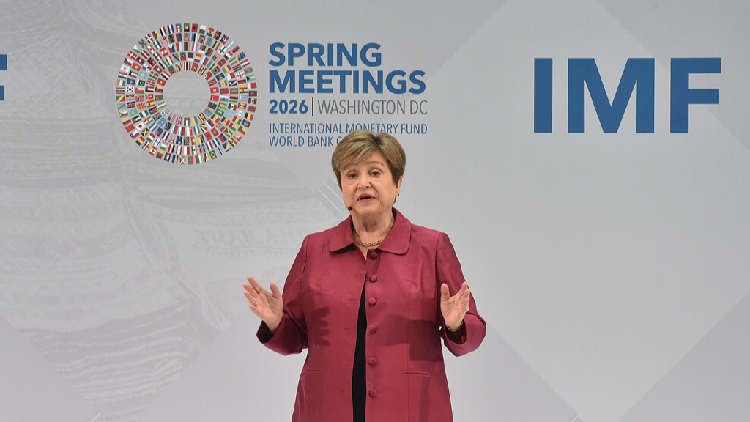
In a rare display of unified concern, the leaders of three of the world's most influential economic and financial institutions – the International Energy Agency (IEA), the International Monetary Fund (IMF), and the World Bank Group – issued a stark warning on Monday regarding the escalating conflict involving the United States, Israel, and Iran. Their collective statement, emerging from a coordinated meeting, highlighted the profound and potentially devastating global impacts of the ongoing hostilities.
Fatih Birol, Executive Director of the IEA, underscored the immediate threat to global energy security. "The Strait of Hormuz, a critical chokepoint for a significant portion of the world's oil supply, remains highly vulnerable," Birol stated. "Any sustained disruption, whether through direct conflict or heightened tensions, would inevitably lead to a sharp spike in oil prices, triggering inflationary pressures and potentially plunging energy-dependent economies into recession." He emphasized that even the perception of instability in the region could drive up insurance costs for shipping, further burdening global trade and supply chains.
Kristalina Georgieva, Managing Director of the IMF, focused on the broader macroeconomic implications. "At a time when the global economy is still grappling with the aftershocks of recent crises and navigating a fragile recovery, a major conflict in the Middle East would be catastrophic," Georgieva warned. "It would exacerbate existing vulnerabilities, disrupt trade routes, stifle investment, and divert crucial resources away from development and climate initiatives. Financial markets would undoubtedly react with extreme volatility, leading to capital flight from emerging markets and tightening global liquidity." The IMF's latest projections, already cautious, would likely be revised downwards significantly should the conflict intensify.
David Malpass, President of the World Bank Group, highlighted the humanitarian and developmental fallout. "Beyond the immediate economic shock, the long-term consequences for human development, particularly in the Middle East and North Africa region, would be immense," Malpass asserted. "Increased instability, displacement, and food insecurity would reverse years of progress in poverty reduction and education. The international community's capacity to address global challenges like climate change and pandemics would be severely hampered as resources are diverted to crisis response." He called for urgent diplomatic efforts to de-escalate the situation and protect the most vulnerable populations.
The joint warning from these three powerful bodies reflects a growing consensus among international experts that the geopolitical tensions in the Middle East pose an existential threat to global economic stability. The region's strategic importance, particularly its role in global energy markets, means that any major conflict has ripple effects that extend far beyond its borders. Analysts suggest that the timing of this joint statement is crucial, aiming to pressure international actors to prioritize diplomatic solutions and prevent a full-scale regional conflagration that could unravel years of economic recovery and cooperation. The call for de-escalation is not merely a plea for peace, but a pragmatic assessment of the dire economic consequences looming on the horizon.