Googlebook Unveiled: Is This the Android-Powered Laptop That Will Redefine Personal Computing?
Google has officially teased its new 'Googlebook,' a laptop running a desktop-optimized Android-based operating system, signaling a potential successor to Chrome OS. This ambitious project aims to merge the familiarity of Android with enhanced productivity features, including Gemini AI integration for contextual suggestions and a 'Quick Access' feature for seamless multitasking. The move could reshape the laptop market, offering a fresh alternative to Windows and macOS with a focus on AI-driven efficiency and cloud integration.
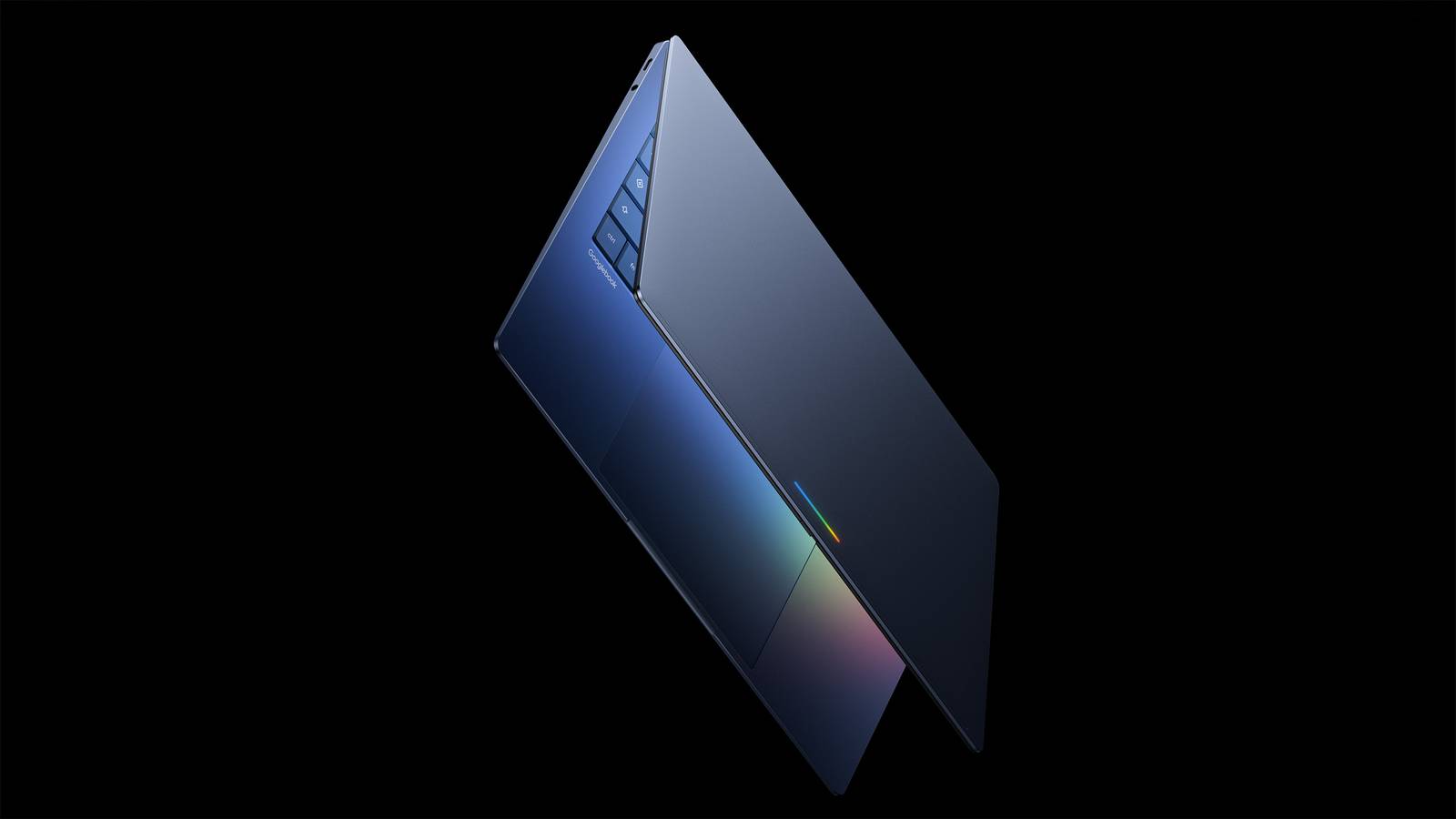
In a move that has sent ripples across the technology landscape, Google has officially pulled back the curtain on its highly anticipated 'Googlebook,' a new laptop poised to redefine the personal computing experience. Billed as the spiritual successor to the ubiquitous Chromebook and its Chrome OS, this innovative device will run on a desktop-optimized Android-based operating system. This isn't just an incremental update; it's a bold declaration from Mountain View that they are, once again, 'rethinking laptops,' aiming to blend the intuitive familiarity of Android with the robust productivity demands of a modern desktop environment. The implications are vast, promising a new paradigm for how users interact with their devices, driven by artificial intelligence and seamless cloud integration.
The Dawn of Desktop Android: A New OS Paradigm
The core of the Googlebook's innovation lies in its operating system. While details remain somewhat guarded, Google has confirmed it will be an Android-based OS, meticulously crafted for a laptop form factor. This marks a significant departure from Chrome OS, which, despite its success in education and budget-friendly segments, often felt like a browser-first experience with limited native application capabilities. The new Android-based OS suggests a more robust app ecosystem from the get-go, leveraging the billions of Android applications already available. However, the challenge will be to ensure these apps are not merely scaled-up phone versions but are genuinely optimized for larger screens, keyboard, and mouse input, and multitasking. Google's past attempts, like Android on tablets, have been met with mixed success, making this a critical juncture for the company. The promise here is a seamless transition for users deeply embedded in the Android ecosystem on their smartphones, extending that familiarity and app library directly to their primary computing device. This could be a game-changer for productivity, content creation, and entertainment, offering a unified user experience across devices.
Gemini Integration: The AI-Powered Future of Productivity
Perhaps the most exciting revelation surrounding the Googlebook is its deep integration with Gemini, Google's advanced AI model. Users will experience AI-powered contextual suggestions simply by 'wiggling the cursor' when highlighting text or images. Imagine highlighting a block of text in an email and Gemini instantly suggesting meeting times based on your calendar, or comparing images directly within a document without leaving your current application. This level of proactive, intelligent assistance could dramatically streamline workflows, reduce cognitive load, and enhance overall efficiency. It moves beyond simple voice commands or search queries, embedding AI directly into the fabric of the user interface. This aligns with Google's broader strategy of infusing AI across all its products, positioning Gemini as a central pillar of the Googlebook experience. The ability to set meetings, compare images, summarize documents, or even draft responses with minimal effort represents a significant leap forward in personal computing, promising a truly intelligent companion rather than just a tool.
Quick Access and Multitasking: Redefining Workflow
Beyond Gemini, the Googlebook introduces a feature called 'Quick Access,' hinting at a sophisticated approach to multitasking and rapid information retrieval. While specifics are yet to be fully detailed, 'Quick Access' likely refers to an intuitive way to jump between applications, access frequently used tools, or pull up relevant information without breaking the flow of work. This could manifest as a refined dock, an intelligent search bar, or a contextual sidebar that anticipates user needs. For years, the debate between Windows, macOS, and Chrome OS has often centered on their respective multitasking capabilities. Google's explicit focus on 'rethinking laptops' suggests they are tackling this head-on, aiming to create an environment where switching contexts is seamless and efficient. This is crucial for professionals and power users who often juggle multiple applications, documents, and communication channels simultaneously. If Google can deliver a truly fluid multitasking experience, it could win over users who found Chrome OS too restrictive for their demanding workflows.
Historical Context: From Chromebooks to Googlebook
The journey to the Googlebook is paved with Google's previous ventures into personal computing. The Chromebook, launched over a decade ago, carved out a niche as an affordable, secure, and easy-to-manage device, particularly popular in education and for users primarily reliant on web applications. Chrome OS, built on the Linux kernel and centered around the Chrome browser, prioritized speed, simplicity, and cloud storage. While successful, its limitations in running traditional desktop applications and its reliance on web connectivity often drew criticism. The Googlebook, with its Android-based OS, appears to address these very limitations, aiming for a broader appeal. This evolution mirrors the trajectory of other tech giants; Apple, for instance, successfully transitioned its macOS to Apple Silicon, blurring the lines between desktop and mobile architectures. For Google, the Googlebook represents a maturation of its vision for computing, moving beyond the browser-centric model to a more comprehensive, app-driven ecosystem that leverages the power of its mobile platform.
Market Implications and Future Outlook
The launch of the Googlebook is not just a new product; it's a strategic play in the fiercely competitive laptop market, currently dominated by Apple and Microsoft. By offering an Android-based OS, Google is creating a distinct third ecosystem that could attract users seeking alternatives to the established players. Its success will depend on several factors: the quality of the hardware, the robustness and optimization of the new OS, the developer adoption for desktop-optimized Android apps, and, crucially, the pricing strategy. If Google can deliver a premium experience at a competitive price point, the Googlebook could capture significant market share. Moreover, the deep integration of Gemini AI positions Googlebook as a frontrunner in the AI PC revolution, potentially setting new standards for intelligent computing. This move could also signal a closer integration between Google's hardware and software divisions, leading to a more cohesive and optimized user experience across its entire product portfolio. The 'rethinking laptops' mantra suggests a long-term vision, and the Googlebook might just be the first step in a much larger transformation of how we perceive and use our personal computers, making them more intelligent, intuitive, and seamlessly integrated into our digital lives.
Stay Informed
Get the world's most important stories delivered to your inbox.
No spam, unsubscribe anytime.
Comments
No comments yet. Be the first to share your thoughts!