Gulf's Desperate Gambit: The Crypto Lifeline Amidst Hormuz Chaos
With the Strait of Hormuz largely incapacitated by two months of conflict, Gulf nations are facing an unprecedented energy crisis. This article explores the innovative, albeit risky, strategies being deployed to circumvent the choke point, including a surprising pivot towards blockchain-backed energy trade. We delve into the geopolitical implications and the potential for digital currencies to reshape global energy security.
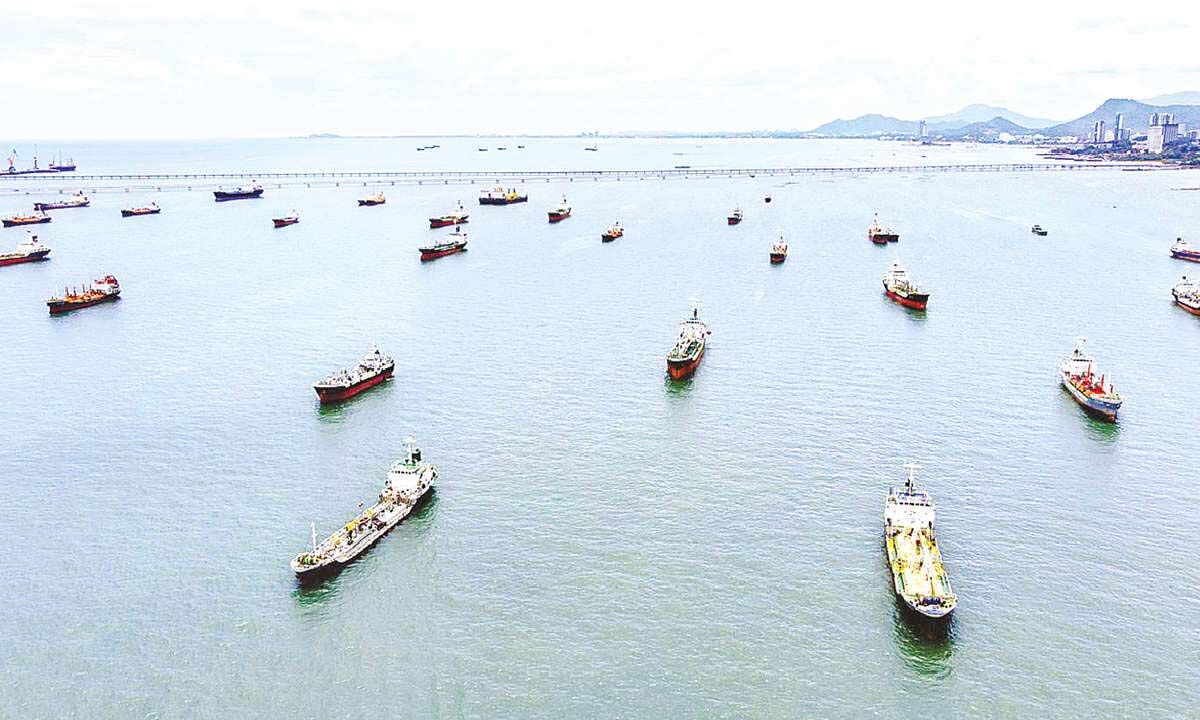
The shimmering waters of the Strait of Hormuz, once a bustling artery for a third of the world's seaborne oil and a quarter of its liquefied natural gas, have become a perilous bottleneck. Two months into the Iran war, this vital maritime passage remains largely shut, its once-constant flow reduced to a trickle. A fragile patchwork of ceasefires, blockades, and re-closures since February 28 has done little to restore confidence, leaving global energy markets in disarray and Gulf nations scrambling for alternatives. The economic and strategic implications are staggering, forcing a radical re-evaluation of energy logistics and, surprisingly, accelerating the adoption of novel financial technologies.
The Crippling Grip of Hormuz's Closure
The Strait of Hormuz, a narrow waterway separating the Persian Gulf from the Gulf of Oman, is more than just a shipping lane; it is a geopolitical fault line. Its closure, or even severe disruption, sends shockwaves through the global economy, impacting everything from oil prices to international relations. For Gulf Cooperation Council (GCC) states – Saudi Arabia, UAE, Qatar, Kuwait, Bahrain, and Oman – the Strait is their primary gateway to world markets. Their economies are inextricably linked to the free flow of hydrocarbons through this channel. The current crisis has exposed the profound vulnerability inherent in this dependence.
Before the conflict, approximately 21 million barrels of oil per day, along with vast quantities of LNG, transited Hormuz. Today, that figure is a mere fraction, leading to soaring insurance premiums, rerouted vessels, and an urgent search for viable alternatives. The existing pipelines, such as Saudi Arabia's Petroline (East-West Pipeline) and the UAE's Habshan-Fujairah pipeline, offer some relief, but their combined capacity is insufficient to offset the loss of the Strait's full throughput. Furthermore, these pipelines themselves are not immune to regional instability, adding another layer of risk to an already precarious situation. The war has not only disrupted physical trade routes but has also eroded the trust and predictability that underpin international commerce, prompting a desperate search for resilient, decentralized solutions.
Traditional Alternatives and Their Limitations
Historically, the primary alternatives to the Strait of Hormuz have involved overland pipelines bypassing the choke point. Saudi Arabia's Abqaiq-Yanbu pipeline, with a capacity of around 5 million barrels per day, and the UAE's Fujairah pipeline, capable of moving approximately 1.5 million barrels daily, are crucial assets. Kuwait and Iraq have also explored pipelines to avoid the Strait, though these projects often face significant logistical and political hurdles. Oman, uniquely positioned outside the Strait, offers some strategic advantage, but its export capacity is limited compared to its larger neighbors.
However, these traditional alternatives have inherent limitations. Firstly, their combined capacity falls far short of the volumes typically transported through Hormuz. Secondly, building new, large-scale pipelines is a monumental undertaking, requiring billions of dollars, years of construction, and often traversing politically sensitive territories. The geopolitical complexities of the Middle East mean that securing rights-of-way and ensuring the long-term security of such infrastructure is a constant challenge. Moreover, even these pipelines are not entirely immune to sabotage or regional conflict, as demonstrated by past incidents. The current crisis underscores the need for solutions that are not merely alternative routes, but fundamentally different paradigms for energy trade.
The Unforeseen Crypto Pivot: Decentralizing Energy Trade
In a surprising, yet increasingly pragmatic move, several Gulf nations are quietly exploring and even implementing blockchain-based solutions to mitigate the impact of the Hormuz closure. The idea is to create a more resilient, transparent, and less centralized system for energy transactions, reducing reliance on traditional financial intermediaries and physical shipping routes. This pivot is not about physically moving oil via crypto, but about using blockchain for tokenized energy assets and smart contracts to facilitate trade and payment, even when physical logistics are compromised or uncertain.
Sources within regional financial circles indicate that pilot programs are underway involving the tokenization of oil and gas reserves. This would allow for the digital representation of physical commodities, enabling faster, more secure, and auditable transactions. For instance, a buyer could purchase tokenized oil that is physically stored in a secure, non-Hormuz-dependent location (e.g., Fujairah storage facilities or pipelines feeding directly to the Gulf of Oman), with ownership transferred instantly via a blockchain ledger. This bypasses the traditional letter of credit system and reduces settlement times, crucial in times of high volatility and uncertainty.
Furthermore, the use of stablecoins pegged to major fiat currencies or even commodity baskets is being explored for cross-border payments, offering an alternative to traditional banking channels that might be slow or subject to sanctions. This decentralization of financial infrastructure provides a critical layer of resilience, allowing trade to continue even if conventional systems are disrupted. The UAE, a known leader in blockchain adoption, is reportedly at the forefront of these initiatives, leveraging its regulatory sandbox and technological infrastructure to test these innovative solutions. While still nascent, the potential for crypto to act as a 'digital bypass' for physical chokepoints is gaining serious traction, driven by the sheer necessity of the current crisis.
Geopolitical Implications and Future Outlook
The embrace of blockchain and crypto in energy trade carries profound geopolitical implications. Firstly, it could significantly reduce the strategic importance of physical chokepoints like Hormuz, at least in terms of financial settlement and ownership transfer. While the physical movement of oil will always be necessary, the ability to trade and secure payment for it digitally could lessen the immediate economic shock of disruptions. This decentralization could empower nations to maintain economic activity even under duress, potentially altering power dynamics in regions prone to conflict.
Secondly, it could lead to the emergence of new digital trade corridors, bypassing traditional financial hubs and potentially challenging the dominance of the US dollar in commodity trading. If successful, this could accelerate the global trend towards de-dollarization and foster greater financial autonomy for nations. However, this also presents new challenges, including regulatory complexities, cybersecurity risks, and the need for robust legal frameworks to govern tokenized assets and smart contracts across international borders.
Looking ahead, the crisis in the Strait of Hormuz is serving as an unexpected catalyst for innovation in the energy sector. While traditional alternatives like pipelines will continue to be developed, the digital frontier, spearheaded by blockchain and cryptocurrencies, offers a truly transformative path. The Gulf nations, driven by necessity, are becoming unlikely pioneers in this space. The long-term success of these crypto-driven strategies will depend on international cooperation, regulatory clarity, and the ability to scale these pilot programs effectively. What is clear, however, is that the future of energy security will not only be about pipelines and tankers but also about secure, decentralized digital ledgers, fundamentally reshaping how the world trades its most vital resources. The Strait of Hormuz may be physically constrained, but the digital alternatives are opening up new, uncharted waters for global commerce.
Stay Informed
Get the world's most important stories delivered to your inbox.
No spam, unsubscribe anytime.
Comments
No comments yet. Be the first to share your thoughts!