H55's Electric Flight Breakthrough: System Safety Verification Paves Way for Sustainable Aviation
H55, a Swiss aerospace company, has successfully completed critical System Safety Function Verification Testing for its integrated Energy Storage System (ESS). This milestone significantly de-risks the development of certified electric propulsion solutions, bringing zero-emission aviation closer to reality. The rigorous testing ensures the ESS meets stringent safety standards, crucial for its application in electric aircraft. This achievement positions H55 as a leader in the race for sustainable air travel, promising a future of quieter, cleaner flights.
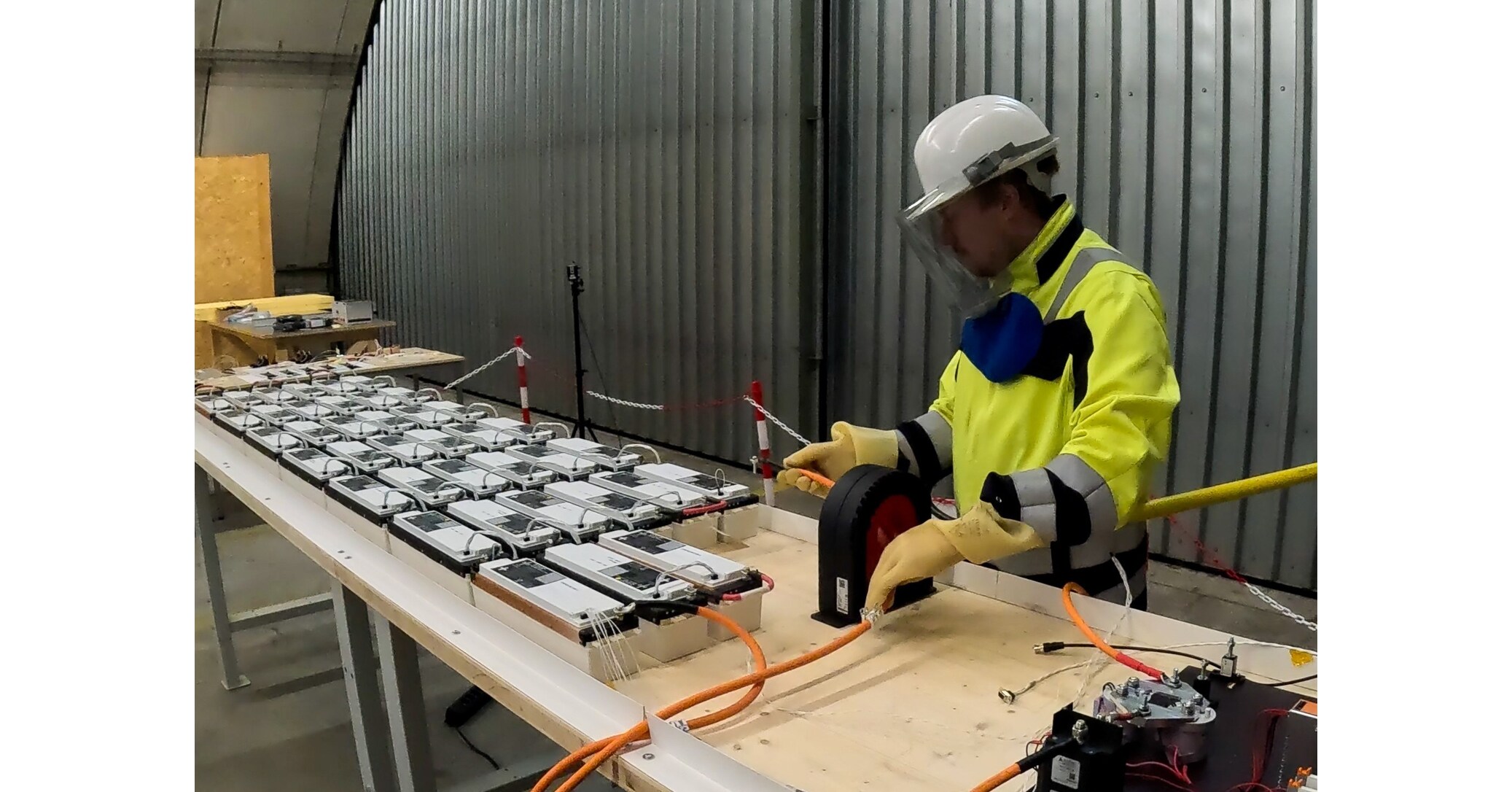
In a pivotal moment for sustainable aviation, Swiss aerospace innovator H55 announced the successful completion of its System Safety Function Verification Testing for its integrated Energy Storage System (ESS). This achievement, revealed on April 29, 2026, from Sion, Switzerland, marks a significant de-risking step in the journey towards certified electric propulsion solutions. For an industry grappling with the imperative of decarbonization, this milestone is not merely technical; it’s a beacon of progress, signaling a tangible shift from conceptual designs to certifiable, real-world applications.
The global aviation sector is under immense pressure to reduce its environmental footprint. Traditional jet fuel combustion contributes significantly to greenhouse gas emissions and noise pollution. Electric propulsion, utilizing advanced battery technologies, offers a compelling alternative. However, the path to electric flight is fraught with challenges, primarily concerning power density, weight, and, most critically, safety. H55’s latest success directly addresses these concerns, demonstrating a robust and reliable ESS capable of meeting the rigorous demands of airborne operations.
The Rigor of Verification: What it Means for Electric Flight
The System Safety Function Verification Testing is far from a trivial exercise. It involves a comprehensive evaluation of the ESS's ability to operate safely under various conditions, including potential fault scenarios. This testing regime is designed to identify and mitigate risks associated with battery thermal runaway, electrical shorts, and other critical failures that could compromise flight safety. For an ESS destined for aircraft, adherence to the highest safety standards is non-negotiable. Regulators like the European Union Aviation Safety Agency (EASA) and the Federal Aviation Administration (FAA) demand exhaustive proof of safety before any new technology can be integrated into commercial or even private aircraft.
H55's methodology likely involved a combination of simulated environments and physical testing, pushing the ESS to its operational limits. The successful completion of such tests provides crucial data and confidence to certification authorities, streamlining the often-arduous process of gaining airworthiness approval. This isn't just about making batteries work; it's about making them work safely, reliably, and predictably in the unforgiving environment of aviation. The company’s focus on an integrated system approach, encompassing not just the battery cells but also the battery management system (BMS), thermal management, and power distribution, is key to this holistic safety validation.
A Historical Perspective: The Evolution of Electric Aviation
The dream of electric flight is not new. Early pioneers experimented with battery-powered aircraft in the late 19th and early 20th centuries, but the limitations of battery technology quickly became apparent. The energy density of early batteries was insufficient to provide meaningful range or payload capacity, relegating electric aircraft to niche applications or short, experimental flights. The advent of the jet engine and high-octane fuels cemented the dominance of fossil-fuel-powered aviation for decades.
However, in the last two decades, a confluence of factors has reignited interest in electric flight. Rapid advancements in lithium-ion battery technology, driven largely by the automotive and consumer electronics sectors, have dramatically improved energy density and power output. Simultaneously, growing environmental awareness and stricter emissions regulations have spurred innovation in alternative propulsion systems. Companies like H55, formed by André Borschberg, co-founder of Solar Impulse, a pioneering solar-powered aircraft project, stand on the shoulders of these advancements, translating ground-breaking research into practical aerospace solutions. The journey from Solar Impulse's circumnavigation to H55's certifiable ESS represents a significant leap in maturity and commercial viability for electric aviation.
Implications for the Future of Air Travel
The successful verification of H55's ESS has profound implications across several segments of the aviation industry. Firstly, it accelerates the development of electric commuter aircraft, often referred to as Electric Vertical Take-Off and Landing (eVTOL) or short-haul electric aircraft. These aircraft promise to revolutionize regional travel, offering quieter, more efficient, and zero-emission alternatives to traditional short-distance flights or ground transport. Imagine a future where inter-city travel is as simple as hailing an electric air taxi, significantly reducing congestion and travel times.
Secondly, this breakthrough de-risks the investment into larger hybrid-electric and fully-electric aircraft. While fully electric long-haul flights remain a distant goal due to current battery limitations, hybrid-electric systems, which combine electric motors with traditional jet engines, can immediately offer substantial fuel savings and emissions reductions. H55's technology could be a foundational component for such hybrid systems, enabling more efficient power management and energy storage. The market for electric aircraft is projected to grow exponentially, with some estimates suggesting it could reach tens of billions of dollars by the next decade, driven by both environmental mandates and operational cost savings.
Expert Analysis and Market Positioning
Industry analysts view H55's achievement as a critical validation point. "This isn't just another press release; it's tangible evidence that the safety hurdles for electric propulsion are being systematically overcome," states Dr. Elena Petrova, an aerospace engineering consultant. "The ability to demonstrate system-level safety verification significantly reduces the technical and regulatory risks for aircraft manufacturers looking to integrate electric power. It moves electric aviation from the 'prototype' phase into the 'certifiable product' phase." This sentiment is echoed by investors who are increasingly looking for mature, de-risked technologies in the burgeoning electric aviation market.
H55's strategic focus on the ESS as a core product, rather than developing entire aircraft, positions it as a crucial enabler for the broader industry. By providing a certified, safe, and high-performance energy storage solution, H55 becomes an indispensable partner for various aircraft OEMs, from start-ups developing novel eVTOL designs to established aerospace giants exploring electrification options. This 'picks and shovels' approach in a rapidly expanding gold rush could prove highly lucrative and impactful.
The Road Ahead: Certification and Commercialization
While the System Safety Function Verification Testing is a monumental step, it is part of a longer, multi-stage certification process. The next phases will involve further integration testing with specific aircraft platforms, endurance testing, and ultimately, flight testing leading to full airworthiness certification. H55's proactive engagement with regulatory bodies throughout this process is crucial. Their experience with Solar Impulse, which involved unprecedented certification challenges for a solar-powered aircraft, provides a unique advantage in navigating these complex regulatory landscapes.
Looking forward, the successful commercialization of H55's ESS will depend on its ability to scale production, maintain cost-effectiveness, and continue innovating to improve energy density and cycle life. The company's commitment to safety and performance, as evidenced by this latest achievement, positions it strongly to become a cornerstone supplier in the electric aviation ecosystem. The skies of tomorrow are poised to be quieter, cleaner, and powered by the very innovations H55 is bringing to fruition today. This marks not just a technological triumph, but a significant stride towards a more sustainable future for air travel globally.
Stay Informed
Get the world's most important stories delivered to your inbox.
No spam, unsubscribe anytime.
Comments
No comments yet. Be the first to share your thoughts!