Hagia Sophia Incident: Greek Flag Unfurling Ignites Diplomatic Tensions and Historical Debate
Two Greek tourists have been remanded in custody in Istanbul after allegedly unfurling a Greek flag, bearing a Byzantine double-headed eagle, inside the Hagia Sophia and recording the act. This incident has reignited long-standing historical and religious sensitivities between Greece and Turkey, particularly concerning the Hagia Sophia's contested status. The act is seen by some as a provocative gesture, while others view it as a symbolic reclamation of heritage, underscoring the complex geopolitical landscape of the Eastern Mediterranean.
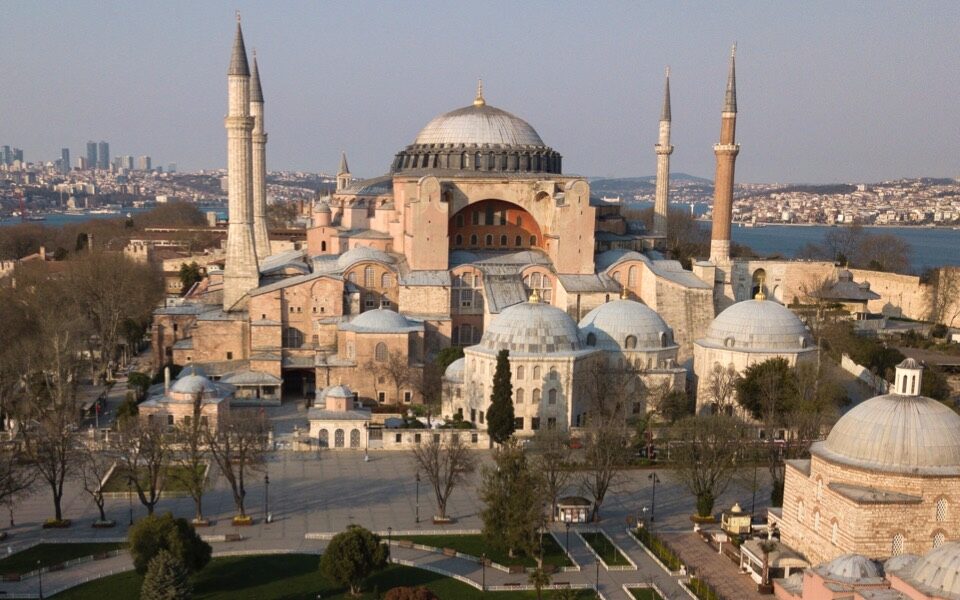
In a move that has sent ripples across the Eastern Mediterranean, two Greek tourists – a man and a woman – have been remanded in custody in Istanbul following an alleged incident inside the iconic Hagia Sophia. Turkish media reports indicate the pair unfurled a Greek flag, specifically one bearing a double-headed Byzantine eagle, and recorded their actions on video. This seemingly isolated act has quickly escalated into a matter of international concern, highlighting the deep-seated historical, religious, and political tensions that continue to define relations between Greece and Turkey.
A Symbol of Contention: Hagia Sophia's Shifting Identity
The Hagia Sophia, a UNESCO World Heritage site, stands as a monumental testament to millennia of complex history. Originally built as a Christian cathedral in the 6th century by the Byzantine Emperor Justinian I, it served as the seat of the Ecumenical Patriarch of Constantinople for over 900 years. Its conversion into a mosque following the Ottoman conquest of Constantinople in 1453 marked a profound shift, symbolizing the ascendancy of Islamic rule in the region. For nearly five centuries, it functioned as an imperial mosque, before Mustafa Kemal Atatürk, the founder of the modern Turkish Republic, transformed it into a secular museum in 1934, a status it held for 86 years. This decision was widely seen as a gesture of modernity and a bridge between East and West.
However, in July 2020, Turkish President Recep Tayyip Erdoğan controversially reverted the Hagia Sophia's status back to a mosque, a move that drew widespread international condemnation from Christian leaders, UNESCO, and several nations, including Greece. For many Greeks and Orthodox Christians worldwide, the Hagia Sophia remains a powerful symbol of their Byzantine heritage and a spiritual center. Its reconversion was perceived as a direct affront, a deliberate erasure of its Christian past, and a challenge to the delicate balance of religious coexistence. The recent flag incident, therefore, is not merely a tourist prank but a highly charged political and religious statement, echoing centuries of historical grievances and aspirations.
The Provocative Act and Its Immediate Aftermath
According to initial reports, the Greek flag unfurled by the tourists was not the standard blue and white national flag, but one featuring a plain cross and a double-headed Byzantine eagle. This specific emblem is deeply significant, representing the Byzantine Empire and, by extension, the historical Greek presence and influence in Anatolia and Constantinople. Its display within the Hagia Sophia, now an active mosque, is interpreted by Turkish authorities and much of the Turkish public as a deliberate act of provocation, challenging Turkish sovereignty and the building's current religious function.
The swift response from Turkish authorities – the arrest and subsequent remand in custody – underscores the gravity with which such acts are viewed. While the exact charges against the individuals have not been publicly detailed, they are likely to involve offenses related to public order, disrespecting religious sites, or potentially even more serious charges depending on the interpretation of their intent. The incident quickly became a topic of intense discussion on social media, with both Turkish and Greek users expressing strong opinions, often reflecting nationalist sentiments and historical narratives.
Geopolitical Ramifications and Historical Context
Relations between Greece and Turkey are perpetually fraught with tension, stemming from a complex tapestry of historical conflicts, territorial disputes in the Aegean Sea, hydrocarbon exploration rights in the Eastern Mediterranean, and the Cyprus issue. The Hagia Sophia's status has become a recurring flashpoint in this already strained relationship. Each action concerning the monument is meticulously scrutinized by both sides, often interpreted through the lens of national pride and historical grievance.
From a Greek perspective, the Hagia Sophia is an integral part of their cultural and religious patrimony. The Byzantine Empire, with Constantinople as its capital, was a direct successor to the Roman Empire and a foundational pillar of Orthodox Christianity. The double-headed eagle, a symbol used by Byzantine emperors, is still present in the emblem of the Greek Orthodox Church. Its display inside the Hagia Sophia can be seen as a symbolic assertion of this historical link, a silent protest against its current status, and a reminder of what many Greeks consider a stolen legacy.
Conversely, for Turkey, the Hagia Sophia's reconversion to a mosque was framed by President Erdoğan as a fulfillment of a long-held desire by many Turkish Muslims and a reaffirmation of Turkey's Islamic identity and sovereignty. Any act perceived as challenging this status, especially by Greek nationals, is likely to be met with a firm response, as it touches upon sensitive issues of national dignity and historical conquest. The incident risks exacerbating diplomatic friction, potentially leading to formal protests or further deterioration of bilateral relations, which are already at a low ebb.
Expert Analysis and Future Outlook
Analysts suggest that while the act itself might have been carried out by individuals, its implications are far-reaching. "This incident, however small in scale, is a microcosm of the larger historical and political struggles between Greece and Turkey," states Dr. Elara Vance, a specialist in Eastern Mediterranean geopolitics. "The Hagia Sophia is not just a building; it's a battleground of narratives. For the tourists, it might have been a defiant act of remembrance; for Turkey, it's an undeniable challenge to their sovereign decision and religious authority."
The incident also raises questions about the future of cultural heritage sites that hold contested significance for multiple civilizations and religions. As global tourism increases, so does the potential for such symbolic acts, whether intended as protest, remembrance, or simply provocation. Managing these sites requires not only robust security but also sensitive diplomatic engagement and a recognition of diverse historical perspectives.
Looking ahead, the legal proceedings against the Greek tourists will be closely watched. The outcome could set a precedent for how similar incidents are handled and will undoubtedly influence public discourse in both countries. It serves as a stark reminder that history is not merely confined to textbooks but continues to play a vibrant, often volatile, role in contemporary international relations. The Hagia Sophia, once again, finds itself at the epicenter of a geopolitical storm, its ancient stones silently bearing witness to the enduring complexities of human identity, faith, and power.
Ultimately, this incident underscores the urgent need for dialogue and mutual understanding between Greece and Turkey, even amidst their deep historical differences. Without such efforts, symbolic acts, however minor, will continue to ignite passions and impede any genuine progress towards lasting peace and cooperation in the region.
Stay Informed
Get the world's most important stories delivered to your inbox.
No spam, unsubscribe anytime.
Comments
No comments yet. Be the first to share your thoughts!