Hegseth Under Fire: Defense Secretary Grilled Over Iran War Strategy in Tense House Hearing
US Defense Secretary Pete Hegseth faced a hostile reception from Democratic lawmakers during a marathon six-hour hearing, marking his first sworn testimony since the Iran war began. The session, dominated by sharp questioning on the conflict's origins, strategy, and mounting costs, exposed deep partisan divides. Critics pressed Hegseth on intelligence assessments and the administration's long-term objectives, raising concerns about transparency and accountability.
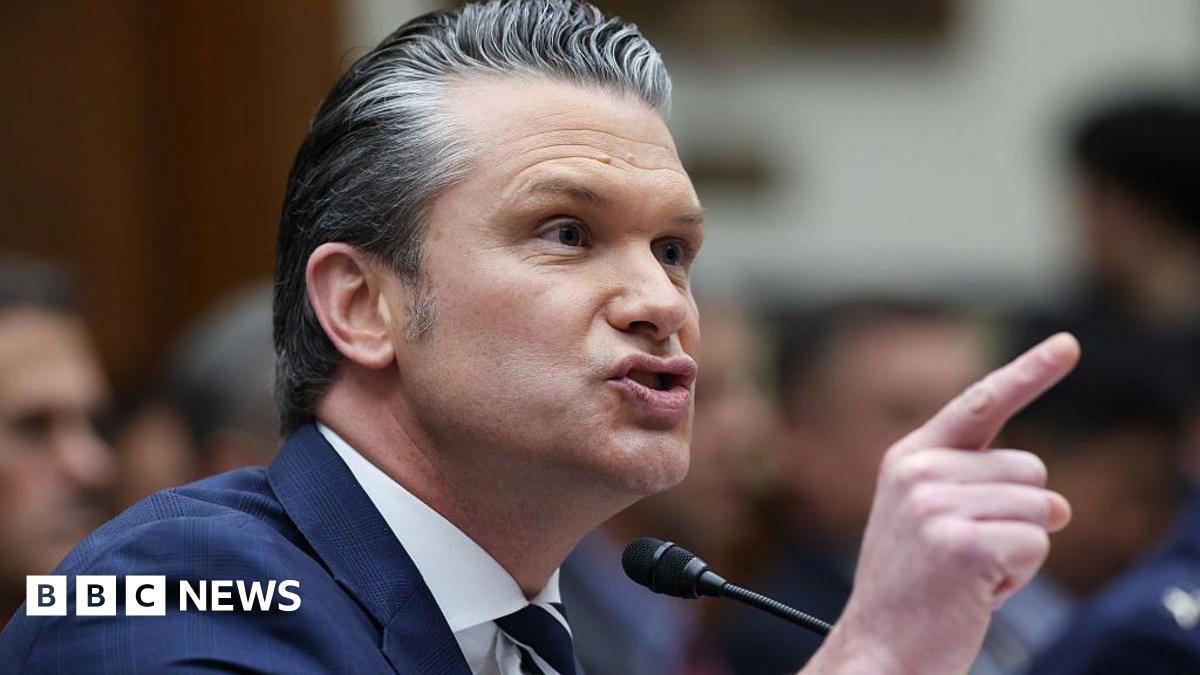
The hallowed halls of the House Armed Services Committee became an arena of intense political theatre and profound national consequence this week, as US Defense Secretary Pete Hegseth endured a nearly six-hour-long grilling from Democratic lawmakers. It was Hegseth's inaugural appearance under oath since the commencement of the Iran war, an ongoing conflict that has reshaped global geopolitics and drawn sharp criticism both domestically and internationally. The session, characterized by palpable tension and pointed exchanges, laid bare the deep partisan chasm defining Washington's approach to the protracted military engagement.
From the outset, Hegseth, a figure often seen as a staunch defender of the administration's foreign policy, found himself on the defensive. Lawmakers, particularly those from the Democratic caucus, wasted no time in challenging the rationale behind the conflict, the veracity of pre-war intelligence, and the administration's perceived lack of a clear exit strategy. The hearing was not merely an oversight exercise; it was a public reckoning, broadcast live, allowing millions to witness the friction at the highest echelons of power regarding a war that continues to exact a heavy toll in lives and resources.
The Genesis of Conflict: Unpacking Pre-War Intelligence
A significant portion of the hearing was dedicated to revisiting the intelligence assessments that preceded the conflict. Democratic representatives, armed with declassified reports and expert testimonies, pressed Hegseth on whether the administration had accurately portrayed the threat posed by Iran. Questions revolved around: * The alleged WMD program in Iran, which critics argue was exaggerated or misinterpreted. * The administration's claims of Iran's direct involvement in regional terror networks, and the extent to which these claims justified military intervention. * The diplomatic alternatives that were reportedly sidelined in favor of a military approach.
Hegseth, while acknowledging the complexities of intelligence gathering, steadfastly defended the administration's decisions, asserting that the actions taken were based on the best available information at the time and were necessary to safeguard American interests and regional stability. He reiterated the administration's stance that Iran's nuclear ambitions and destabilizing activities in the Middle East presented an unacceptable risk that could not be ignored. However, his explanations often failed to satisfy his interrogators, who frequently interrupted him with follow-up questions, demanding more specific details and less generalized assurances.
Strategy Under Scrutiny: A War Without End?
The operational conduct and strategic objectives of the Iran war formed another critical pillar of the committee's inquiry. Lawmakers expressed profound concern over the escalating human and financial costs of the conflict, with some pointing to a perceived lack of a coherent long-term plan. Representative Alexandria Chen, a vocal critic of the war, highlighted the growing number of casualties and the billions of dollars expended, asking Hegseth directly, “Secretary, can you tell the American people what victory looks like in Iran, and when we can expect our troops to come home?”
Hegseth outlined the administration's multi-pronged strategy, which he described as aiming to: * Degrade Iran's military capabilities and dismantle its nuclear infrastructure. * Support democratic movements within the region and counter Iranian proxies. * Ensure the free flow of oil through vital shipping lanes.
He emphasized the importance of maintaining pressure on the Iranian regime to prevent it from developing nuclear weapons and to curb its regional aggression. Yet, the lack of concrete timelines or measurable benchmarks for success left many lawmakers unconvinced, fueling fears of an open-ended commitment with no clear end in sight. The debate also touched upon the controversial use of private military contractors and the impact of the war on regional stability, with critics arguing that the conflict has inadvertently empowered other extremist groups and destabilized neighboring states.
Partisan Divide and the Future of US Foreign Policy
The hearing underscored the profound ideological chasm between the two major parties regarding US foreign policy. Democratic lawmakers largely advocated for a return to diplomacy, multilateralism, and a more cautious approach to military intervention, expressing skepticism about the effectiveness of regime change and unilateral action. They argued that the war had alienated key allies and undermined America's moral standing on the global stage. Conversely, Hegseth and his supporters maintained that a strong, assertive posture was essential to deter adversaries and protect national interests, viewing the conflict as a necessary evil to prevent a greater catastrophe.
This partisan divide is not merely academic; it has tangible implications for the future direction of US foreign policy. The outcome of the ongoing conflict, and the public's perception of its justification and conduct, will undoubtedly influence upcoming elections and shape the geopolitical landscape for years to come. The hearing served as a stark reminder that while the executive branch wields immense power in foreign affairs, it is ultimately accountable to the legislative branch and, by extension, to the American people.
Looking Ahead: Accountability and the Path Forward
As the six-hour session drew to a close, it was clear that no definitive answers had been reached, nor had the deep-seated disagreements been resolved. The hearing was less about finding common ground and more about establishing a public record of dissent and demanding accountability. For many, Hegseth's testimony, while robust, failed to assuage concerns about the war's trajectory or its long-term consequences. The questions raised by Democratic lawmakers—about intelligence failures, strategic ambiguities, and the immense human and financial cost—will continue to reverberate.
The path forward remains fraught with uncertainty. The administration faces increasing pressure to articulate a clearer strategy for ending the conflict and rebuilding stability in the region. Meanwhile, Congress, particularly the opposition party, is poised to continue its rigorous oversight, potentially exploring legislative avenues to limit the executive's war powers or reallocate resources. The Iran war, and the ongoing debate surrounding it, stands as a critical test of American democracy, its checks and balances, and its capacity to learn from past mistakes while navigating complex global challenges. The public, through hearings like this, is left to weigh the arguments, assess the evidence, and ultimately decide the narrative of a war that continues to define an era.
Stay Informed
Get the world's most important stories delivered to your inbox.
No spam, unsubscribe anytime.
Comments
No comments yet. Be the first to share your thoughts!