Historic Breakthrough: 36 Nations Back Special Tribunal for Putin's Aggression Against Ukraine
In an unprecedented move, 36 countries and the European Union have formally endorsed the creation of a Special Tribunal to prosecute Russian President Vladimir Putin and his inner circle for the crime of aggression against Ukraine. This landmark decision seeks to close a critical accountability gap in international law, targeting the highest echelons of Russian leadership. The initiative aims to deliver justice for Ukraine and establish a powerful deterrent against future acts of unprovoked aggression, signaling a new era for international criminal justice.
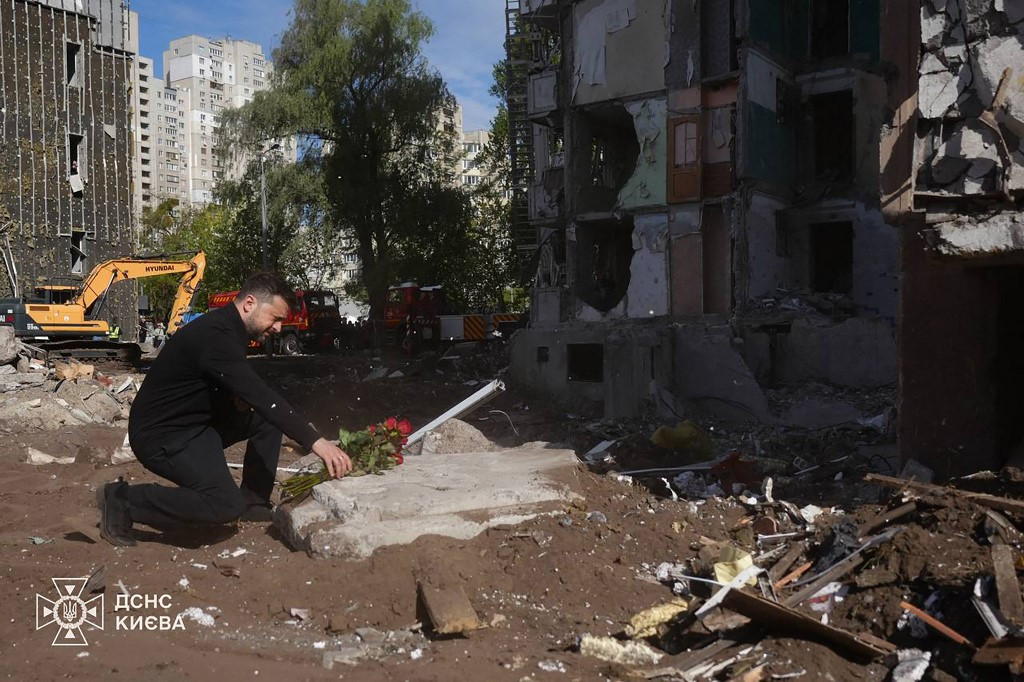
The wheels of international justice, often slow and complex, have just turned with unprecedented speed and unity. In a historic legal breakthrough, 36 countries and the European Union formally approved the creation of a Special Tribunal on Friday to prosecute Russian President Vladimir Putin and his inner circle for the crime of aggression against Ukraine. This landmark decision marks a pivotal moment in the global response to the ongoing conflict, signaling a resolute commitment to hold the highest echelons of power accountable for initiating an illegal war.
The crime of aggression, distinct from war crimes, genocide, or crimes against humanity, specifically targets the unlawful decision to launch an invasion. While the International Criminal Court (ICC) can prosecute other atrocities committed during the conflict, its jurisdiction does not extend to the crime of aggression when the aggressor state (Russia) has not ratified the Rome Statute or accepted its jurisdiction. This legal lacuna has long been a source of frustration for international legal scholars and victims alike, creating an accountability gap that the proposed Special Tribunal aims to decisively close.
The Legal Framework and Its Genesis
The concept of a special tribunal for the crime of aggression against Ukraine has been debated and developed since the full-scale invasion began in February 2022. Spearheaded by Ukraine and supported by a growing coalition of nations, the initiative seeks to overcome the jurisdictional limitations of existing international courts. The proposed tribunal would operate under a hybrid model, potentially integrating elements of Ukrainian law with international legal principles, or be established through a bilateral agreement between Ukraine and the United Nations, or a multilateral treaty among supporting states. The precise structure is still under discussion, but the political will to establish it is now firmly in place.
The crime of aggression, as defined by the Rome Statute of the International Criminal Court, refers to "the planning, preparation, initiation or execution, by a person in a position effectively to exercise control over or to direct the political or military action of a State, of an act of aggression which, by its character, gravity and scale, constitutes a manifest violation of the Charter of the United Nations." This definition squarely applies to Russia's full-scale invasion of Ukraine, which has been widely condemned as a clear breach of international law and the UN Charter. The focus on Putin and his inner circle underscores the principle of individual criminal responsibility for state-sponsored aggression, ensuring that those who orchestrate such acts cannot hide behind the veil of state sovereignty.
Why a Special Tribunal? Addressing the Accountability Gap
The need for a dedicated tribunal arises from specific legal challenges. The International Criminal Court, based in The Hague, has already opened investigations into alleged war crimes, crimes against humanity, and genocide committed in Ukraine. However, its jurisdiction over the crime of aggression is limited to situations where both the aggressor state and the victim state are parties to the Rome Statute, or where the UN Security Council refers the situation. Russia, a permanent member of the Security Council, would undoubtedly veto any such referral, and it has not ratified the Rome Statute. This effectively shields its leadership from ICC prosecution for the crime of aggression.
A Special Tribunal bypasses these jurisdictional hurdles. By creating a new judicial body, either through a UN General Assembly resolution or a treaty among like-minded states, the international community can assert its right to hold individuals accountable for the most egregious international crimes. Proponents argue that this is not about creating new law, but about enforcing existing international norms that prohibit unprovoked aggression. The Nuremberg and Tokyo Tribunals after World War II set a precedent for prosecuting aggression, establishing that individuals, not just states, can be held criminally responsible for initiating wars of conquest. This new tribunal would build upon that historical foundation, adapting it to contemporary international legal realities.
Key considerations for the tribunal's establishment include: * Jurisdiction: Defining the precise scope of its authority over individuals and specific acts. * Location: The physical seat of the tribunal, potentially in The Hague or another European city. * Funding: Securing sustainable financial resources for its operations. * Personnel: Appointing independent and experienced judges, prosecutors, and staff. * Cooperation: Ensuring cooperation from states in evidence collection and witness protection.
Implications for International Law and Geopolitics
The establishment of this Special Tribunal carries profound implications. Firstly, it would send an unequivocal message that acts of unprovoked aggression will not go unpunished, regardless of the perpetrator's geopolitical standing. This could serve as a powerful deterrent against future military adventurism by other states. Secondly, it reinforces the principle of individual criminal responsibility, a cornerstone of modern international criminal law, ensuring that leaders cannot evade justice for decisions that lead to mass suffering and death.
From a geopolitical perspective, the tribunal's creation further isolates Russia on the international stage. The broad coalition of 36 countries and the EU demonstrates a significant alignment of democratic nations against Russia's actions. This collective action not only provides a legal pathway for justice but also strengthens the diplomatic and economic pressure on Moscow. It underscores a commitment to a rules-based international order, challenging the notion that powerful states can act with impunity.
Critics of the tribunal concept often raise concerns about potential political motivations or the precedent it might set for prosecuting leaders of other nations. However, supporters emphasize that the focus is narrowly tailored to the crime of aggression against Ukraine, a conflict characterized by a clear violation of international law. The unique circumstances of the invasion, including its scale and the overwhelming evidence of Russia's intent, justify this exceptional measure.
The Road Ahead: Challenges and Opportunities
While the formal approval marks a significant step, the path to a fully operational tribunal is still fraught with challenges. Legal and logistical hurdles remain, including determining the precise legal basis for its establishment (e.g., a UN General Assembly resolution, a multilateral treaty), securing sufficient funding, and ensuring the cooperation of all relevant parties. The collection of evidence, protection of witnesses, and the eventual apprehension of those indicted will require sustained international effort and political will.
However, the opportunities presented by this tribunal are immense. For Ukraine, it offers a tangible pathway to justice for the immense suffering inflicted upon its people and territory. It provides a platform for victims to have their voices heard and for the truth to be established through a rigorous legal process. For the international community, it represents a chance to uphold fundamental principles of international law and reinforce the prohibition against aggressive war, a principle enshrined in the UN Charter but often challenged in practice.
This initiative is not merely about punishing individuals; it is about reaffirming the sanctity of national sovereignty and territorial integrity, and about building a more stable and just international order. The commitment of 36 nations and the EU to this cause is a testament to the enduring belief that even in the face of immense power, justice can and must prevail. The world will be watching as this historic tribunal takes shape, hoping it will usher in an era where the crime of aggression is no longer a path to impunity, but a direct route to accountability.
Stay Informed
Get the world's most important stories delivered to your inbox.
No spam, unsubscribe anytime.
Comments
No comments yet. Be the first to share your thoughts!