Hong Kong's 'Block Trade King' Scandal: Unpacking the HK$1.7 Million Insider Trading Case
A prominent hedge fund manager, Simon Sadler, stands accused of exploiting a bank's "wholesale collective failure" to engage in insider trading, netting HK$1.7 million. The case, involving confidential information about a planned block trade of Esprit shares, highlights critical vulnerabilities in financial oversight and the persistent challenge of market manipulation. This deep dive explores the allegations, the regulatory implications, and the broader context of financial integrity in Hong Kong.
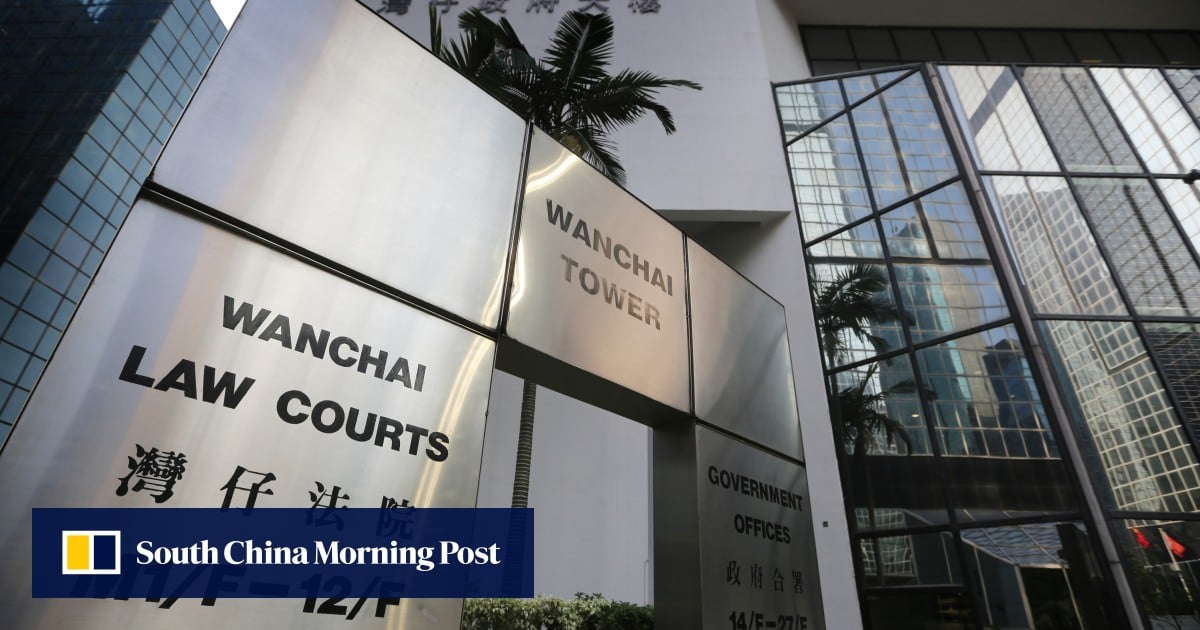
In the high-stakes world of finance, where fortunes can be made or lost in an instant, the line between shrewd market insight and illicit gain often becomes dangerously blurred. Nine years ago, a prominent hedge fund manager, Simon Sadler, dubbed Hong Kong's 'block trade king', allegedly crossed that line, exploiting what prosecutors describe as a bank’s “wholesale collective failure” to pocket HK$1.7 million in a single day. The case, which has recently resurfaced in court, casts a long shadow over the integrity of financial markets and underscores the relentless battle against insider trading.
The allegations revolve around a planned block trade of shares in the Hong Kong fashion house Esprit. Sadler, alongside Daniel La Rocca, is accused of using confidential information about this impending transaction to sell more than 1.7 million Esprit shares, pre-empting a significant price drop. This alleged act of front-running – using privileged information to execute trades before a larger, market-moving transaction – highlights a fundamental breach of trust and fair play that regulators globally strive to prevent. The unfolding legal proceedings offer a rare glimpse into the intricate mechanisms of market manipulation and the challenges faced by enforcement agencies in proving such complex financial crimes.
The Anatomy of an Alleged Scheme
According to prosecutors, the scheme unfolded with precision. Sadler, through his firm, was privy to sensitive information regarding a substantial block trade of Esprit shares. Block trades, by their nature, involve large quantities of securities and can significantly impact market prices. Knowledge of such a trade before it becomes public is a powerful advantage. The prosecution argues that Sadler and La Rocca leveraged this non-public information to offload their holdings in Esprit, thereby avoiding substantial losses that would have occurred once the block trade was announced and the share price inevitably fell. The HK$1.7 million profit represents the difference between the price at which they sold and the price the shares would have fetched post-announcement.
The core of the prosecution's argument rests on proving that the information was indeed confidential, material, and that the defendants acted upon it with intent. This often involves dissecting communication records, trading patterns, and establishing a clear timeline of events. The phrase "wholesale collective failure" attributed to the bank suggests a breakdown in internal controls and information barriers, which are designed to prevent the leakage of sensitive data. Such failures are not uncommon in large financial institutions, but when they lead to alleged illicit gains, they become a focal point for regulatory scrutiny and public concern.
Regulatory Framework and Enforcement Challenges
Hong Kong, as one of the world's leading financial hubs, boasts a robust regulatory framework designed to maintain market integrity. The Securities and Futures Commission (SFC) is the primary body responsible for overseeing the city's markets and enforcing laws against market misconduct, including insider trading. However, prosecuting insider trading cases is notoriously difficult. Proving that an individual possessed material non-public information and acted on it, rather than on legitimate market analysis or coincidence, requires compelling evidence and often relies on circumstantial patterns of behavior.
* Information Barriers: Banks and financial institutions are mandated to erect 'Chinese Walls' – strict information barriers – between different departments (e.g., corporate finance advising on block trades and trading desks) to prevent the flow of confidential information. A "wholesale collective failure" implies these walls were either non-existent or severely compromised. * Proof of Intent: Establishing criminal intent is crucial. Defense often argues that trades were made based on publicly available information, market sentiment, or independent research, making it challenging for prosecutors to definitively link trades to inside knowledge. * Technological Advancements: While technology aids in tracking trades, it also presents new avenues for sophisticated market manipulation, making detection and proof more complex.
The outcome of this case could set a precedent for how such lapses are viewed and prosecuted, potentially leading to stricter compliance requirements for financial institutions and more aggressive enforcement actions by the SFC.
The Broader Implications for Market Integrity
Insider trading erodes investor confidence and distorts the fundamental principle of a level playing field. When market participants believe that certain individuals have an unfair advantage, it discourages investment and undermines the credibility of the entire financial system. The alleged actions of the 'block trade king' serve as a stark reminder that even in highly regulated environments, vigilance is paramount.
This case is not an isolated incident but part of a global struggle against financial malfeasance. From the infamous cases on Wall Street to similar scandals in London and Tokyo, the temptation to exploit privileged information for personal gain remains a constant challenge. The financial industry, therefore, has a collective responsibility to reinforce ethical conduct and strengthen internal controls. This includes:
* Enhanced Training: Regular and comprehensive training for all employees on insider trading laws and ethical conduct. * Robust Surveillance: Implementing advanced surveillance systems to detect unusual trading patterns. * Whistleblower Protection: Encouraging and protecting whistleblowers who come forward with information about potential misconduct. * Accountability: Holding individuals and institutions accountable for failures in oversight and compliance.
The HK$1.7 million profit, while significant, pales in comparison to the potential damage to reputation and market trust. For PulseWorld readers, this case highlights the ongoing need for transparency and robust governance in financial markets, especially as they become increasingly interconnected and complex.
A Forward Look: The Future of Financial Oversight
As the digital age progresses, the landscape of financial crime continues to evolve. The rise of algorithmic trading, dark pools, and decentralized finance (DeFi) presents new frontiers for regulators. While the current case harks back to events nine years ago, its lessons are acutely relevant today. Financial institutions must continuously adapt their compliance frameworks to address emerging risks. The "wholesale collective failure" cited by prosecutors should serve as a wake-up call, emphasizing that technology alone is not a panacea; human oversight, ethical culture, and an unwavering commitment to regulatory compliance are equally, if not more, critical.
The verdict in the 'block trade king' case will undoubtedly be watched closely by market participants, regulators, and the public alike. It will not only determine the fate of Simon Sadler and Daniel La Rocca but also send a powerful message about Hong Kong's resolve to uphold the integrity of its financial markets. In an era where trust is a precious commodity, ensuring fairness and transparency remains the cornerstone of a healthy and thriving global economy.
Stay Informed
Get the world's most important stories delivered to your inbox.
No spam, unsubscribe anytime.
Comments
No comments yet. Be the first to share your thoughts!