Hormuz Interception Ignites New Mideast Crisis: Peace Talks Collapse Amid US-Iran Standoff
A US Navy interception of an Iranian-flagged cargo vessel in the Strait of Hormuz has shattered fragile peace talks between Washington, Tehran, and Tel Aviv. With a 10-day ceasefire expiring, the incident exposes deep rifts and divergent expectations for future negotiations. Regional stability hangs precariously as diplomatic efforts falter, raising fears of renewed escalation in the volatile Middle East.
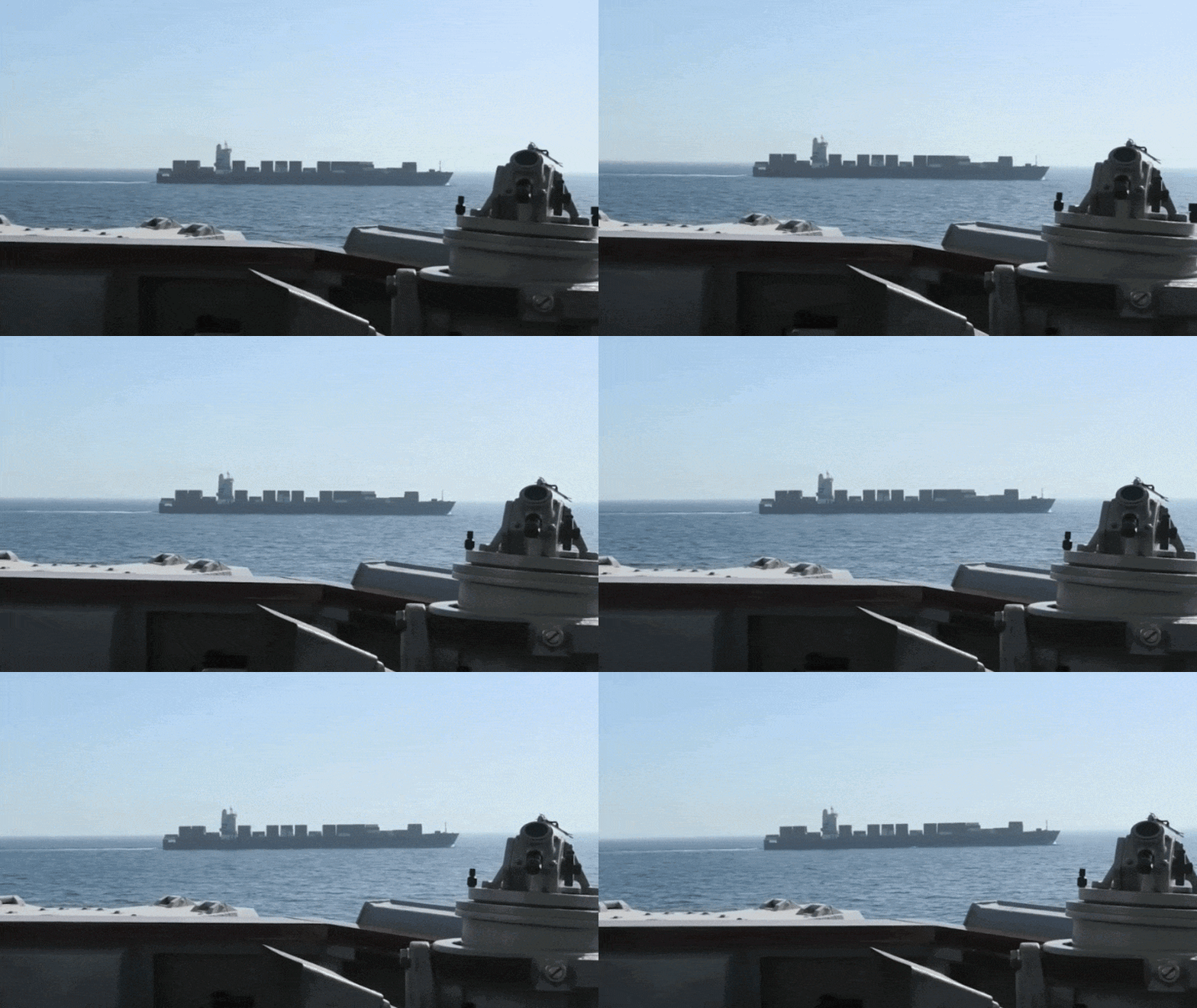
The Strait of Hormuz, a choke point for global oil supplies, has once again become the epicenter of escalating tensions, plunging the Middle East into a fresh crisis. Just two days before a precarious 10-day ceasefire was set to expire, a US Navy interception of an Iranian-flagged cargo vessel sent shockwaves through diplomatic circles, effectively torpedoing fragile peace talks between the United States, Iran, and Israel. The incident, shrouded in conflicting narratives, has laid bare the deep-seated mistrust and divergent agendas that continue to plague one of the world's most volatile regions. As the clock ticks down on the ceasefire, the prospect of renewed hostilities looms large, threatening to unravel years of painstaking, albeit often stalled, diplomatic efforts.
The Interception: A Spark in a Powder Keg
The details surrounding the interception remain contentious. According to initial reports from US Central Command (CENTCOM), the USS Farragut, an Arleigh Burke-class destroyer, intercepted a vessel identified as the Persepolis, an Iranian-flagged cargo ship, in international waters within the Strait of Hormuz. CENTCOM stated the interception was conducted based on "credible intelligence" suggesting the Persepolis was attempting to transfer illicit weaponry to Houthi rebels in Yemen, a claim vehemently denied by Tehran. Iranian state media, however, painted a different picture, alleging a "provocative and illegal act of piracy" in Iranian territorial waters, asserting the Persepolis was carrying humanitarian aid. Independent verification of these claims has been challenging, but the immediate consequence was undeniable: the already strained atmosphere of the peace talks evaporated instantly.
This incident is not an isolated event but rather the latest in a long history of maritime confrontations in the Strait. Over the past decade, the region has witnessed numerous skirmishes, including tanker attacks, drone incidents, and previous vessel seizures, underscoring the strategic importance and inherent volatility of the waterway. The Strait of Hormuz is critical for global energy security, with approximately 20% of the world's petroleum and a significant portion of its liquefied natural gas (LNG) transiting through it daily. Any disruption here sends ripples through international markets, affecting oil prices and global economies. The timing of this particular interception, coinciding with the critical final days of a ceasefire, suggests either a deliberate act of pressure or a catastrophic miscalculation, depending on whose narrative one accepts.
Peace Talks in Peril: A Chasm of Expectations
The 10-day ceasefire, brokered after intense back-channel diplomacy, was intended to create a window for de-escalation and to lay the groundwork for a more comprehensive peace agreement. Sources close to the negotiations indicated that the US, Iran, and Israel had agreed to a temporary cessation of hostilities, including a halt to Iranian-backed proxy attacks on US interests and Israeli targets, and a pause in Israeli retaliatory strikes. The ultimate goal was to move towards a regional security framework that would address Iran's nuclear program, its ballistic missile development, and its support for regional militias, in exchange for sanctions relief and security guarantees.
However, it quickly became apparent that Washington and Tehran were operating from fundamentally different playbooks regarding the next steps. US President Donald Trump, in a series of social media posts, emphasized the need for "ironclad guarantees" from Iran and a "complete dismantling" of its nuclear enrichment capabilities before any permanent deal could be considered. He also reportedly insisted on direct engagement with Israel as a prerequisite for further US concessions. Conversely, Iranian Supreme Leader Ayatollah Ali Khamenei's office released statements reiterating Iran's right to peaceful nuclear technology and demanding the immediate and unconditional lifting of all sanctions as a starting point for any meaningful dialogue. "Our red lines are clear," a spokesperson stated, "and we will not negotiate under duress or threat."
Israel, a crucial third party, also expressed deep skepticism. Prime Minister Benjamin Netanyahu's government had publicly voiced concerns that the ceasefire was merely a tactical pause for Iran to regroup, rather than a genuine commitment to peace. The interception incident, from Tel Aviv's perspective, likely reinforced these anxieties, fueling calls for a more assertive stance against what it perceives as Iranian aggression.
The Regional Domino Effect: Implications for Stability
The collapse of these peace talks carries dire implications for the broader Middle East. The fragile stability achieved during the ceasefire is now shattered, and the region braces for potential renewed conflict. Yemen, already devastated by years of civil war, could see an immediate uptick in fighting if Iranian support for the Houthis is perceived to continue or escalate. Similarly, Lebanon and Syria, where Iranian-backed Hezbollah and other militias operate, could become flashpoints for proxy confrontations with Israel.
Economically, the immediate aftermath has seen a spike in global oil prices, reflecting market anxieties about supply disruptions. Analysts at the International Energy Agency (IEA) warned that prolonged instability in the Strait of Hormuz could lead to a "significant and sustained" increase in energy costs worldwide, impacting global economic recovery efforts. Furthermore, the diplomatic fallout extends beyond the immediate parties. European powers, who had been cautiously optimistic about the peace talks, have expressed deep disappointment, urging all sides to exercise restraint and return to the negotiating table. China and Russia, while maintaining their own complex relationships with Iran, have also called for de-escalation, recognizing the broader risks to international trade and security.
A Perilous Path Forward
The path ahead is fraught with danger. The immediate priority for international diplomacy will be to prevent an uncontrolled escalation of hostilities. This will require not only de-escalation on the ground but also a renewed commitment to dialogue, however difficult. The incident in the Strait of Hormuz serves as a stark reminder that even limited ceasefires are incredibly fragile and that fundamental disagreements over regional influence, security, and nuclear ambitions remain unresolved.
One potential avenue for de-escalation could involve third-party mediation from countries like Oman or Qatar, which have historically played constructive roles in regional diplomacy. However, given the current level of mistrust, any such efforts would face immense challenges. The international community, particularly the UN Security Council, will need to exert significant pressure on all parties to step back from the brink. Without a clear and unified diplomatic strategy, the Middle East risks spiraling into a new cycle of confrontation, with devastating consequences for its people and the global economy. The peace that was so painstakingly sought now feels more distant than ever, leaving a vacuum where conflict could easily flourish.
Stay Informed
Get the world's most important stories delivered to your inbox.
No spam, unsubscribe anytime.
Comments
No comments yet. Be the first to share your thoughts!