House Judiciary Launches 'Sweeping' Probe into Jared Kushner's Saudi Dealings
The House Judiciary Committee has initiated a comprehensive investigation into Jared Kushner's post-White House financial dealings, particularly focusing on the $2 billion investment from Saudi Arabia's Public Investment Fund. Concerns are mounting over potential self-enrichment and conflicts of interest stemming from his role as a senior advisor to former President Trump. This probe aims to uncover whether Kushner leveraged his public service for personal financial gain, raising serious questions about the ethics of former government officials.
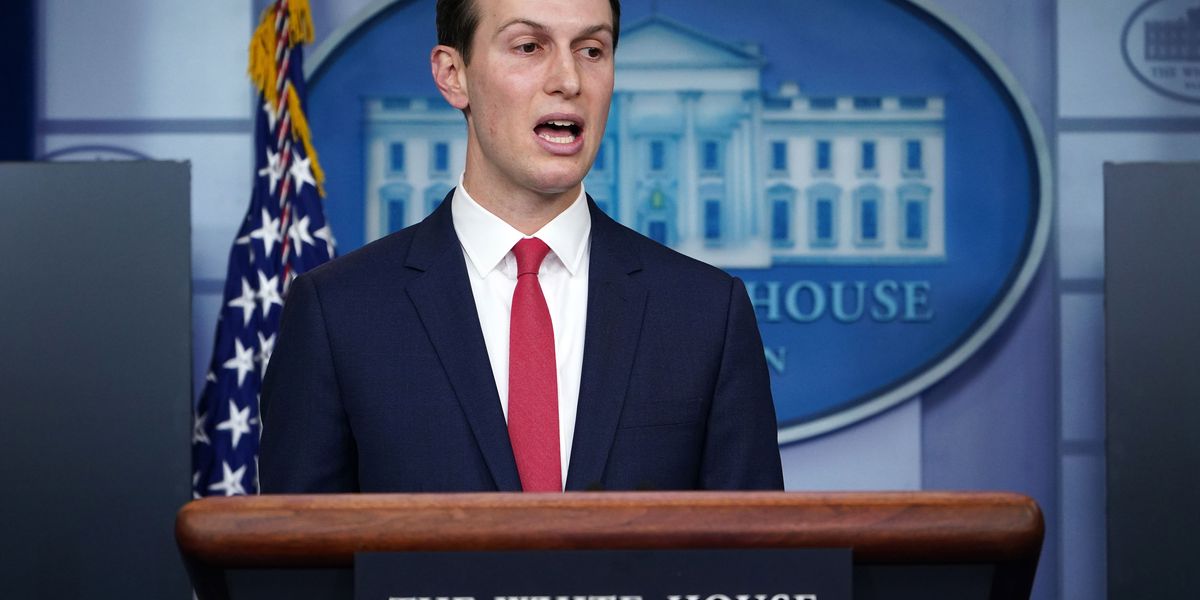
In a move that sends ripples through Washington D.C. and Riyadh, the House Judiciary Committee has announced a "sweeping" probe into the financial activities of Jared Kushner, former President Donald Trump's son-in-law and senior White House advisor. The investigation, spearheaded by the committee's ranking Democrat, Jamie Raskin, centers on allegations of self-enrichment and potential conflicts of interest stemming from Kushner's post-government business ventures, most notably the $2 billion investment from Saudi Arabia's Public Investment Fund (PIF) into his private equity firm, Affinity Partners.
This development reignites a long-standing debate about the ethics of former government officials monetizing their public service, especially when dealing with foreign governments with complex geopolitical interests. Raskin's statement, "You cannot faithfully represent the United States with billions of dollars in Saudi and Emirati cash burning a hole in every pocket of every suit you own," encapsulates the core concern: whether Kushner's past diplomatic efforts were intertwined with his future financial ambitions, potentially compromising U.S. foreign policy.
The Genesis of the Controversy: From White House to Wall Street
Jared Kushner's tenure in the Trump administration was marked by an unusual portfolio. Despite lacking traditional diplomatic experience, he was entrusted with highly sensitive foreign policy initiatives, including efforts to broker peace in the Middle East and manage relations with Saudi Arabia and the United Arab Emirates. His close ties to Saudi Crown Prince Mohammed bin Salman (MBS) became a hallmark of the Trump administration's approach to the region. Kushner frequently engaged with MBS, often bypassing traditional State Department channels, and was a key architect of the Abraham Accords, normalizing relations between Israel and several Arab nations.
Less than six months after leaving the White House, Kushner launched Affinity Partners, a private equity firm. The firm's ability to secure a $2 billion investment from the Saudi PIF, chaired by MBS himself, raised immediate red flags for ethics watchdogs and political observers. This substantial investment came despite objections from the PIF's own advisory panel, which reportedly cited concerns about the "inexperience" of Kushner's firm and the "unacceptable" risk involved. The panel's concerns were ultimately overruled by the PIF board, headed by MBS, underscoring the personal nature of the relationship.
Critics argue that this investment represents a quid pro quo, a reward for Kushner's favorable stance towards Saudi Arabia during his time in government. During his White House tenure, Kushner was a staunch defender of Saudi Arabia, even after the brutal murder of journalist Jamal Khashoggi, an act widely attributed to MBS by U.S. intelligence agencies. His perceived influence over Trump's foreign policy decisions regarding the Kingdom has fueled suspicions that his government role was leveraged for future personal gain.
Ethical Minefield: Navigating Post-Government Employment
The probe by the House Judiciary Committee delves into a critical area of public service ethics: the revolving door between government and the private sector. While it is common for former officials to transition into lucrative private roles, the scale and speed of Kushner's financial windfall, particularly from a foreign government, are what make this case particularly scrutinized. Federal ethics laws aim to prevent former officials from using their government connections for personal profit, especially in ways that could appear to be a reward for past actions or influence future policy.
Key questions the probe is expected to address include: * Did Kushner's official actions as a White House envoy directly or indirectly benefit the Saudi government in a way that paved the path for the PIF investment? * Were there any undisclosed agreements or understandings between Kushner and Saudi officials during his time in government that related to future business opportunities? * Did Kushner's private equity firm meet the standard due diligence requirements typically expected for such a significant investment, or was the PIF's decision driven by political considerations? * What role, if any, did former President Trump play in facilitating or approving Kushner's dealings with Saudi Arabia, both during and after his presidency?
The investigation will likely seek access to internal documents from Affinity Partners, communications between Kushner and Saudi officials, and potentially testimony from individuals involved in the PIF's investment decision. The legal and ethical implications are substantial, potentially setting precedents for how future administrations and their officials conduct themselves in foreign relations.
Broader Implications for U.S. Foreign Policy and Transparency
This investigation extends beyond Jared Kushner himself; it touches upon the broader integrity of U.S. foreign policy and the transparency of government officials' financial dealings. The perception that powerful individuals can parlay their public service into vast personal wealth from foreign entities undermines public trust in government and raises concerns about potential foreign influence on American decision-making.
For U.S.-Saudi relations, the probe could add another layer of complexity. The relationship has historically been transactional, often prioritizing strategic interests like oil stability and counter-terrorism over human rights concerns. However, increased scrutiny of financial ties between U.S. officials and the Saudi monarchy could force a re-evaluation of these dynamics. It highlights the challenge of balancing national interests with the need for ethical conduct and transparency in international diplomacy.
Furthermore, the probe serves as a reminder of the need for robust ethics regulations and enforcement mechanisms. The current framework, while comprehensive, often struggles to keep pace with the sophisticated ways in which influence can be exerted and compensated. This case could spur calls for stronger disclosure requirements for former officials and stricter prohibitions on certain types of post-government employment, particularly when dealing with sovereign wealth funds of nations with complex human rights records.
A Precedent-Setting Investigation?
The House Judiciary Committee's investigation into Jared Kushner is not merely a political maneuver; it represents a significant effort to uphold the principles of public trust and accountability. The outcome of this probe could have far-reaching consequences, influencing not only Kushner's financial future but also the ethical standards applied to future administrations. It underscores the idea that public service, while often a stepping stone to private success, must never be a vehicle for illicit self-enrichment, especially when involving foreign powers. As the investigation unfolds, the world will be watching to see how the U.S. grapples with these complex questions of power, profit, and patriotism. The findings could redefine the boundaries of acceptable conduct for those who serve at the highest levels of government, ensuring that loyalty remains to the nation, not to personal financial gain.
Stay Informed
Get the world's most important stories delivered to your inbox.
No spam, unsubscribe anytime.
Comments
No comments yet. Be the first to share your thoughts!