India's Smartphone Revolution: Homegrown Manufacturers Powering Global Growth
India is rapidly transforming into a global smartphone manufacturing hub, with homegrown companies now producing over a quarter of devices sold domestically. This surge, led by giants like Dixon Technologies, is fueled by strategic policy support and the outsourcing of production by international brands. The nation's electronics manufacturing sector is experiencing unprecedented growth, with exports becoming a crucial driver, signaling a significant shift in the global supply chain dynamics.
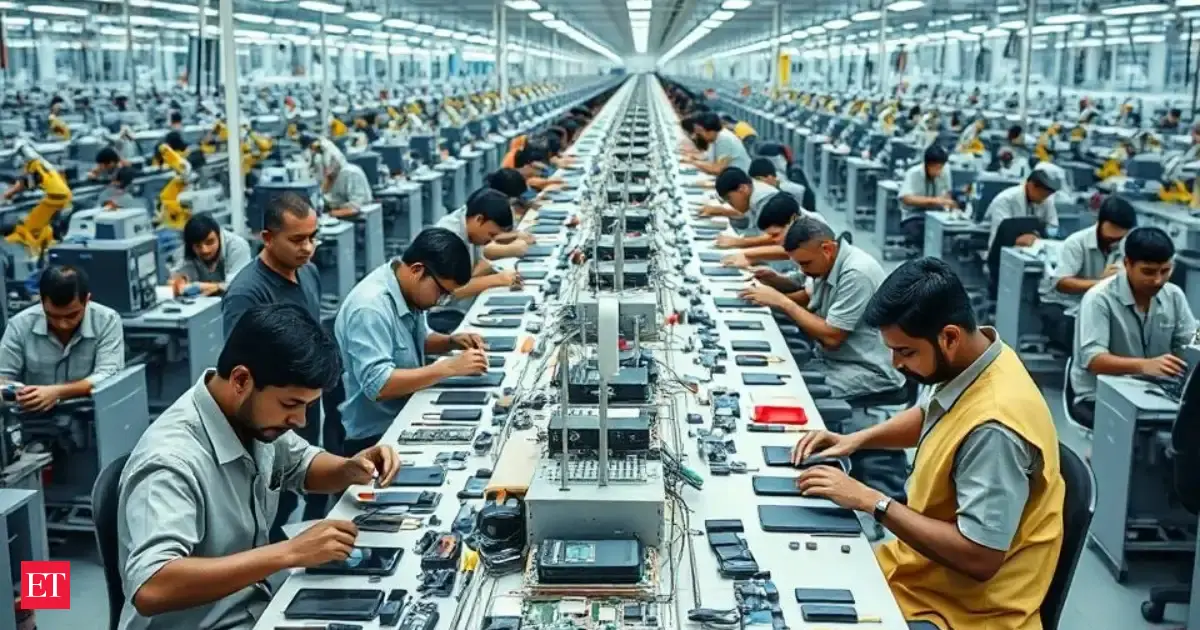
In a remarkable display of industrial prowess and strategic foresight, India is rapidly cementing its position as a formidable force in the global smartphone manufacturing landscape. What was once a market dominated by imports and foreign brands is now witnessing a profound transformation, with homegrown manufacturers capturing an impressive share. Recent reports indicate that more than one in four smartphones sold in India are now produced by domestic firms, marking a significant milestone in the nation's journey towards self-reliance and global competitiveness.
This dramatic shift isn't merely an economic statistic; it represents a fundamental reorientation of global supply chains and a testament to India's burgeoning capabilities. Companies like Dixon Technologies have emerged as frontrunners, not only becoming India's largest smartphone maker but also symbolizing the broader success of the 'Make in India' initiative. This surge is not accidental; it's the culmination of targeted government policies, a vast domestic market, and the strategic decision by global tech giants to outsource production to Indian facilities, leveraging the country's skilled workforce and cost efficiencies.
The 'Make in India' Momentum: A Policy-Driven Surge
The genesis of India's smartphone manufacturing boom can be traced back to robust government policies designed to foster domestic production and reduce import dependency. Initiatives like the Production Linked Incentive (PLI) scheme have played a pivotal role, offering financial incentives to companies that increase local manufacturing. These policies have created an attractive environment for both Indian and international players to invest heavily in manufacturing infrastructure within the country. The PLI scheme, in particular, has been instrumental in drawing significant investments, encouraging the establishment of large-scale manufacturing units, and boosting local value addition.
This policy support extends beyond mere financial incentives, encompassing efforts to improve ease of doing business, develop a skilled labor force, and create a supportive ecosystem for electronics manufacturing. The government's vision is clear: to transform India from an assembly hub into a full-fledged manufacturing powerhouse, capable of designing, developing, and producing advanced electronic goods. This long-term strategic outlook has provided the necessary stability and confidence for companies to commit substantial resources to their Indian operations.
Global Brands, Local Production: A Symbiotic Relationship
A key driver of this manufacturing renaissance is the increasing trend of global smartphone brands outsourcing their production to Indian contract manufacturers. Major international players, including Apple, Samsung, and Xiaomi, have significantly ramped up their production in India, not just for the domestic market but also for exports. This outsourcing model benefits both parties: global brands gain access to a massive, cost-effective manufacturing base and can better navigate geopolitical supply chain risks, while Indian manufacturers gain valuable expertise, technology transfer, and large-scale production contracts.
This symbiotic relationship has led to a rapid expansion of manufacturing capabilities and technological sophistication within India. Local firms are not just assembling components; they are increasingly involved in more complex manufacturing processes, contributing to a higher percentage of local value addition. This collaboration is crucial for India's ambition to move up the value chain, from simple assembly to advanced manufacturing and design. The presence of global brands also helps to integrate Indian manufacturers into the global electronics supply chain, opening doors for further growth and diversification.
Exports: The New Frontier for Growth
While catering to the vast domestic market remains a core focus, exports have emerged as a critical growth area for India's electronics manufacturing sector. The scale and efficiency achieved by Indian manufacturers, coupled with competitive pricing, have made them attractive partners for global distribution. The 'Make in India for the World' mantra is becoming a reality, with Indian-made smartphones finding their way into international markets. This export-led growth is vital for generating foreign exchange, creating employment, and further solidifying India's position on the global manufacturing map.
The push for exports is not limited to smartphones; it extends to other electronic devices and components, signaling a broader ambition to become a global electronics manufacturing hub. The government's focus on export promotion, through various schemes and trade agreements, is further accelerating this trend. As global supply chains continue to diversify and de-risk, India stands to benefit significantly, positioning itself as a reliable and high-capacity manufacturing alternative to traditional hubs.
Challenges and the Road Ahead
Despite the impressive growth, India's smartphone manufacturing sector faces certain challenges. These include the need for continuous technological upgradation, development of a deeper component ecosystem, and further investment in research and development. While assembly has scaled rapidly, the local manufacturing of high-value components like chipsets, displays, and advanced sensors still lags. Addressing these gaps will be crucial for India to achieve true self-reliance and move beyond contract manufacturing to become an innovation leader.
However, the trajectory is undeniably positive. The momentum generated by policy support, global partnerships, and a burgeoning domestic market suggests that future growth is expected to continue at a robust pace. India's journey from a net importer to a significant exporter of smartphones is a powerful narrative of economic transformation. It underscores the potential of strategic industrial policy coupled with a dynamic private sector to reshape national economies and global industries. As India continues to invest in infrastructure, skills, and innovation, its role as a global manufacturing powerhouse, particularly in electronics, is set to expand even further, promising a future where 'Made in India' becomes synonymous with quality and technological advancement on the world stage.
Stay Informed
Get the world's most important stories delivered to your inbox.
No spam, unsubscribe anytime.
Comments
No comments yet. Be the first to share your thoughts!