Intel Core i9-14900KF Shatters 9.2 GHz Barrier, Reclaiming CPU Overclocking World Record
The Intel Core i9-14900KF has once again pushed the boundaries of computing, achieving an astonishing 9.2 GHz frequency. Chinese overclocker wytiwx utilized extreme cooling with liquid helium to secure this new world record, further solidifying Intel's Raptor Lake architecture at the pinnacle of performance. This feat highlights the relentless pursuit of speed and the engineering marvels behind modern processors.
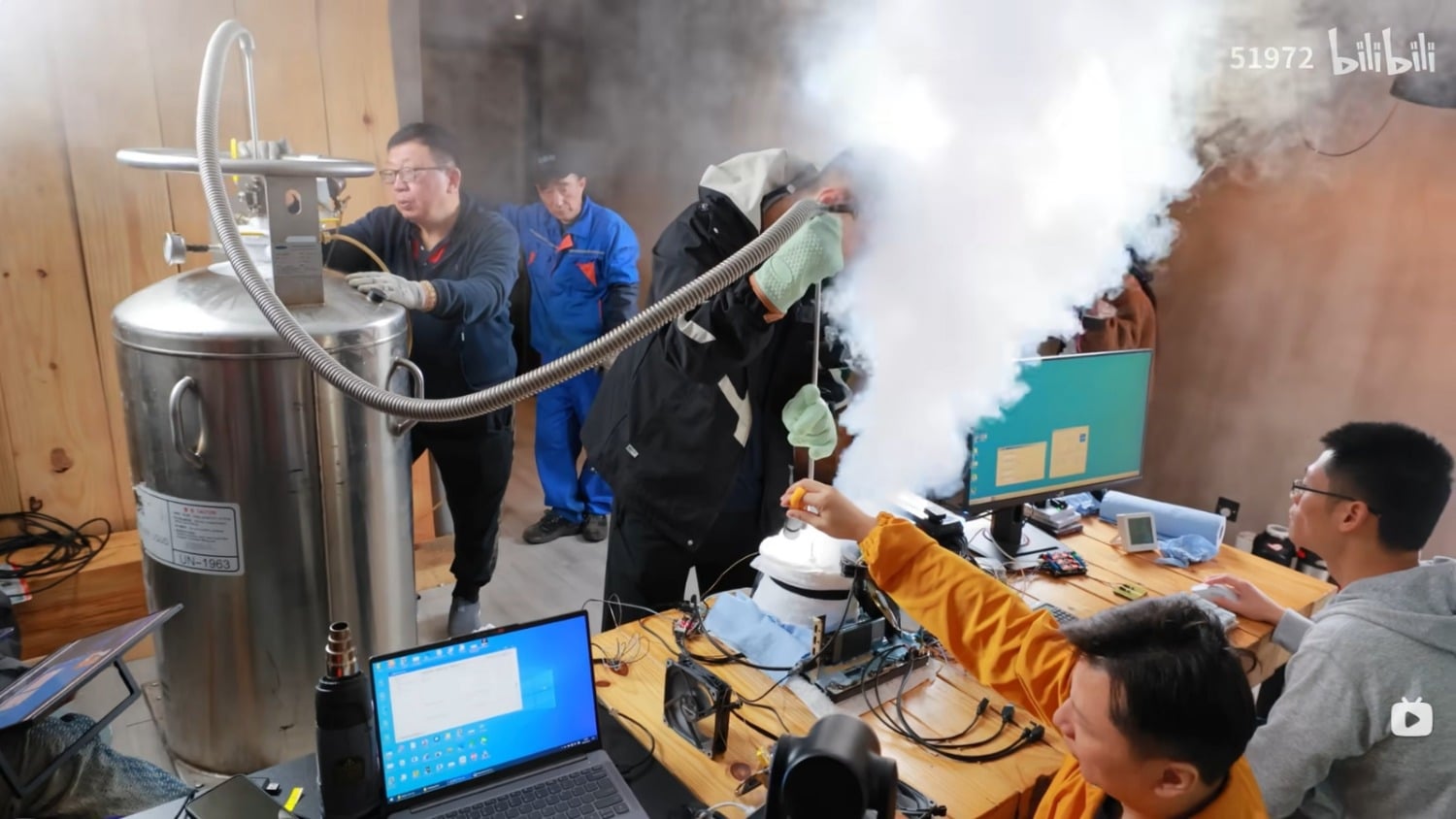
In the relentless pursuit of raw computational speed, humanity continually pushes the boundaries of what's possible. This week, the world of high-performance computing witnessed another monumental leap as an Intel Core i9-14900KF processor shattered the 9.2 GHz frequency barrier, setting a new CPU overclocking world record. This extraordinary achievement, orchestrated by the renowned Chinese overclocker known as wytiwx, underscores the incredible potential of modern silicon and the extreme measures enthusiasts are willing to take to unlock it.
The feat, meticulously documented on the prestigious HWBot charts, saw the Intel Core i9-14900KF reach an astounding 9204.48 MHz. This narrowly bested wytiwx's own previous record by a mere 76 MHz, a testament to the fine margins at the absolute bleeding edge of overclocking. For context, the average consumer-grade CPU typically operates between 3.5 GHz and 5.5 GHz. Breaching the 9 GHz mark is not just an incremental improvement; it's a statement about the engineering prowess of Intel's Raptor Lake architecture and the dedication of the overclocking community.
The Anatomy of a World Record: Extreme Cooling and Precision Tuning
Achieving such stratospheric frequencies is far from a plug-and-play endeavor. It requires a confluence of meticulously selected hardware, specialized cooling solutions, and expert-level tuning. At the heart of this record-breaking attempt was liquid helium (LHe), an exotic coolant capable of reaching temperatures as low as -269°C (-452°F). This is significantly colder than the more commonly used liquid nitrogen (LN2), which typically cools to around -196°C. The use of liquid helium is a clear indicator of the extreme conditions necessary to stabilize the processor at such high clock speeds, mitigating the immense heat generated by the electrical current flowing through the silicon.
Beyond the cooling, the choice of motherboard, power delivery system, and RAM also plays a crucial role. While specific details of wytiwx's full setup are often closely guarded secrets within the overclocking community, it's safe to assume a top-tier Z790 motherboard with robust power phases was employed to deliver stable and clean power to the hungry CPU. Every component, from the thermal paste to the power supply unit, must be optimized for maximum stability under extreme stress. The process involves countless hours of trial and error, adjusting voltage settings, clock multipliers, and bus speeds, often resulting in system crashes and reboots, all in pursuit of that elusive stable frequency.
Intel's Dominance in the Overclocking Arena
This latest record further solidifies Intel's position at the forefront of the overclocking world. The Raptor Lake architecture, particularly the i9-14900K and its KF variant (which lacks integrated graphics), has proven to be an exceptional performer in these extreme scenarios. In fact, the Intel Core i9-14900K series now occupies all five of the top global frequency slots on HWBot, a remarkable achievement that underscores its 'golden sample' potential for overclockers. Last year, this very processor wrested the world record from an ASUS team, demonstrating its inherent capability for pushing limits.
Historically, Intel processors have often been favored by overclockers due to their robust design and often higher clock speed potential compared to competitors, particularly in single-core performance. This isn't just about bragging rights; these extreme benchmarks serve as a proving ground for silicon manufacturing processes and architectural design. They demonstrate the headroom available in these chips, even if such speeds are unattainable for everyday users. It's a testament to the engineering that allows these chips to operate reliably at much lower, more practical frequencies, while still possessing the latent power to reach these dizzying heights under ideal, albeit extreme, conditions.
Implications and the Future of Computing
While a 9.2 GHz CPU isn't going to be found in your next gaming PC or workstation, these record-breaking feats have significant implications for the broader technology landscape. Firstly, they showcase the continuous advancements in semiconductor manufacturing. To produce chips that can withstand such extreme voltages and temperatures while remaining stable for even a few seconds is a marvel of material science and fabrication techniques. Every nanometer reduction in process size, every improvement in transistor efficiency, contributes to this potential.
Secondly, these records provide valuable data for engineers. Understanding the limits of a chip's frequency and stability under extreme conditions can inform future designs, helping to identify bottlenecks and areas for improvement. It's a form of stress testing at its most intense, pushing the silicon to its absolute breaking point to understand its true capabilities. This knowledge can then trickle down into more efficient and powerful consumer products.
Finally, the spirit of overclocking itself is a powerful driver of innovation. It's a community-driven effort to extract every last drop of performance from hardware. This passion fuels competition among manufacturers to produce more 'overclocker-friendly' chips and motherboards, ultimately benefiting all consumers through better-performing and more reliable components. As we look to the future, the pursuit of higher clock speeds will likely continue, though perhaps with a greater focus on efficiency and multi-core performance. However, the allure of breaking frequency barriers remains a powerful motivator, ensuring that enthusiasts like wytiwx will continue to push the boundaries of what we thought was possible, one megahertz at a time. The next frontier might involve exotic materials, quantum computing, or entirely new architectures, but for now, the Intel Core i9-14900KF stands as a beacon of raw, unadulterated speed.
Stay Informed
Get the world's most important stories delivered to your inbox.
No spam, unsubscribe anytime.
Comments
No comments yet. Be the first to share your thoughts!