Intel's 'Wildcat Lake' Core 7 350 Challenges Apple A19 Pro in Performance Showdown
Intel's latest 'Wildcat Lake' Core 7 350 CPU has emerged on PassMark, sparking a fierce rivalry with Apple's A19 Pro. While Intel's new chip boasts a 9% lead in multi-threaded tasks, it trails Apple by 18% in single-threaded performance. This head-to-head battle signals a pivotal moment in the mobile and desktop processor landscape, with significant implications for future device capabilities and market competition.
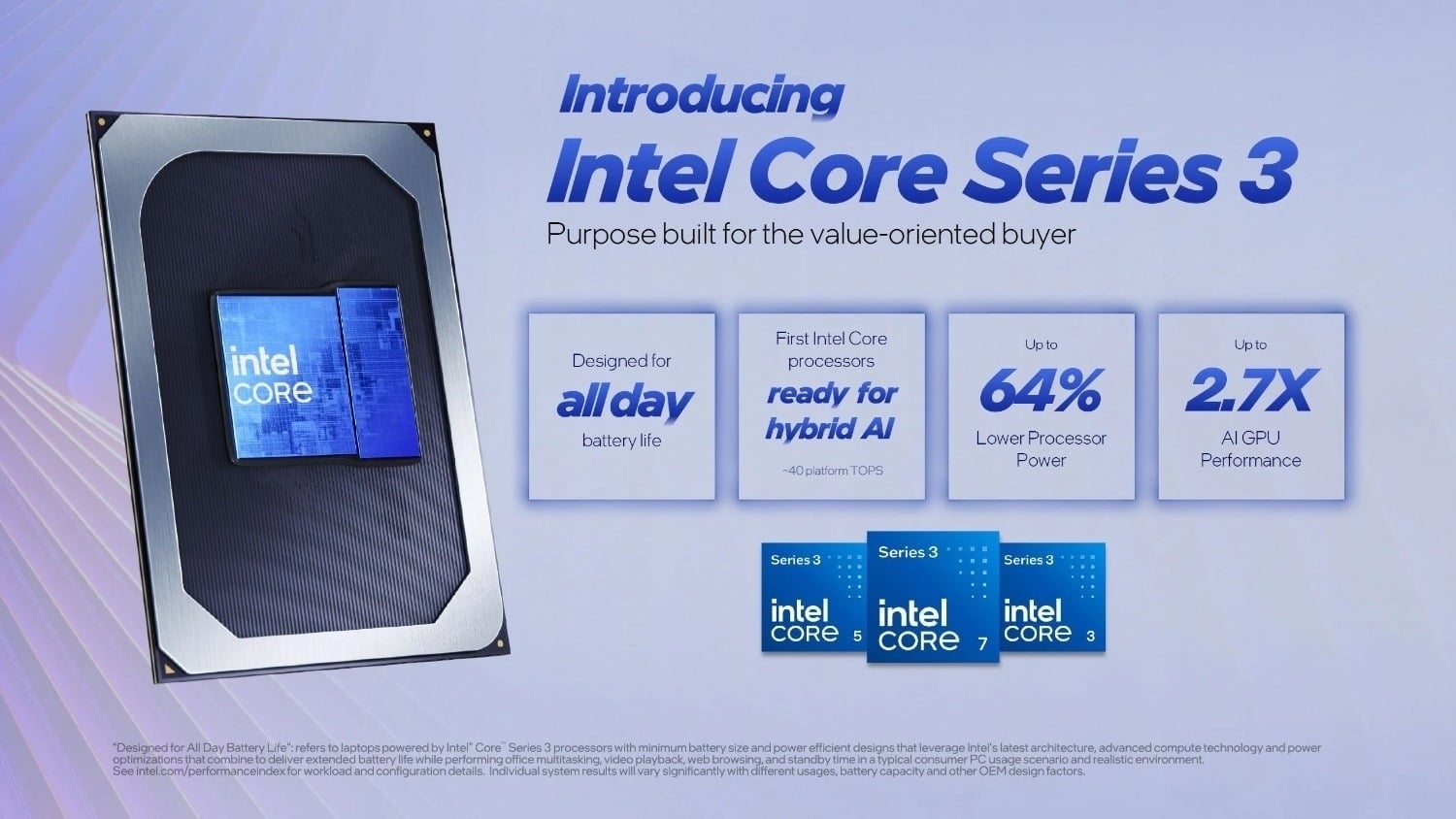
The world of microprocessors is a relentless arena of innovation, where giants like Intel and Apple constantly vie for supremacy. The latest skirmish in this technological arms race has unfolded on the benchmarking platform PassMark, where Intel's new Core 7 350 'Wildcat Lake' CPU has made its debut, immediately drawing comparisons to Apple's formidable A19 Pro chip. This direct confrontation is more than just a numbers game; it's a window into the evolving strategies of two industry titans and the future of computing performance across various device categories.
For decades, Intel has been the undisputed king of desktop and laptop processors, its x86 architecture powering the vast majority of personal computers worldwide. Apple, on the other hand, has historically relied on Intel for its Mac lineup, but its recent pivot to custom-designed Apple Silicon – beginning with the M1 chip and now evolving to the A-series for mobile and M-series for desktops – has dramatically reshaped the competitive landscape. The A19 Pro, a successor to the highly acclaimed A-series chips found in iPhones and iPads, represents the pinnacle of Apple's mobile processor design, known for its exceptional single-core performance and power efficiency. Now, with the Core 7 350 'Wildcat Lake' entering the fray, the lines between traditional desktop and mobile performance are blurring, promising exciting developments for consumers and developers alike.
The Performance Face-Off: Intel vs. Apple Silicon
The initial PassMark scores for the Intel Core 7 350 'Wildcat Lake' paint a nuanced picture of its capabilities against the Apple A19 Pro. In multi-threaded tasks, the Intel chip shows a commendable lead, outperforming the A19 Pro by approximately 9%. This is a significant achievement for Intel, suggesting strong gains in handling complex, parallel workloads that are common in professional applications like video editing, 3D rendering, and scientific simulations. Multi-threading performance is crucial for users who demand raw processing power for intensive tasks, and Intel's ability to pull ahead here underscores its continued commitment to high-performance computing.
However, the narrative shifts when examining single-threaded performance. Here, the Apple A19 Pro maintains a distinct advantage, trailing the Intel Core 7 350 by a notable 18%. Single-threaded performance is vital for many everyday applications, including web browsing, office productivity suites, and a substantial portion of gaming, where optimizing individual core speed can lead to a smoother, more responsive user experience. Apple's long-standing focus on optimizing its silicon for iOS and macOS, coupled with its integrated hardware-software ecosystem, has consistently yielded impressive single-core results, setting a high bar for competitors.
This dichotomy highlights the different design philosophies at play. Intel, with its deep roots in traditional PC architecture, often prioritizes raw core count and multi-core scalability. Apple, leveraging its expertise in mobile chip design, emphasizes power efficiency and highly optimized single-core execution, which translates well to battery life and instantaneous responsiveness in a mobile context. The 'Wildcat Lake' family, which has seen other members like the Core 5 320 and Core 5 330 appear on PassMark, seems to be Intel's latest effort to refine its offerings and directly challenge the new generation of ARM-based competitors.
Historical Context: The Shifting Sands of Processor Dominance
To truly appreciate the significance of this showdown, one must look back at the history of processor development. For decades, Intel's x86 architecture, pioneered by chips like the 8086 and later perfected with the Pentium and Core series, dominated the personal computing landscape. Its consistent performance improvements, driven by Moore's Law, seemed insurmountable. However, the rise of mobile computing, spearheaded by smartphones and tablets, ushered in a new era dominated by ARM-based processors. Companies like Apple, Qualcomm, and Samsung invested heavily in ARM, recognizing its superior power efficiency for battery-constrained devices.
Apple's decision in 2020 to transition its entire Mac lineup from Intel to its own Apple Silicon (M-series chips, which share architectural DNA with the A-series) was a seismic event. It demonstrated that ARM-based designs could not only compete with but, in many cases, surpass Intel's x86 chips in performance-per-watt, and even raw performance for certain workloads. This move sent shockwaves through the industry, forcing Intel to accelerate its own innovation cycles and re-evaluate its strategies. The 'Wildcat Lake' series, therefore, can be seen as Intel's direct response to this new competitive reality, aiming to reclaim its performance crown in a market that is increasingly diverse and demanding.
Intel's recent efforts have focused on architectural innovations, such as hybrid core designs (Performance-cores and Efficient-cores) seen in its Alder Lake and Raptor Lake generations, to optimize for both power and performance. While 'Wildcat Lake' appears to be a distinct family, its performance metrics suggest a continued push to balance multi-core grunt with improved single-core responsiveness, directly addressing the strengths of Apple Silicon.
Implications for Consumers and the Industry
The implications of this performance battle are far-reaching. For consumers, it means more choice and potentially better products. A competitive market drives innovation, leading to faster, more efficient, and more affordable devices. If Intel can continue to close the gap in single-threaded performance while maintaining its multi-threaded lead, it could offer compelling alternatives to Apple's ecosystem, particularly for users who prefer the flexibility of Windows or Linux platforms.
For developers, this evolving landscape presents both challenges and opportunities. Optimizing software for different architectures (x86 vs. ARM) requires additional effort, but it also pushes the boundaries of what's possible. The rise of cross-platform development tools and frameworks will become even more critical as the industry moves towards a more heterogeneous computing environment.
From an industry perspective, this competition is a healthy sign. It prevents stagnation and ensures that both Intel and Apple are constantly pushing the envelope. Intel's 'Wildcat Lake' could be a crucial part of its strategy to regain market share in segments where Apple Silicon has made inroads, such as thin-and-light laptops and even potentially high-performance mobile workstations. It also underscores the importance of foundry technology; Intel is investing heavily in its manufacturing capabilities (Intel Foundry Services) to compete with TSMC, which produces Apple's chips. The ability to innovate at both the architectural and manufacturing levels will be key to long-term success.
The Road Ahead: A Future of Intense Competition
The Core 7 350 'Wildcat Lake' is just one piece of Intel's broader strategy to compete in a rapidly changing market. While its multi-threaded lead over the A19 Pro is impressive, the single-threaded deficit indicates that Intel still has ground to cover in certain areas. However, the consistent appearance of 'Wildcat Lake' chips on benchmarks suggests that Intel is actively developing and refining this new line, likely targeting specific market segments or form factors.
The future of computing will likely not be dominated by a single architecture but rather a diverse ecosystem where x86 and ARM-based chips coexist, each excelling in different niches. Intel's continued innovation in its Core series, coupled with its foray into discrete graphics with Arc, demonstrates a holistic approach to maintaining its relevance. Apple, meanwhile, will continue to refine its A-series and M-series chips, leveraging its integrated hardware-software advantage to deliver seamless user experiences.
Ultimately, this rivalry benefits everyone. It forces both companies to innovate faster, deliver more powerful and efficient products, and ultimately push the boundaries of what computing devices can achieve. The 'Wildcat Lake' vs. A19 Pro battle is not just about benchmark scores; it's about the very direction of technological progress, promising a future where performance, efficiency, and user experience reach unprecedented levels.
Stay Informed
Get the world's most important stories delivered to your inbox.
No spam, unsubscribe anytime.
Comments
No comments yet. Be the first to share your thoughts!