iPhone 20: Apple's Quad-Curved Vision Faces Unprecedented Price Hike Amid OLED Deals & DRAM Shortages
Apple's highly anticipated iPhone 20, featuring a revolutionary quad-curved display and Liquid Glass UI, is poised to redefine smartphone aesthetics. However, this innovation comes at a steep cost, as exclusive OLED panel deals and a global DRAM shortage are projected to drive its price significantly higher. This potential surge raises concerns about accessibility and market dynamics, challenging Apple's traditional pricing strategies.
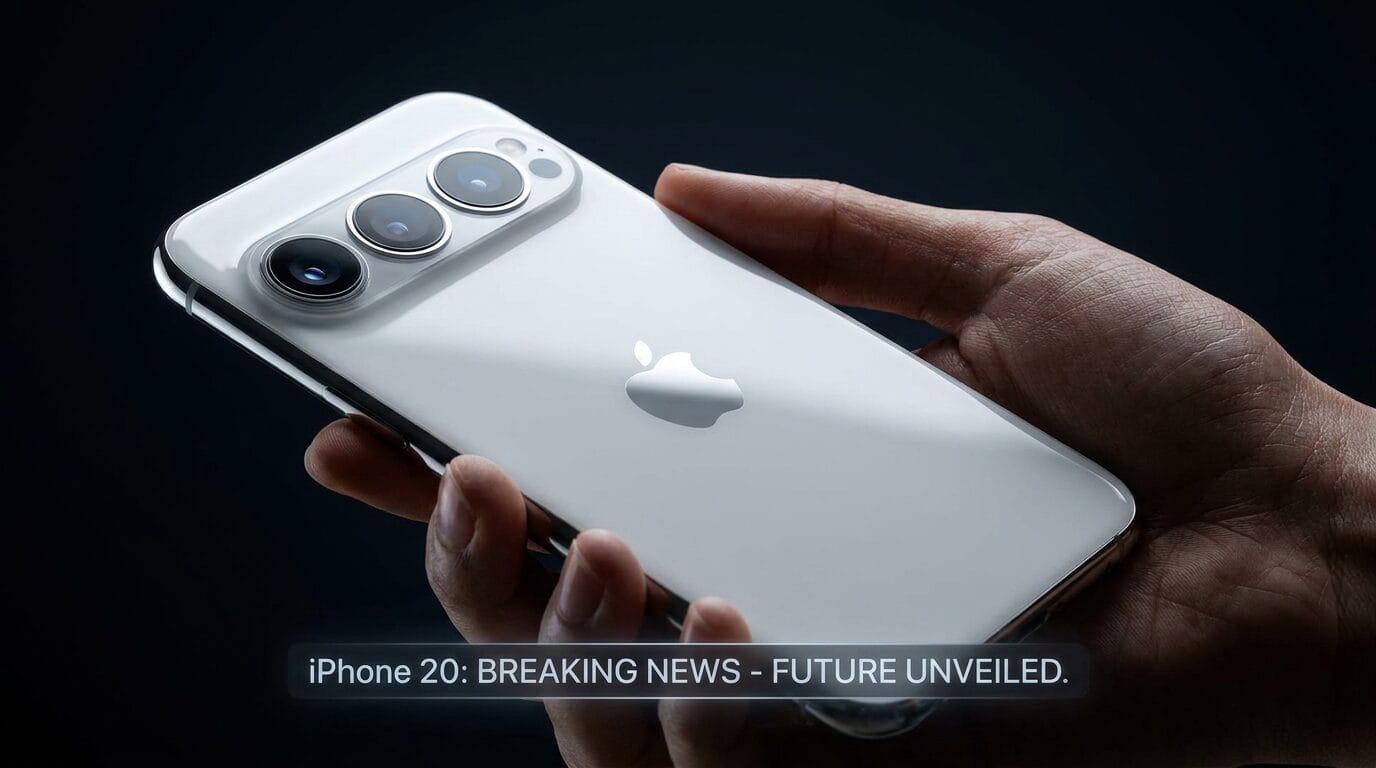
In the ever-evolving landscape of consumer technology, Apple stands as a titan, consistently pushing the boundaries of design and functionality. The impending launch of the iPhone 20, however, signals a potentially groundbreaking yet financially challenging chapter for the Cupertino giant. Whispers from industry insiders and supply chain analyses suggest that while the device will boast a revolutionary quad-curved display and an intuitive Liquid Glass UI, these innovations, coupled with strategic supply chain decisions, are setting the stage for an unprecedented price hike that could redefine the premium smartphone market.
For years, Apple has masterfully balanced innovation with market accessibility, albeit at the higher end of the spectrum. The iPhone 20, with its rumored departure from conventional flat or subtly curved screens, represents a significant aesthetic and ergonomic leap. The quad-curved display is not merely a visual flourish; it promises a more immersive viewing experience and a seamless interaction with the device's edges, potentially integrating new gesture controls. This hardware marvel is expected to be complemented by the Liquid Glass UI, an interface designed to fluidly adapt to the display's contours, offering a tactile and visual experience unlike any before. Such advancements typically come with a premium, but the current confluence of market forces suggests this premium will be steeper than ever.
The OLED Conundrum: Exclusive Deals and Supply Chain Leverage
At the heart of the iPhone 20's projected price increase lies Apple's strategic, yet potentially costly, approach to component sourcing. The OLED (Organic Light-Emitting Diode) display is a critical, high-value component, and Apple's historical strategy has often involved securing exclusive or preferential deals with top-tier manufacturers. For the iPhone 20's advanced quad-curved panel, this strategy appears to be in full effect. Industry reports indicate that Apple has entered into highly exclusive agreements with its primary OLED suppliers, likely Samsung Display and LG Display, to secure the necessary volume and specific technological specifications for this cutting-edge screen.
These exclusive deals, while ensuring supply and maintaining Apple's stringent quality standards, inherently drive up the per-unit cost. Suppliers, in turn, can command higher prices for dedicating significant portions of their production capacity and R&D efforts to a single, demanding client. This leverage allows Apple to differentiate its product but also insulates it from broader market pricing pressures to some extent. However, when combined with other supply chain challenges, this exclusivity amplifies the final product's cost. The sheer complexity and novel manufacturing processes required for a quad-curved OLED display also contribute to its elevated price tag, as production yields may initially be lower, and specialized equipment is required.
The DRAM Shortage: A Global Bottleneck
Compounding the OLED cost is the persistent global shortage of DRAM (Dynamic Random-Access Memory). DRAM is a fundamental component in virtually all modern electronic devices, including smartphones, where it serves as the primary working memory. The tech industry has been grappling with intermittent DRAM shortages for several years, driven by factors such as: * Increased demand: The proliferation of AI, 5G, and high-performance computing has dramatically boosted the need for high-capacity, high-speed memory. * Supply chain disruptions: Geopolitical tensions, natural disasters, and the COVID-19 pandemic have all, at various times, impacted manufacturing and logistics. * Production limitations: Building and expanding semiconductor fabrication plants (fabs) is an incredibly capital-intensive and time-consuming process, making it difficult for supply to rapidly meet surging demand.
For Apple, a company that integrates vast amounts of RAM into its devices for seamless multitasking and demanding applications, the DRAM shortage is a significant concern. Analysts predict that the cost of DRAM could rise by 15-20% or more in the coming quarters, directly impacting the bill of materials for the iPhone 20. While Apple's immense purchasing power usually grants it some insulation, even they are not immune to global commodity price fluctuations. This added cost, when layered upon the exclusive OLED deals, creates a formidable upward pressure on the final retail price.
Implications for Consumers and the Market
The projected price surge for the iPhone 20 carries significant implications for both consumers and the broader smartphone market. For the average consumer, an even higher price point for an iPhone could push it further out of reach. While Apple has always commanded premium prices, there's a perceived ceiling beyond which even brand loyalty might falter. This could lead to a few scenarios:
* Extended Upgrade Cycles: Consumers might hold onto their older iPhones for longer, delaying upgrades and potentially impacting Apple's sales volumes. * Increased Interest in Refurbished/Used Market: A more expensive new model could boost the market for refurbished or second-hand iPhones, offering a more affordable entry point into the Apple ecosystem. * Growth of Mid-Range Alternatives: Competitors offering feature-rich smartphones at more accessible price points could gain market share, especially in emerging economies where price sensitivity is higher.
For Apple, the challenge will be to justify the increased cost through unparalleled innovation and user experience. The quad-curved display and Liquid Glass UI must deliver a truly transformative experience that makes the higher price palatable. Furthermore, Apple might need to adjust its product strategy, perhaps by offering a wider range of models at different price points, or by enhancing its trade-in programs to soften the blow of a new purchase.
The Future of Premium Smartphones: A New Benchmark?
The iPhone 20's potential price hike, driven by cutting-edge technology and supply chain realities, could set a new benchmark for what constitutes a 'premium' smartphone. It forces a re-evaluation of value proposition in the high-end segment. Will other manufacturers follow suit, or will they attempt to undercut Apple with similar features at lower prices, albeit potentially with compromises? The answer will likely shape the competitive landscape for years to come.
Ultimately, the iPhone 20 represents a fascinating case study in technological ambition meeting economic realities. Apple's relentless pursuit of innovation, exemplified by its quad-curved display and Liquid Glass UI, is undeniable. However, the confluence of exclusive component deals and global supply shortages – particularly in OLED and DRAM – presents a formidable challenge to its traditional market positioning. As the launch approaches, all eyes will be on Cupertino, not just to witness the next iteration of smartphone technology, but to understand the new economic paradigm it might usher in for the entire industry. The question remains: how much are consumers willing to pay for the future, and can Apple convince them that the iPhone 20 is truly worth every elevated penny?
Stay Informed
Get the world's most important stories delivered to your inbox.
No spam, unsubscribe anytime.
Comments
No comments yet. Be the first to share your thoughts!