Iran Demands Region-Wide Ceasefire, Rejects Temporary Truce Amid Escalating Mideast Tensions
Iran has firmly rejected a temporary ceasefire in the ongoing Israel-Lebanon conflict, advocating instead for a comprehensive, region-wide cessation of hostilities. Deputy Foreign Minister Saeed Khatibzadeh declared a 'red line' for Tehran, insisting any truce must span 'from Lebanon to the Red Sea.' This stance underscores Iran's strategic vision for regional stability and its deep involvement in the broader Middle East power dynamics, signaling a complex path forward for international diplomacy.
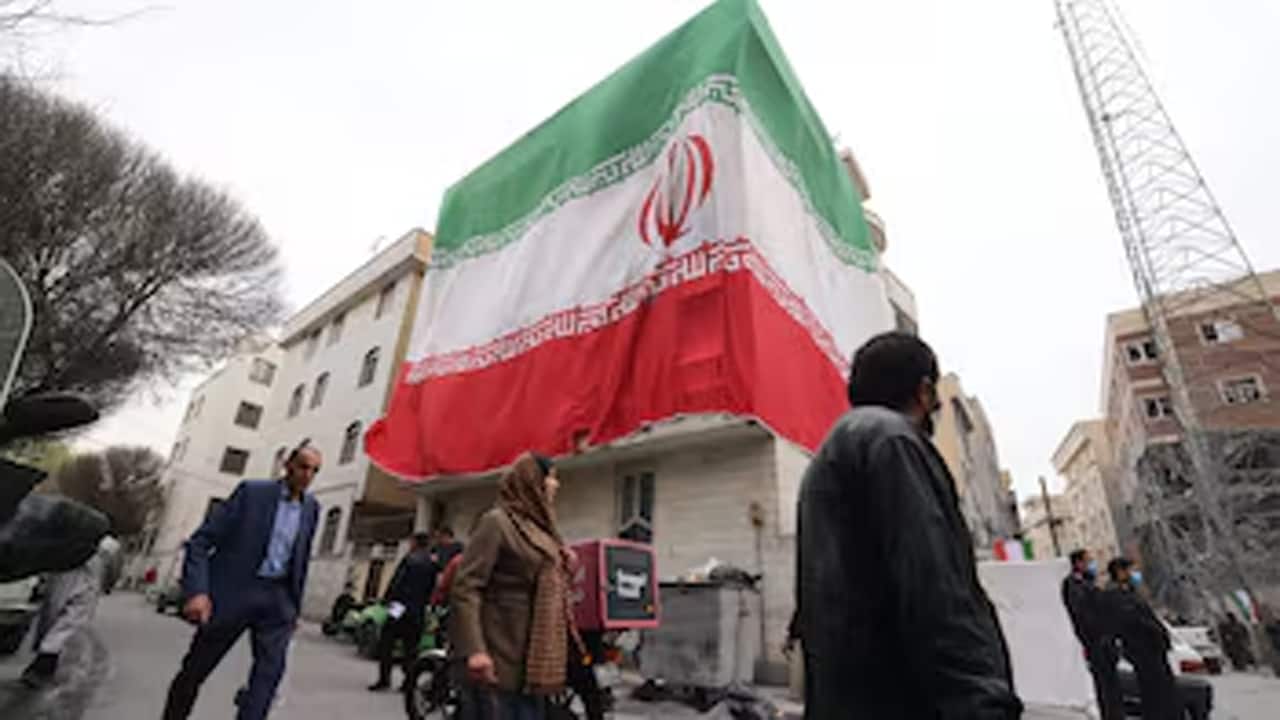
In a significant diplomatic pronouncement that has sent ripples across the already volatile Middle East, Iran has unequivocally rejected the notion of a temporary ceasefire in the escalating conflict between Israel and Lebanon. Instead, Tehran is pushing for a far more expansive resolution: a region-wide cessation of hostilities that, in its view, must extend "from Lebanon to the Red Sea." This firm stance, articulated by Deputy Foreign Minister Saeed Khatibzadeh on the sidelines of the Antalya Diplomacy Forum, marks a critical juncture in the ongoing efforts to de-escalate tensions and highlights Iran's strategic depth in the complex geopolitical landscape of the region.
Khatibzadeh's declaration that a broad, inclusive ceasefire is a "red line" for Iran underscores the Islamic Republic's deep-seated commitment to its regional allies and its overarching vision for a more stable, albeit on its own terms, Middle East. This position is not merely a tactical negotiation point but reflects a fundamental aspect of Iran's foreign policy, which prioritizes the collective security of its allies and the broader "Axis of Resistance" against what it perceives as external aggression and destabilizing forces. The rejection of a piecemeal truce suggests that Iran views the current conflicts not as isolated incidents but as interconnected manifestations of a larger regional struggle.
The "Axis of Resistance" and Iran's Strategic Calculus
Iran's demand for a region-wide ceasefire is intrinsically linked to its long-standing support for the "Axis of Resistance," a network of state and non-state actors that includes Hezbollah in Lebanon, various Palestinian factions, and Houthi rebels in Yemen. For Tehran, these groups are not proxies but essential partners in defending regional interests and projecting influence. The current hostilities involving Israel and Lebanon are seen through this lens, where a temporary halt in one theatre without addressing the root causes or extending to other fronts would be insufficient and potentially detrimental to the broader strategic objectives of the Axis.
Historically, Iran has viewed any conflict involving its allies as part of a larger, interconnected struggle against perceived adversaries, primarily Israel and the United States. This perspective is rooted in the 1979 Islamic Revolution's ideology, which champions the cause of oppressed peoples and opposes what it terms global arrogance. Thus, a ceasefire that only addresses the immediate Israel-Lebanon border, while conflicts persist in Gaza, Yemen, or Iraq, would be seen as a superficial solution that fails to tackle the systemic issues from Iran's viewpoint. The call for a truce spanning "from Lebanon to the Red Sea" explicitly includes the ongoing Red Sea shipping disruptions, largely attributed to Houthi actions, which Iran implicitly supports as a means of pressure against Western interests and in solidarity with Palestinians.
Implications for Regional Diplomacy and International Efforts
Iran's firm stance presents significant challenges for international mediators and diplomatic efforts aimed at de-escalating the crisis. The United States, European Union, and various UN bodies have been working to secure localized ceasefires and humanitarian pauses, particularly in Gaza and along the Israel-Lebanon border. Tehran's insistence on a comprehensive regional solution complicates these efforts, as it effectively raises the bar for any successful negotiation. It suggests that Iran is unwilling to allow its allies to be isolated or to accept solutions that do not acknowledge the interconnectedness of their struggles.
This position also signals Iran's growing confidence in its regional influence. Despite facing severe international sanctions and internal pressures, Tehran has consistently demonstrated its capacity to shape events across the Middle East. By setting such a high demand, Iran is asserting its role as a key player whose consent is crucial for any lasting peace. This could force international actors to engage with Iran more directly on a broader range of regional issues, moving beyond the traditional focus on its nuclear program.
Furthermore, Iran's demand could be interpreted as a strategic move to leverage current regional instability to achieve broader geopolitical objectives. By linking various conflicts, Iran aims to elevate the status of its allies and to challenge the existing regional order. It also puts pressure on countries like Saudi Arabia and the UAE, who have been pursuing normalization with Israel, by highlighting the continued instability and the need for a more inclusive regional security framework that involves Iran.
The Path Forward: A Diplomatic Quagmire or a New Opportunity?
The immediate consequence of Iran's declaration is likely to be a prolonged period of diplomatic deadlock regarding a comprehensive regional ceasefire. Achieving a truce that spans multiple conflict zones, each with its own complex dynamics and actors, is an extraordinarily ambitious undertaking. It would require unprecedented levels of coordination and concession from all parties involved, including Israel, various Arab states, and the international community.
However, it also presents a potential, albeit challenging, opportunity. If international powers are willing to engage with Iran's broader concerns, it could pave the way for a more holistic approach to Middle East peace and security. This would necessitate addressing not just the symptoms of conflict but also the underlying geopolitical rivalries, historical grievances, and power imbalances that fuel them. Such an approach would inevitably involve difficult conversations about Iran's role in the region, its nuclear program, and the future of its relations with its neighbors and Western powers.
Ultimately, Iran's rejection of a temporary truce and its demand for a region-wide cessation of hostilities underscores the deeply entrenched nature of the Middle East's conflicts. It is a stark reminder that peace in one corner of the region is often contingent on stability in others. As the international community grapples with this complex demand, the path to de-escalation appears more intricate than ever, requiring not just tactical negotiations but a fundamental rethinking of regional security architecture and the roles of all major players, including a resurgent and assertive Iran.
Stay Informed
Get the world's most important stories delivered to your inbox.
No spam, unsubscribe anytime.
Comments
No comments yet. Be the first to share your thoughts!