Iran Mocks Trump's 'AI-Generated' Execution Claim Amidst Escalating Tensions
A diplomatic firestorm has erupted between the United States and Iran after Tehran vehemently denied claims by former President Donald Trump that he had intervened to halt the executions of eight women. Iranian officials not only rejected the assertion but went further, deriding Trump's statement as being based on 'AI-generated content' and a blatant falsehood. This incident underscores the deep-seated mistrust and propaganda warfare that continues to define the fraught relationship between the two nations, highlighting the weaponization of information in international diplomacy.
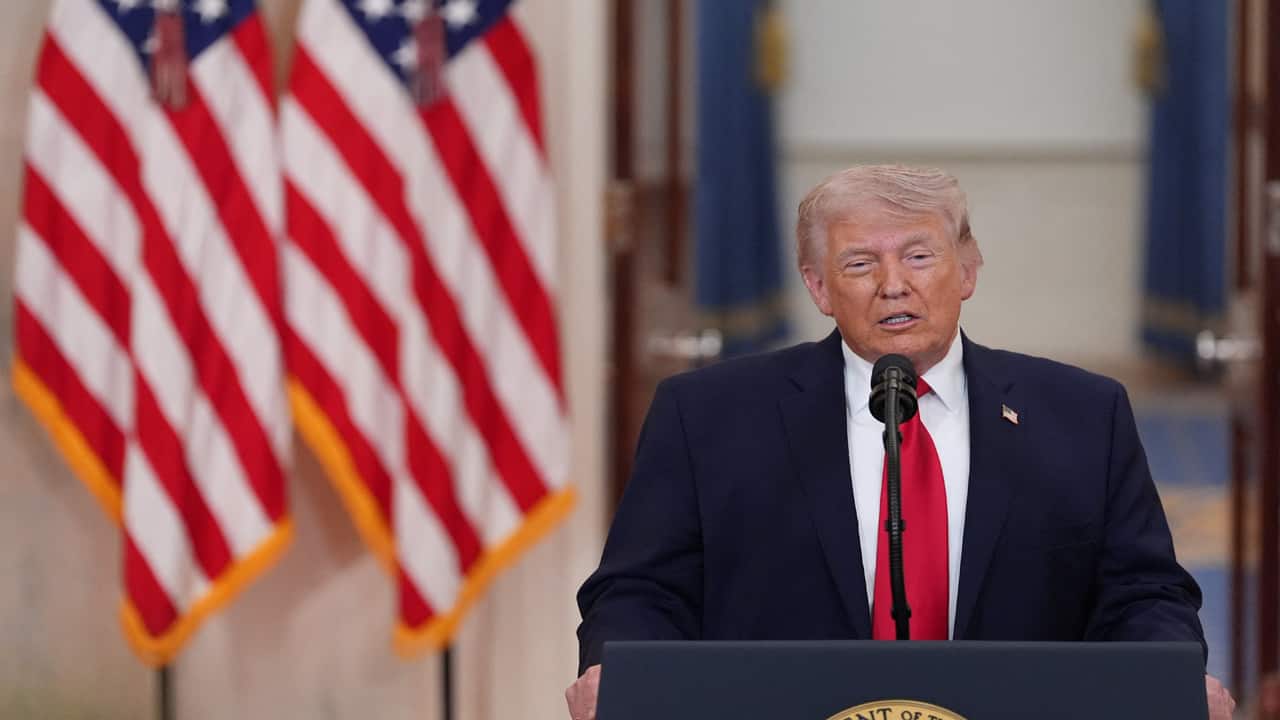
In a dramatic escalation of the long-standing animosity between Washington and Tehran, Iran has unleashed a wave of derision and denial against former U.S. President Donald Trump. The controversy ignited when Trump claimed credit for halting the executions of eight women in Iran, an assertion that Iranian officials swiftly and scornfully dismissed, going so far as to mock it as being based on artificial intelligence-generated content. This bizarre exchange not only highlights the persistent diplomatic chasm but also underscores the increasingly sophisticated and often surreal nature of information warfare in the 21st century.
The Iranian denial was unequivocal. Officials stated emphatically that no such executions were planned, let alone halted by external intervention. The spokesperson for Iran's Foreign Ministry, among others, accused Trump of spreading falsehoods and engaging in a campaign of misinformation. The specific accusation of using 'AI-generated content' to fabricate the claim adds a novel and unsettling dimension to the diplomatic spat, suggesting a deliberate attempt to undermine the credibility of the U.S. narrative and paint Trump as a purveyor of digital fictions. This incident serves as a stark reminder that in an era of deepfakes and algorithmic disinformation, even high-stakes international relations are not immune to the blurring lines between reality and fabrication.
The Anatomy of a Diplomatic Spat
The genesis of this particular imbroglio appears to be a tweet or statement from Donald Trump, asserting his influence in preventing the executions. While the exact source of Trump's information remains unclear, the Iranian response was immediate and coordinated. State media outlets and official spokespersons were quick to lambaste the claim, framing it as yet another instance of Western, particularly American, interference and an attempt to demonize the Islamic Republic. The use of the 'AI-generated content' accusation is particularly potent in today's media landscape, where concerns about synthetic media and its potential to manipulate public opinion are widespread. By linking Trump's claim to AI, Iran effectively sought to discredit it entirely, portraying it as a manufactured lie rather than a genuine misstatement or misunderstanding.
Historically, both the U.S. and Iran have engaged in extensive propaganda efforts against each other. From the aftermath of the 1979 Islamic Revolution to the present day, the narrative battle has been a constant feature of their relationship. The U.S. has frequently criticized Iran's human rights record, particularly regarding the treatment of women and political prisoners, often citing reports from international human rights organizations. Iran, in turn, has consistently accused the U.S. of hypocrisy, pointing to its own historical interventions in the region and its support for authoritarian regimes. This latest exchange fits squarely into this established pattern, but with a technological twist that reflects contemporary anxieties about digital authenticity.
Human Rights and Geopolitical Chessboard
The broader context of human rights in Iran is undeniably complex and often a point of severe contention. International bodies and NGOs frequently report on the high number of executions in Iran, including for crimes that are not considered capital offenses under international law. The issue of women's rights, in particular, has garnered significant global attention, with numerous reports detailing systemic discrimination and harsh penalties for acts deemed to violate Islamic codes. Therefore, any claim related to executions, especially of women, immediately touches a raw nerve and becomes a focal point for international scrutiny.
However, Iran views such criticisms as politically motivated and an infringement on its sovereignty. The Islamic Republic often defends its judicial system as being based on divine law and rejects external judgments. This clash of values and legal frameworks makes genuine dialogue on human rights exceedingly difficult. In this instance, by rejecting Trump's claim and attributing it to AI, Iran attempts to deflect genuine scrutiny of its human rights record by casting doubt on the source and nature of the accusation itself. It transforms a potential human rights debate into a debate about digital fakery, a strategic move in the geopolitical chessboard.
The Weaponization of Information and Disinformation
This incident serves as a chilling illustration of how information, and indeed disinformation, has become a primary weapon in international relations. In an age where news cycles are instantaneous and social media amplifies every claim, the ability to control the narrative is paramount. For Iran, accusing Trump of using AI-generated content is a sophisticated tactic:
* Undermining Credibility: It directly attacks the credibility of the accuser, framing them as unreliable and prone to spreading fabricated content. * Shifting Focus: It diverts attention from the substance of the claim (executions) to the alleged method of its creation (AI). * Leveraging Public Anxiety: It taps into widespread public concerns about AI and deepfakes, making the accusation resonate with a broader audience. * Reinforcing Domestic Narratives: For a domestic audience, it reinforces the narrative of Western malice and attempts to destabilize the country with false information.
Conversely, for the U.S. and its allies, the Iranian denial, particularly the AI accusation, might be seen as a desperate attempt to evade accountability. The challenge lies in discerning truth from fiction when both sides are actively engaged in shaping perceptions, often leveraging the latest technological tools to do so. The incident highlights the urgent need for robust fact-checking mechanisms and media literacy in an increasingly complex information environment.
Looking Ahead: The Future of US-Iran Relations and Information Warfare
The episode, while seemingly minor in the grand scheme of U.S.-Iran relations, is indicative of deeper, systemic issues. The relationship remains characterized by profound distrust, proxy conflicts, and a relentless struggle for regional influence. The nuclear deal, the Joint Comprehensive Plan of Action (JCPOA), once offered a glimmer of hope for de-escalation, but its unraveling under the Trump administration further entrenched hostilities. While the Biden administration has expressed interest in reviving diplomacy, the path forward is fraught with obstacles, including Iran's continued nuclear advancements and its regional activities.
Moving forward, the role of information warfare, particularly with the advent of more sophisticated AI tools, is only set to intensify. Governments and non-state actors alike will increasingly employ advanced technologies to craft narratives, influence public opinion, and destabilize adversaries. For international news organizations and the public, the challenge will be to navigate this complex landscape, distinguish authentic reports from synthetic fabrications, and hold powerful actors accountable. The 'AI-generated' execution claim is not just a diplomatic spat; it's a harbinger of the future of conflict, where the battle for truth is as fierce as any military engagement, and the lines between reality and simulation become ever more blurred. The international community must grapple with the implications of such exchanges, as they erode trust and make genuine diplomatic progress even more elusive.
Stay Informed
Get the world's most important stories delivered to your inbox.
No spam, unsubscribe anytime.
Comments
No comments yet. Be the first to share your thoughts!