Iran's New Peace Gambit: Trump 'Not Satisfied' as Tensions Simmer in the Gulf
Iran has presented a new proposal to de-escalate tensions and end the ongoing conflict, reportedly delivered via Pakistan. The offer suggests unwinding the US blockade at the outset of Hormuz talks, rather than as a precondition, and links nuclear negotiations to sanctions relief. However, US President Donald Trump has expressed dissatisfaction, hinting at potential military action if a deal isn't reached, leaving the future of diplomatic efforts uncertain amidst a volatile geopolitical landscape.
The geopolitical chessboard of the Middle East remains fraught with peril, as a fresh diplomatic overture from Tehran has met with a skeptical reception from Washington. Iran, facing crippling sanctions and mounting international pressure, has reportedly submitted a new proposal aimed at de-escalating the ongoing conflict and charting a path towards peace. This initiative, conveyed through Pakistani channels, suggests a willingness to engage in talks over the Strait of Hormuz, with the crucial concession that the US would begin unwinding its blockade at the start of negotiations, rather than requiring it as a pre-condition. Furthermore, the proposal reportedly links nuclear discussions to the easing of sanctions, a long-standing demand from Tehran. However, the immediate response from US President Donald Trump was one of pronounced dissatisfaction, casting a shadow of uncertainty over the prospects for a diplomatic breakthrough and raising fears of continued instability in a region already on edge.
A Shifting Diplomatic Landscape
The details of Iran's latest proposal, while not fully disclosed, represent a significant shift in its negotiating stance. Previously, Tehran had insisted on the complete lifting of US sanctions as a prerequisite for any direct talks, particularly concerning its nuclear program. The new offer, by suggesting a parallel process where sanctions relief and blockade unwinding commence with negotiations, indicates a potential softening of this rigid position. This could be interpreted as a strategic move by Iran to create an entry point for dialogue, especially given the severe economic strain it is experiencing. The Strait of Hormuz, a vital chokepoint for global oil shipments, has been a flashpoint for recent tensions, with attacks on tankers and the downing of a US drone escalating fears of a broader conflict. Iran's willingness to discuss the Strait's security in conjunction with US actions signals a desire to address immediate concerns while also pushing for its core demand of sanctions relief. The involvement of Pakistan as an intermediary underscores the complex web of international diplomacy at play, with various regional and global powers attempting to mediate the crisis.
Trump's 'Not Satisfied' Stance and the Shadow of Force
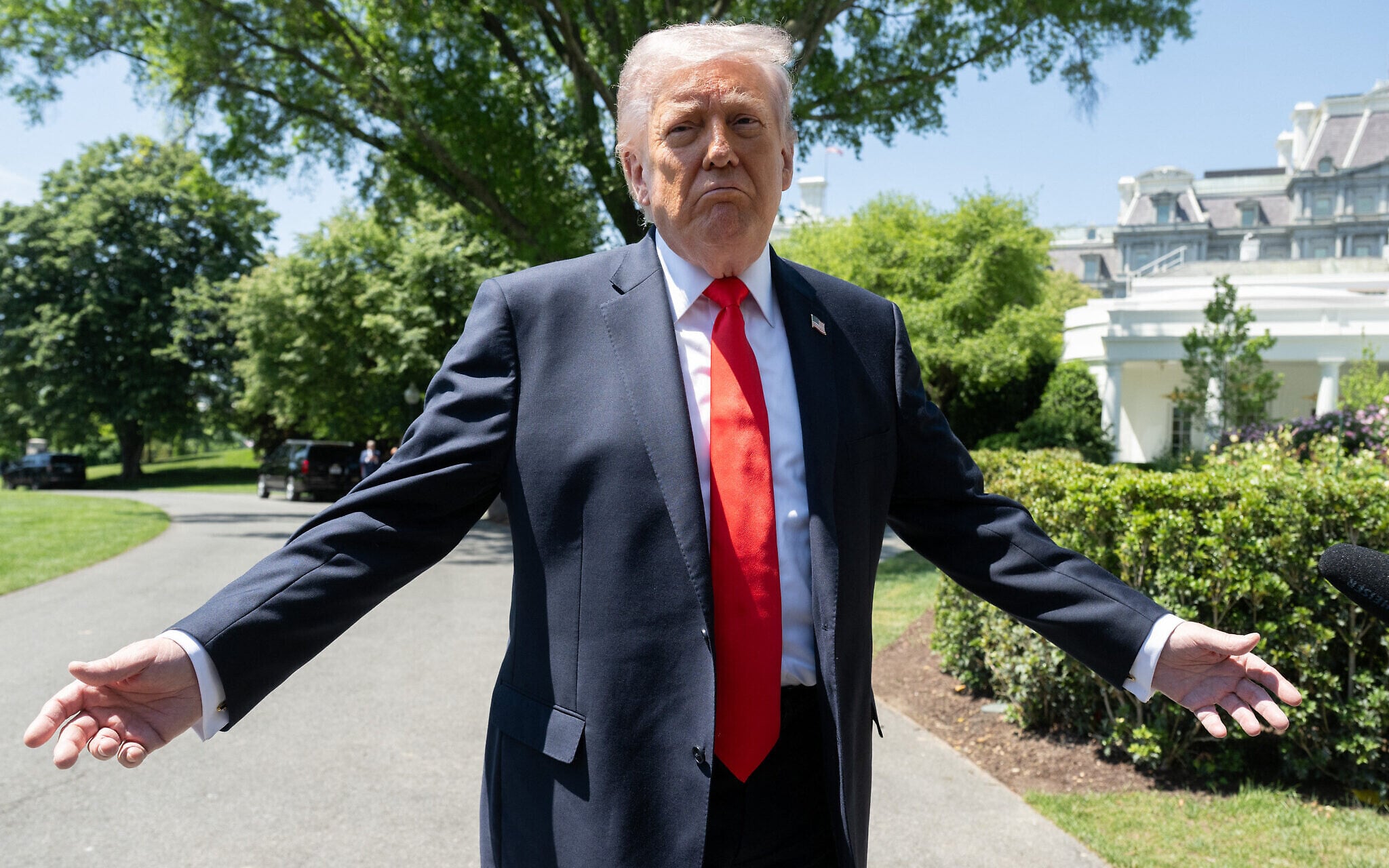
President Trump's swift rejection of the proposal, stating he was "not satisfied," underscores the deep mistrust and fundamental disagreements that plague US-Iran relations. His comments, made publicly, also included a chilling acknowledgment that he had been briefed on options to "blast the hell out of them" if a deal were not reached. This stark language, while characteristic of Trump's negotiating style, sends a clear message to Tehran that military options remain on the table. The US administration's consistent pressure campaign, dubbed "maximum pressure," aims to force Iran back to the negotiating table on terms favorable to Washington, primarily focusing on a more comprehensive deal that addresses Iran's ballistic missile program and its regional activities, in addition to its nuclear ambitions. The current US stance is that the 2015 Joint Comprehensive Plan of Action (JCPOA), from which Trump withdrew, was insufficient. The challenge for diplomats now is to bridge the chasm between Iran's desire for sanctions relief and the US's demand for a broader behavioral change from Tehran, all while avoiding an accidental or intentional military confrontation that could have catastrophic consequences for the global economy and regional stability.
Historical Context: Decades of Distrust
The current standoff is not an isolated incident but rather the latest chapter in a long and tumultuous history between the United States and Iran, marked by decades of mutual suspicion and hostility. The 1979 Islamic Revolution fundamentally altered the geopolitical landscape, transforming Iran from a key US ally under the Shah into an anti-Western, anti-American Islamic Republic. Key events such as the hostage crisis at the US embassy, the Iran-Iraq War (where the US covertly supported Iraq), and more recently, concerns over Iran's nuclear program and its support for various proxy groups in the Middle East, have cemented this adversarial relationship. The JCPOA in 2015 offered a brief period of rapprochement, with Iran agreeing to curb its nuclear activities in exchange for sanctions relief. However, President Trump's unilateral withdrawal from the deal in 2018, followed by the re-imposition and escalation of sanctions, reignited tensions and brought the two nations to the brink of conflict on several occasions. Understanding this deep-seated historical context is crucial for appreciating the complexity of the current diplomatic challenges and the difficulty in forging a lasting peace.
Expert Analysis and Regional Implications
Experts widely agree that the current situation is highly volatile. Dr. Sarah Khan, a senior analyst at the Middle East Institute, notes, "Iran's proposal, however limited, is a sign of economic distress and a desire to avoid further escalation. However, Trump's response indicates that the US is not yet willing to compromise on its 'maximum pressure' strategy." The implications for the region are profound. A military confrontation would undoubtedly destabilize global oil markets, sending prices soaring and potentially triggering a worldwide economic downturn. Regional allies of the US, such as Saudi Arabia and Israel, are closely watching developments, with their own security concerns intertwined with the US-Iran dynamic. Conversely, Iran's regional proxies, including Hezbollah in Lebanon and various Shiite militias in Iraq, could be activated, leading to a broader regional conflagration. The prospect of a proxy war intensifying across the Middle East remains a significant concern. Furthermore, the lack of a clear diplomatic off-ramp increases the risk of miscalculation, where an incident, however minor, could spiral out of control. The international community, including European powers, Russia, and China, continues to advocate for de-escalation and a return to diplomacy, recognizing the immense stakes involved.
The Path Forward: Diplomacy or Deterioration?
The immediate future of US-Iran relations hangs precariously in the balance. While President Trump's public rejection of the proposal might seem to close the door on diplomacy, it is often a part of the negotiation dance. Behind-the-scenes efforts, possibly involving other intermediaries, may continue. The key will be to find a formula that allows both sides to save face and claim a degree of victory. For Iran, this means meaningful sanctions relief; for the US, it means tangible commitments from Tehran regarding its nuclear program and regional behavior. The current proposal's suggestion of unwinding the blockade at the start of talks rather than as a precondition could be a crucial face-saving mechanism for both sides. The international community must continue to press for dialogue, emphasizing the catastrophic consequences of military conflict. Without a genuine commitment from both Washington and Tehran to find common ground, the region risks sliding further into instability, with global repercussions that no nation can afford. The coming weeks will be critical in determining whether diplomacy can prevail over the ever-present threat of escalation, or if the region is destined for another chapter of conflict and uncertainty.
Stay Informed
Get the world's most important stories delivered to your inbox.
No spam, unsubscribe anytime.
Comments
No comments yet. Be the first to share your thoughts!